

Archive

November 27, 2026

Browsing

Global equity markets climbed higher this week, seemingly ignoring a series of grim forecasts from some of the world’s most prominent financial analysts. While American traders took a breather for the Thanksgiving holiday, investors across Asia and Europe pushed indices upward. In Europe, the Stoxx 600 surged by two percent and the FTSE 100 rose nearly two percent, while Asian markets including Japan and South Korea also saw broad gains. Even with New York offline, S&P 500 and Nasdaq 100 futures ticked upward, suggesting that the appetite for risk remains surprisingly resilient.

This bullish momentum stands in stark contrast to a shocking declaration from Joachim Klement of Panmure Liberum. In a candid video address, Klement revealed that he has sold every single equity in his personal portfolio, citing a fear that markets are spiraling toward a major bear market with potential drawdowns exceeding thirty percent. Pointing to technical indicators and the fact that the S&P 500 is trading below its 200-day moving average, Klement issued a daring projection that the index could plummet to 5,000 by 2027, a figure that currently feels distant to optimistic traders.

The pessimism among these experts is fueled by a cocktail of stubborn inflation and aggressive monetary policy. Recent data shows personal consumption expenditures rising unexpectedly, leading many to believe the Federal Reserve will be forced to hike interest rates again in December. Analysts argue that because the U.S. economy remains robust with low unemployment and strong GDP growth, the Fed has ample room to tighten the screws on inflation regardless of how it affects stock prices. Combined with anxieties over artificial intelligence investments and new tariff policies, several strategists warned that the traditional end-of-year Santa Claus rally might be dead on arrival.

Despite these alarms, there are signs that the current volatility is concentrated primarily within the tech sector rather than reflecting a systemic collapse. Some observers noted that outside of high-flying technology stocks, much of the broader market is actually performing quite well. With hundreds of individual companies in the S&P 500 continuing to climb and international markets showing strength, it appears that global investors are betting against the doomsayers for now, choosing growth over caution even as warnings of a crash grow louder.
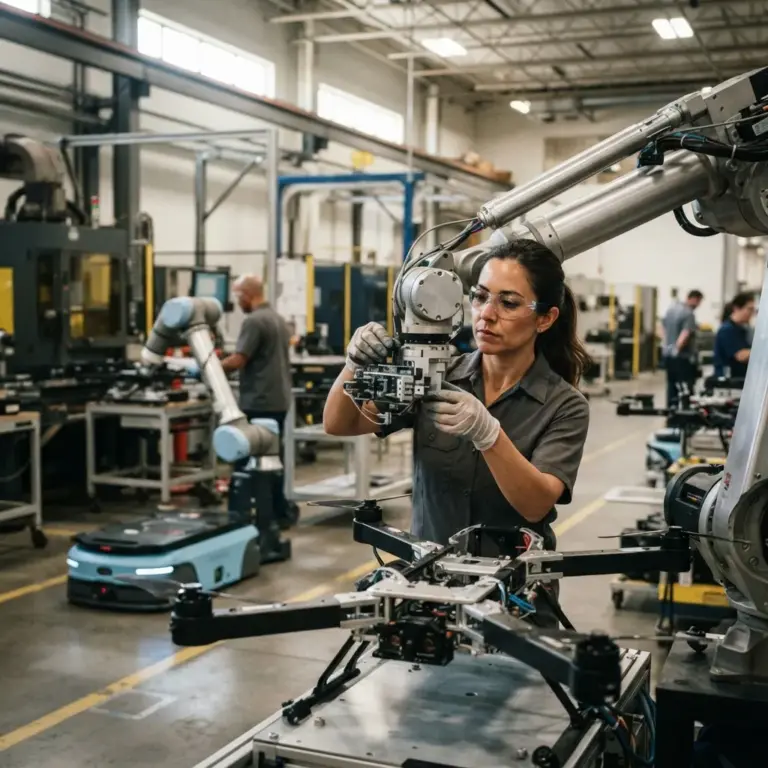
Despite recent turbulence in the stock market that saw shares dip significantly, Nvidia appears to be positioning itself for a second act that could dwarf its initial success with data centers. While much of the hype surrounding the company has focused on the digital side of artificial intelligence, a new catalyst known as physical AI is beginning to emerge. This involves integrating intelligent software into tangible machinery like autonomous drones, industrial robots, and advanced medical equipment. By moving AI out of the server room and into the real world, Nvidia is opening a door to an entirely new revenue stream.

The numbers backing this shift are staggering. During its most recent earnings call, Nvidia indicated that its physical AI revenue is expected to more than quadruple in the current fiscal year, jumping from six billion dollars to twenty five billion. The company is already collaborating with heavy hitters like Caterpillar and Boston Dynamics to refine how humanoid robots operate in warehouses and hospitals. With some analysts projecting the broader physical AI market could reach one point four trillion dollars by 2035, Nvidia is essentially playing a long game where it provides the brains for everything from factory floors to consumer electronics.

For investors who have been spooked by short term volatility, these fundamentals offer a compelling reason to stay optimistic. Between a massive two point five trillion dollar backlog in cloud industry demand and a dominant seventy five percent share of the AI chip market, the core business remains incredibly healthy. When combined with a valuation that has become increasingly attractive following recent price corrections, many see this moment as a rare window to enter a position in a company that is not just riding a trend but actively building the infrastructure for the next decade of global automation.

The Trump administration has unveiled an ambitious plan to implement a fresh round of tariffs targeting China, the European Union, and a dozen other major trading partners. According to U.S. Trade Representative Jamieson Greer, the move is designed to curb the influence of foreign subsidies and encourage domestic manufacturing within a consumption heavy American economy. While several nations will see increases between ten and twenty percent, China remains the primary target with proposed rates of twenty percent on most goods, which could potentially climb to forty percent if diplomatic negotiations fail.

Economists warn that while these measures aim to protect local industry, the financial burden will likely trickle down to the public. Gavin Bade of The Wall Street Journal notes that these tariffs effectively rebuild a protective wall around U.S. markets following previous legal setbacks in the Supreme Court. Data from the Yale Economic Lab suggests that returning to these aggressive levy levels could increase average annual costs for every American by roughly four hundred dollars as importers pass those expenses onto shoppers.

To avoid further legal challenges, the administration is relying on Section 301 of the Trade Act of 1974 rather than emergency powers. By framing the issue as a response to unfair trading practices and excessive industrial capacity abroad, officials believe they have found a firmer legal footing. This strategy specifically targets countries that allegedly flood global markets with artificially cheap products, thereby putting American producers at a competitive disadvantage.

Despite the tension, analysts suggest this rollout may serve more as a calculated negotiating tactic than an immediate declaration of economic war. With a critical trade truce with China set to expire in January, these moves align with longstanding expectations from Beijing. While some success has been seen in reducing the trade deficit and pushing tech manufacturing toward India and Southeast Asia, experts point out that enforcement remains difficult due to transshipment, where Chinese goods are subtly rebranded in third party nations before entering the U.S. market.

Eurozone leaders have reached an agreement to appoint Pablo Hernandez de Cos as the next president of the European Central Bank, marking the first time a Spaniard will lead the Frankfurt-based institution. The announcement came via Antonio Costa, president of the European Council, who confirmed that member states have recommended Hernandez de Cos alongside Laurence Boone and Markus Brunnermeier for seats on the ECB executive board. This move sets the stage for final appointments to be formalized during the European Union summit this December.

Taking over in February, Hernandez de Cos arrives at a pivotal moment for the eurozone economy. He succeeds Christine Lagarde, who is stepping down several months ahead of her scheduled departure next October. Currently serving as the head of the Bank for International Settlements in Basel, the 55-year-old economist is viewed by diplomats as a steady hand capable of building consensus across diverse national interests during volatile economic times.

His resume provides a blueprint for handling crises, having served as both chief economist and governor of the Bank of Spain. In those roles, he managed everything from the fallout of the 2010s banking collapse to the inflationary shocks triggered by the pandemic and Russia’s invasion of Ukraine. His experience extends globally through his previous chairmanship of the Basel Committee on Banking Supervision, where he helped set international standards for financial institutions.

In Madrid, Prime Minister Pedro Sanchez celebrated the nomination as evidence of Spain’s growing influence within European governance. Writing on social media amid a tight domestic political climate leading up to Sunday’s general election, Sanchez suggested that Hernandez de Cos joins a broader wave of Spanish leadership in Brussels and beyond. Following today’s recommendation, the candidates must still receive formal backing from the ECB governing council and the European Parliament before officially taking office.