
Archive

November 15, 2026

Browsing

The latest wave of corporate earnings reports suggests a resilient streak across the U.S. market, with many companies comfortably exceeding what Wall Street expected. According to recent data from Morningstar, overall earnings are on track for significant growth compared to previous years, maintaining a pace well above the typical three-year average. More than half of the listed stocks tracked have beaten consensus estimates by five percent or more, signaling a healthy appetite for growth despite shifting economic headwinds.

For savvy investors, the real story lies in the gap between these stellar performances and current stock prices. While some shares jump immediately following a positive report, others remain surprisingly cheap relative to their actual value. Analysts recently identified seven specific stocks that managed to crush both revenue and profit targets while remaining fundamentally undervalued. These include heavy hitters like Arista Networks and Sony, alongside specialized players such as Entegris and Ionis Pharmaceuticals.

Among the standouts, Arista Networks caught particular attention after posting explosive sales growth and providing an aggressive outlook for 2027. Despite a post-earnings price bump, experts suggest the company remains materially undervalued given its dominant position in tech hardware. Similarly, GE Vernova showed strength by raising its full year revenue guidance and expanding its footprint through strategic acquisitions, proving that industrial powerhouses can still find room for rapid acceleration.

Finding these opportunities requires looking beyond a single quarter’s success to avoid falling for temporary accounting tricks. By filtering for companies with sustainable competitive advantages and high star ratings, researchers have isolated firms where the intrinsic value simply hasn’t been fully recognized by the broader market yet. For those focused on long term stability rather than short term volatility, these discounted winners offer a compelling entry point into sectors showing genuine operational momentum.
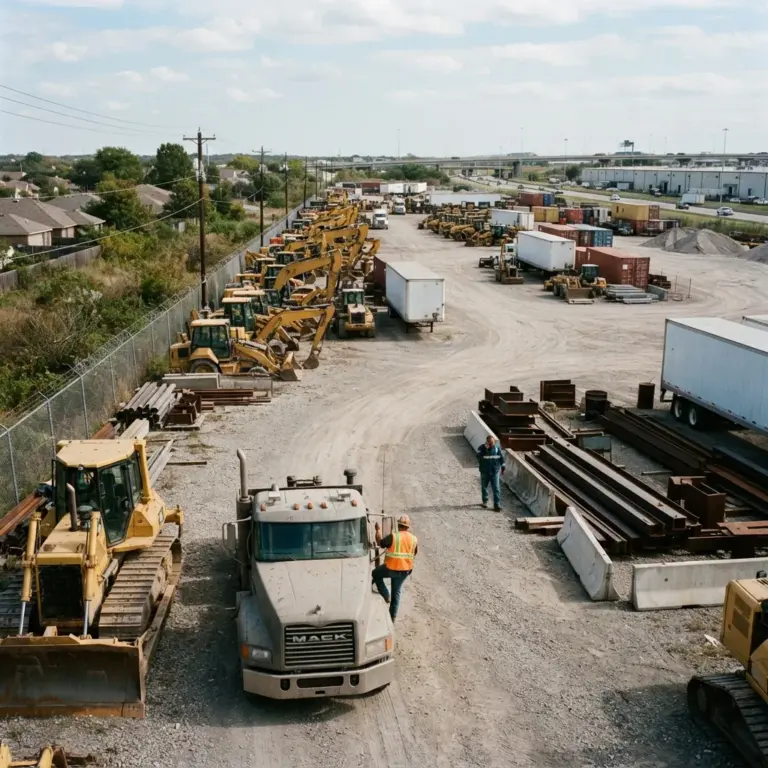
Across the sprawling suburbs of America, nondescript gravel lots filled with idling bulldozers and fleet trucks have long blended into the background of the industrial landscape. However, these unbranded patches of land, known in the trade as industrial outdoor storage or IOS, are suddenly becoming some of the hottest targets for Wall Street. Heavy hitters like Blackstone and Brookfield are pouring billions into the sector, recognizing that as AI infrastructure expands and supply chains tighten, the need for specialized space to house heavy equipment has skyrocketed.

The financial incentive is clear when looking at the numbers. In several major markets, rents for outdoor storage have surged far beyond those of traditional indoor warehouses. According to recent data from Newmark Research and Alterra IOS, average monthly rents per usable acre jumped over 100 percent between 2020 and late 2024. Cities like Baltimore and Houston have seen explosive growth, driven largely by proximity to seaports, rail lines, and highways. While big firms are consolidating these assets through massive acquisitions and lending deals—such as Brookfield’s billion dollar move to take Peakstone Realty Trust private—they are finding a market that is surprisingly fragmented.

Despite the arrival of institutional giants, experts suggest that local entrepreneurs and smaller investors aren’t priced out yet. Because many of these lots are owned by mom-and-pop operators rather than corporations, there is still plenty of room for individuals to acquire smaller parcels of three to five acres in secondary markets. Unlike standardized warehouses with specific ceiling heights or square footage, every IOS lot is unique, making it difficult for giant funds to automate their buying process and leaving gaps for agile local players to secure high-yield properties.

However, entering this niche requires a careful eye on local government strategy. Industry veterans warn that zoning remains the biggest hurdle; without a deep understanding of city planning, an investor could accidentally purchase land slated for residential redevelopment or phased out of industrial use. Even with those risks, proponents argue we are only in the early stages of this boom. As available land continues to shrink due to urban sprawl and warehouse conversion, these simple dirt lots are transforming into essential pieces of national infrastructure with immense underlying value.

The sudden departure of Jensen Huang from the helm of Nvidia marks a jarring conclusion to an era defined by explosive growth and singular leadership. For years, Huang served as the unmistakable face of the artificial intelligence revolution, blending technical brilliance with a flamboyant personal brand that mirrored the meteoric rise of his company. As trillions of dollars poured into chipmaking and data centers, Nvidia became more than just a hardware provider; it became the engine driving much of the current American economic expansion.

Huang’s resignation on Thursday follows a series of scandalous revelations that read like a cinematic script, leaving investors and analysts scrambling to assess the fallout. Because Nvidia provides the essential infrastructure powering nearly every major AI project in existence, there is a lingering anxiety about whether the loss of such a visionary leader could destabilize the sector. While many believe the technological momentum is too great to be stopped by one man’s exit, the psychological blow to the market remains significant.

Financial experts suggest that while it is unlikely that one executive’s personal failings could trigger a national recession, the situation highlights how dangerously centralized power has become within a few key players in the tech world. On Thursday, Nvidia’s stock took a noticeable hit even as the wider market remained relatively steady, suggesting that shareholders are worried less about the economy at large and more about who can possibly step into Huang’s oversized shoes.

Ultimately, this transition forces a reckoning for an industry that had grown accustomed to treating its founders as infallible icons. Huang was inextricably linked to Nvidia’s identity, making it difficult for observers to envision where the company goes next without its leather-clad pioneer leading the charge. Whether this shift creates room for fresh innovation or signals a cooling period for AI enthusiasm remains to be seen.

The rise of Anthropic began not with a quest for wealth, but with a dramatic exit. In late 2020, siblings Dario and Daniela Amodei walked away from their high-ranking vice presidency roles at OpenAI, citing deep frustrations over how the company approached artificial intelligence safety. Fearful that AI capabilities were advancing far quicker than our ability to control them, the duo staged a defection, bringing along five colleagues who shared their concerns regarding OpenAI’s pivot toward aggressive commercialization. This core group included researchers Tom Brown, Jared Kaplan, Sam McCandlish, and Chris Olah, as well as policy expert Jack Clark. Together, they sought to create a sanctuary for safer development, though that mission is now coinciding with one of the largest financial windfalls in corporate history.

As Anthropic prepares to go public on November 19, these seven founders are positioned to become some of the wealthiest individuals in the tech industry. With each holding roughly a 1.4 percent stake in the company, current valuations suggest their individual holdings are worth upwards of 14 billion dollars. Should the initial public offering hit its higher targets and drive the company’s market valuation toward 1.4 trillion dollars, those personal fortunes could soar to between 17 and 18 billion dollars each. While critics and former associates note that such massive incentives inevitably influence decision-making, insiders maintain that the venture was born out of a genuine desire to prevent others from mishandling a powerful global technology.

The leadership team reflects a diverse blend of academic rigor and strategic grit. CEO Dario Amodei brings a background in computational neuroscience from Princeton and experience at Google Brain and Baidu, viewing AI as a tool to solve complex biological mysteries. His sister Daniela, serving as president and board chair, complements this technical depth with her experience in political campaigning and risk management at Stripe. Meanwhile, Chief Compute Officer Tom Brown adds an entrepreneurial edge; despite admitting he once struggled with linear algebra in college, Brown became a pivotal figure in machine learning research and played a primary role in training GPT-3 before joining the exodus to form Anthropic.