

Archive

November 13, 2026

Browsing

Nebius entered the trading day with strong momentum after reporting fiscal third quarter results that beat analyst projections. The AI focused cloud computing firm managed to keep losses lower than expected while driving revenue past estimates, signaling robust demand for specialized infrastructure. This positive trend was mirrored earlier in the week by rival CoreWeave, which also posted figures that outperformed market expectations.

However, any gains from these financial wins were quickly erased as investors reacted to a sudden leadership vacuum at the heart of the industry. Shares of neocloud providers began to slide following reports that Nvidia CEO Jensen Huang has resigned amidst personal scandal. Because companies like Nebius rely heavily on their relationship with Nvidia for high end hardware and strategic backing, the departure of such a pivotal figure sent ripples of uncertainty through the sector.

The broader market felt the impact immediately, with indices including the Dow Jones dipping as traders processed the instability at Nvidia. While the underlying business fundamentals for these emerging cloud players remain strong, cautious investors are now weighing those growth metrics against the volatility of an unstable supply chain partner. For now, the euphoria surrounding earnings beats has been eclipsed by a crisis of confidence in AI governance.
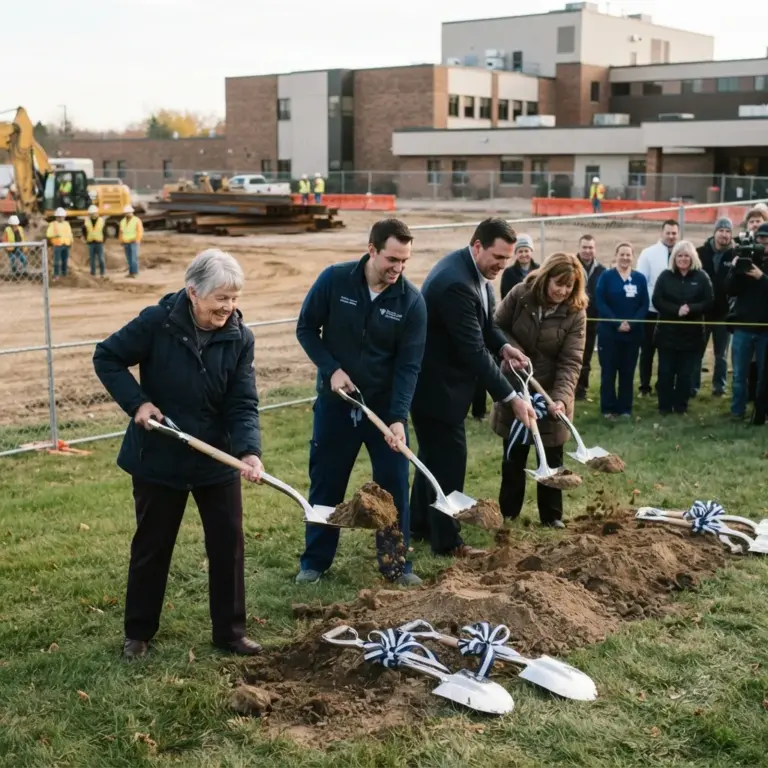

ThedaCare has officially broken ground on a sixteen million dollar expansion of its emergency room at the Medical Center in Waupaca, signaling a strong commitment to rural healthcare. While many small town hospitals across the country are currently struggling to keep their doors open, this investment aims to meet the demands of a growing local community and an increasing number of seasonal visitors. With an aging population relying more heavily on urgent medical services, officials say the upgrade is essential for maintaining public safety and accessibility.

Lynn Detterman, President of the North Region of Froedtert ThedaCare, noted that the current facility often reaches maximum capacity during the summer months, forcing staff to treat patients in waiting areas and other makeshift spaces. To solve this congestion, the new emergency wing will add ten thousand square feet to the building, marking a thirty percent increase in total size. This growth will allow the center to expand from eight treatment rooms up to twelve, ensuring there is ample space for patients along with their families and caregivers.

Beyond just adding beds, the renovation focuses on operational efficiency and comfort. A new ambulance bay will be constructed to handle larger modern vehicles while shielding arriving patients from harsh weather conditions. According to Jenny Derks, Vice President of ThedaCare Medical Centers for New London and Waupaca, these changes are designed to improve the overall flow of care through the department. Hospital staff also believe that creating a less cramped environment will boost morale among nurses and technicians, which directly correlates to higher quality patient outcomes.

This project represents only one part of a broader strategy by ThedaCare to modernize its presence in Waupaca over recent years. The organization has already introduced robotic surgery options, expanded behavioral health facilities, and recruited more primary care physicians into the region. Once construction is complete, residents can expect the upgraded emergency department to begin serving the community in early 2028.

The United Kingdom experienced a notable boost in economic momentum during the third quarter, with the economy expanding by 0.7 percent. This growth aligned perfectly with analyst expectations and marked a steady climb from earlier in the year. Much of this progress was fueled by a surging services sector, which managed to carry the weight of the broader economy even as construction contracted and production saw only marginal gains.

A significant catalyst for this upturn appears to be the rapid integration of artificial intelligence and cloud computing. According to the Office for National Statistics, information and communication industries were primary drivers of wealth creation, reflecting a wave of corporate investment in high tech infrastructure and programming. Suren Thiru of the Institute of Chartered Accountants described AI as an extra engine of growth that helped businesses bolster their resilience amidst global instability.

Government officials have welcomed the data as a sign of national strength. Finance Minister John Healey pointed to what he called stand out resilience in the face of international turmoil caused by the conflict between the U.S. and Iran, noting that current growth rates are among the strongest seen in nearly a decade outside of pandemic distortions. Prime Minister Andy Burnham echoed this sentiment, suggesting that these figures provide a renewed sense of hope for Britain’s financial future.

Despite the optimism, economists warn that significant challenges remain on the horizon. Persistent inflation and recent interest rate hikes from the Bank of England continue to put pressure on households and businesses alike. With markets anticipating further rate increases in December and ongoing geopolitical tensions weighing on investor confidence, experts suggest that while the U.K. is currently holding its own, its durability will be severely tested leading into next year.

Prospective homebuyers are retreating from the market in droves as a combination of soaring mortgage rates and stubborn inflation pushes home sales to their lowest point in sixteen years. New data from the National Association of Realtors shows that existing home sales plummeted to 3.75 million units in October, marking an 8.8 percent drop compared to last year. While prices remained relatively resilient with a median sale price of 416,700 dollars, the volume of transactions cratered across the Midwest, South, and West.

The sudden chill in the market comes after a brief window of optimism where rates had dipped below six percent earlier in 2026. However, geopolitical instability surrounding the war in Iran and spiking inflation have sent those numbers climbing once again. The standard 30 year fixed mortgage rate is now hovering around 7.18 percent, creating a financial barrier for many who remember the era of three percent loans during the pandemic. Lawrence Yun, chief economist at the NAR, noted that buying a home has become incredibly difficult given these historic highs.

This downturn is closely tied to recent moves by the Federal Reserve, which raised interest rates in September for the first time since 2023 to fight overheating inflation. With another hike likely next month, analysts worry that affordability will continue to slide further into crisis mode. This economic pressure was felt deeply during the recent midterm elections, contributing to a Democratic victory in Congress as voters expressed frustration over stagnant home ownership and rents that are growing faster than general inflation.

Despite the grim statistics and record lows in pending contracts, some experts believe this slump is temporary rather than a permanent shift in behavior. Danielle Hale of Realtor.com suggests that current figures reflect a perfect storm involving seasonal slowdowns and political uncertainty leading up to an election cycle. For now, however, millions of Americans remain locked out of the dream of home ownership as they wait for a more stable financial horizon.