
Archive

November 5, 2026

Browsing

Shares of German defense powerhouse Rheinmetall took a sharp dive on Thursday, plummeting up to 16 percent after the company slashed its long term financial outlook. This latest downturn comes as the firm struggles with persistent delays in military contracts and hurdles in delivering critical ammunition. It is the second time since August that the manufacturer has had to walk back its expectations, following a major blow when Germany abandoned plans for a massive warship project that would have represented the company’s largest order since the end of World War II.

The revised projections paint a more cautious picture for 2026, with anticipated sales dropping to roughly 13.2 billion euros, well below previous estimates that topped out at 14.2 billion euros. Company officials pointed specifically to setbacks in artillery ammunition testing and scheduling issues surrounding the Arminius Boxer project, which is now not expected to be commissioned until next year. These operational hiccups have shaken investor confidence, adding to a difficult year where shares have already fallen about 35 percent despite a period of explosive growth fueled by Europe’s response to the invasion of Ukraine.

Despite these forward looking worries, the company’s current books actually show significant strength. Third quarter sales surged by 32 percent compared to last year, while operating profits jumped by an impressive 62 percent. With a staggering backlog of orders totaling 78 billion euros, Rheinmetall remains fundamentally busy, but market analysts warn that timing is everything. Experts from RBC suggested this volatility might feed into a larger industry debate regarding whether traditional hardware giants can keep pace with newer defense technologies during periods of geopolitical instability.
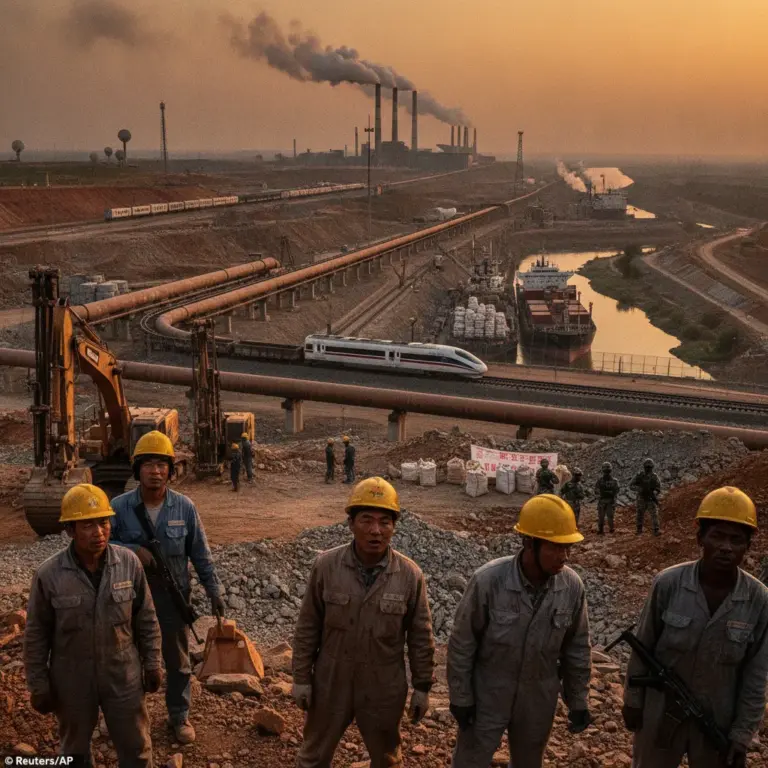

For decades, China has quietly built an iron grip on the global supply of critical minerals, leaving the West in a precarious position. From semiconductors and defense systems to electric vehicle batteries, the modern economy runs on materials that Beijing can effectively weaponize through periodic export controls. While Washington and various European capitals have recently woken up to this danger, their current strategy focuses heavily on building refineries and processing plants. While improving midstream capacity is a necessary step toward independence, experts warn that it is merely a temporary bandage if there are no raw materials to feed those factories.

The real challenge lies in the grueling timeline of mining. Opening a new mine typically takes around twenty years, meaning any security sought for the 2040s must be invested today. Japan provides a sobering cautionary tale here; despite fifteen years of aggressive effort to decouple from Chinese rare earths, they have only managed to reduce their dependence from ninety percent down to roughly sixty five percent. For the United States and its G7 allies, simply refining existing ore isn’t enough. They need a steady pipeline of new discoveries transformed into working mines, yet they are failing at the most critical juncture of development.

This failure happens in what industry insiders call the valley of death. Western firms actually lead the world in early stage mineral exploration, but once a promising deposit is found, funding tends to dry up. Small exploration companies known as juniors can find seed money for prospecting, but they struggle to afford the tens of millions required for feasibility studies and permits. Commercial banks view these projects as too risky without collateral, and giant mining corporations are too beholden to shareholders demanding immediate returns to gamble on long term developments.

Because Western capital disappears during this middle phase, Chinese firms have stepped in as the lender of last resort. By providing equity and infrastructure deals in mineral rich nations via initiatives like the Belt and Road, Beijing ensures that it captures the rewards of Western discovery. Essentially, China maintains its dominance not necessarily by being better at finding minerals, but by being the only entity willing to pay for them while they are still stuck in the valley of death. Until democratic allies embrace similar long term risk tolerance, they remain dependent on a competitor who views resource control as a primary tool of state power.

For nearly two years, the British government has leaned heavily on a staggering projection that artificial intelligence could inject 400 billion pounds into the national economy. This optimistic figure served as a convenient shield against public anxiety regarding mass job losses and economic instability brought on by automation. However, those claims have come under intense scrutiny following an admission from AI Minister Kanishka Narayan that the number originated from a report commissioned by Google rather than internal government analysis.

When pressed during a parliamentary session, Narayan revealed that the government’s own projections are far more modest, placing the potential gain between 55 billion and 140 billion pounds by 2030. With a central estimate of roughly 120 billion pounds, the official state forecast is less than a third of the figure previously touted to the public. Even so, the minister cautioned that these updated assessments remain hugely uncertain, suggesting that predicting the exact financial impact of such a volatile technology is an imprecise science at best.

Critics and lawmakers are now questioning why a corporate-funded study was treated as gospel across multiple administrations. Dame Chi Onwurah, chair of the Commons Science, Innovation and Technology Committee, warned that relying on such inflated figures creates a culture of hype that can ultimately undermine genuine digital transformation. Similarly, Lord Holmes of Richmond noted that robust data is essential when billions in taxpayer funding are at stake, expressing frustration that it took so long for officials to clarify where these numbers actually came from.

The discrepancy has sparked a broader debate about the influence of big tech companies on government policy. While PF Global, the consultancy firm that produced the original report for Google, suggests their initial high estimate reflected faster expected adoption rates, observers like Sumedha Deshmukh of the Ada Lovelace Institute argue this highlights a dangerous pattern. She suggested that precisely phrased economic gains often hide baked-in incentives from industry funders and urged the government to prioritize independent research over polished corporate presentations before building national strategy upon them.

American voters delivered a stinging rebuke to the expansion of artificial intelligence infrastructure in Tuesday’s midterm elections, rejecting data center proposals in a landslide across dozens of jurisdictions. In more than 40 races spanning 13 states, citizens pushed back against the massive facilities required to power modern AI, voting them down in 38 instances. The resistance manifested in various forms, ranging from six cities enacting total bans to another dozen imposing strict limits on energy consumption. This wave of opposition extended beyond ballot measures, claiming the careers of several high profile politicians who aligned themselves with Big Tech interests.

The most prominent casualty was Texas Governor Greg Abbott, who lost his bid for a fourth term by over 700,000 votes. Abbott had positioned Texas as the global epicenter of AI development and accepted millions in donations from industry insiders, but his efforts to appease a skeptical public via a superficial pause on new projects failed to convince voters. His opponent, Democratic governor elect Gina Hinojosa, successfully framed the issue as one of corporate greed versus community stability. Across the country, similar patterns emerged in places like Kentucky and Oklahoma, where incumbents were ousted or beaten by write in candidates simply for supporting hyperscale data projects.

Advocates for the movement argue that the perceived benefits of AI have not trickled down to local residents who instead face rising utility bills and environmental degradation. Michael Whitesides of Local Progress noted that many voters view these facilities as billionaire backed monstrosities that drain vital resources without improving daily life. From Emporia, Kansas, where tensions boiled over into arrests at city meetings, to Asheville and San Marcos, newly elected leaders are signaling a shift toward prioritizing local ecology and affordability over Silicon Valley’s appetite for land and electricity.

Even those with deep pockets found their influence limited on election night. Elon Musk spent hundreds of millions attempting to shape outcomes particularly in Texas where he has significant business interests tied to data growth. Following the defeat of his allies and the rejection of expansive infrastructure plans on the ground, Musk took to X late Tuesday night with a sarcastic admission that putting data centers in space was starting to look appealing. For now it seems American communities are drawing a hard line against the physical footprint of the AI revolution choosing their own landscapes over the needs of an algorithmic future.