Archive

November 8, 2026

Browsing

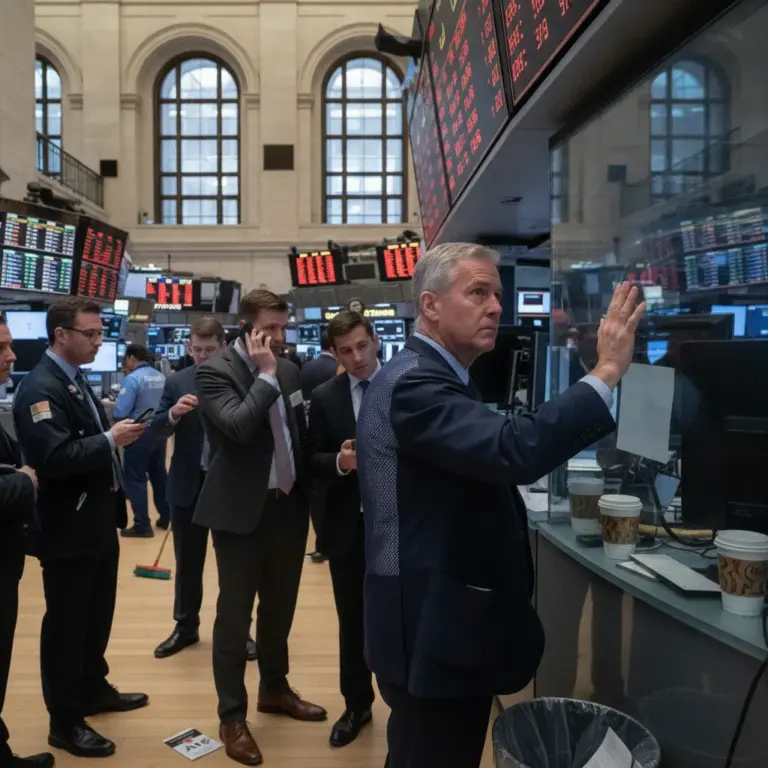
Wall Street experienced a jarring reversal this week as the tech heavy Nasdaq saw a staggering 2.5 trillion dollars vanish in a single day. While markets initially reacted with optimism toward the Democrats’ midterm victories, that mood soured quickly by Thursday. Investors began to fear that the new political landscape would bring tighter regulations and obstacles for the artificial intelligence sector, potentially stalling the massive infrastructure buildout that has driven growth for years.

Much of this anxiety stems from specific policy promises made during the campaign trail. In Texas, Governor elect Gina Hinojosa signaled her intent to temporarily halt new data center construction and roll back tax incentives for tech firms. Such moves have sent ripples through the investment community, raising questions about whether the unchecked expansion of AI hardware will face significant legislative headwinds across various states.

However, analysts suggest that politics was only the catalyst for a much deeper systemic issue involving excessive debt. Many hedge funds had borrowed heavily to amplify their bets on the AI boom using high levels of leverage. When prices started to dip due to political uncertainty, these investors faced urgent margin calls from lenders demanding more collateral. This forced them to sell off large chunks of their holdings regardless of price, creating a feedback loop where selling triggered further price drops and subsequent liquidations.

Despite the carnage, some experts believe this volatility is more about financial overextension than a fundamental collapse of technology values. Jamie Cox of Harris Financial Group noted that while those who got too far over their skis are currently suffering, the long term trajectory remains intact as companies look to optimize existing facilities. Still, the episode serves as a stark reminder that when an entire sector is built on borrowed money, even a small crack in confidence can lead to a landslide loss in value.
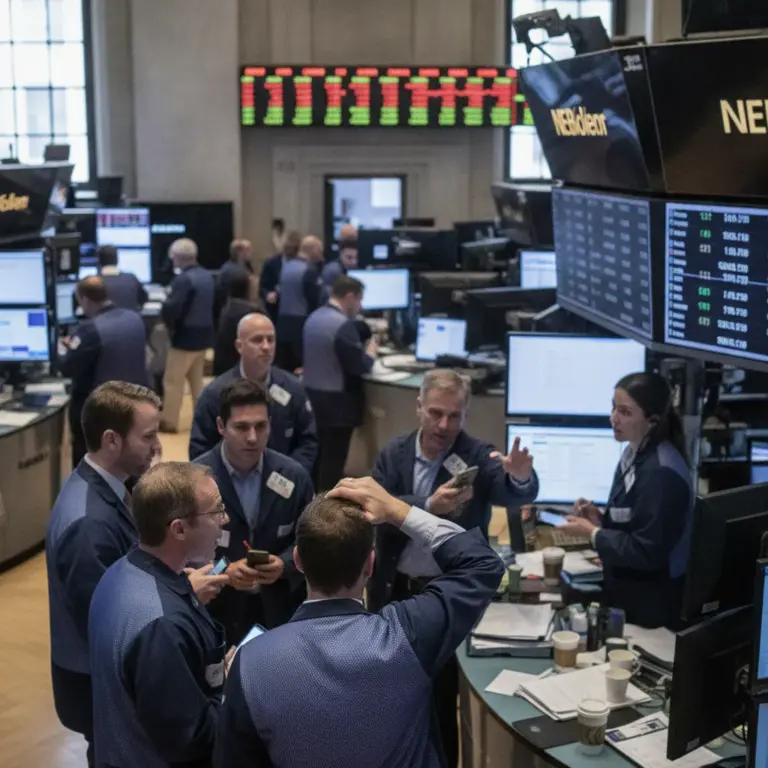
Wall Street ended a turbulent week on a tentative note Friday as investors attempted to recover from a severe sell off earlier in the session. The tech heavy Nasdaq Composite led the charge, climbing 1.1 percent to finish at 24,579. While the gain represented a welcome bounce back for growth stocks, it was not enough to offset a bruising week that left the index down 3.4 percent overall and remaining in correction territory. Other major indices struggled to find similar momentum, with the S&P 500 edging up slightly while the Dow Jones Industrial Average dipped further, capping a losing week for blue chip stocks.

The recovery effort was fueled by rebounds in semiconductor giants like Nvidia and Micron Technology, both of which saw gains after being hammered on Thursday due to political concerns surrounding data center infrastructure. However, these gains were tempered by news that Microsoft may reduce its reliance on certain high performance cloud providers used for artificial intelligence workloads. Outside of technology, corporate earnings created a stark divide in performance. Airbnb soared nearly 12 percent after delivering an impressive quarterly beat that highlighted strong revenue growth and rapid innovation. In contrast, DraftKings suffered its worst single day since late 2022, plummeting over 21 percent after missing financial targets and slashing its full year outlook.

On the macroeconomic front, fresh labor data provided a surprising boost to confidence as the U.S. economy added 165,000 jobs in October, far exceeding forecasts. With unemployment dipping to 4.1 percent, economists suggest the Federal Reserve now has more breathing room regarding employment stability, even as AI continues to disrupt specific white collar sectors. Despite the strong jobs report, traders remain anxious about future interest rate moves ahead of next Tuesday’s Consumer Price Index report. Current bets suggest a high probability of a December rate hike unless upcoming inflation data shows a significant cooling trend toward the central bank’s long term goals.

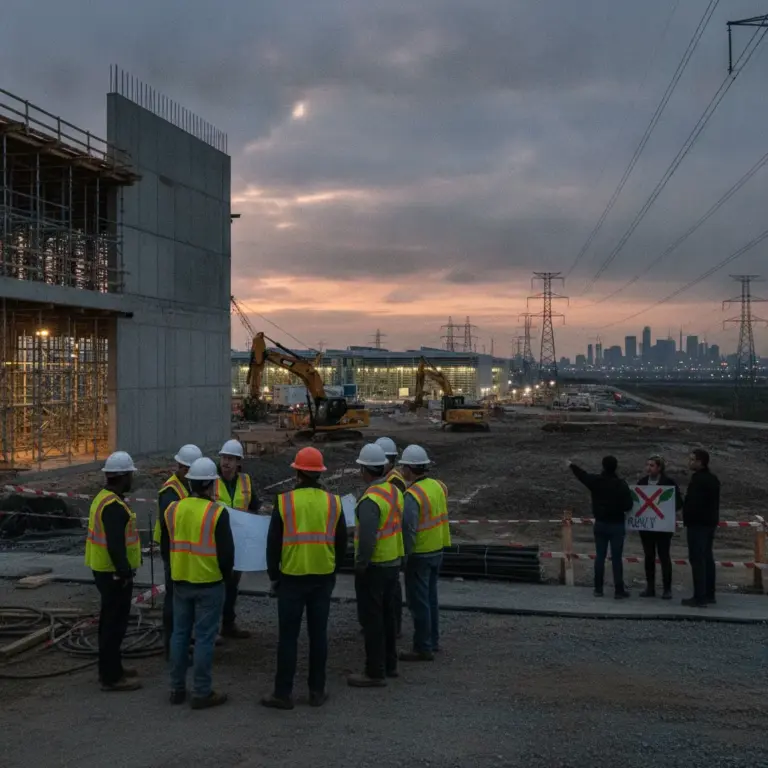
Across the United States, massive data centers are becoming increasingly polarizing landmarks. While local communities often fight their arrival due to environmental and zoning concerns, economists warn that stalling these projects could trigger a significant ripple effect throughout the national economy. A staggering amount of capital is currently fueling this expansion, with federal researchers suggesting that spending on AI infrastructure and power facilities accounted for nearly twenty percent of the U.S. gross domestic product last year.

Industry giants like Microsoft, Amazon, Meta, and Alphabet are leading a frantic race to scale their operations, with planned investments expected to climb toward one trillion dollars by 2027. However, this momentum faces two primary threats: growing political resistance following recent midterm elections and a looming question regarding profitability. Some experts argue that while slowing down construction might satisfy public outcry, it risks crippling the very engine driving current business investment and stock market gains.

Financial analysts express concern that the astronomical costs required to maintain this pace may eventually outstrip the actual revenue generated by AI services. If companies cannot prove that these facilities lead to tangible productivity gains soon, they may be forced to slash capital expenditures. Such a pivot wouldn’t just affect tech firms; it could dampen overall GDP growth and erase billions in perceived wealth for investors who have seen their portfolios soar alongside the S&P 500.

Ultimately, much of today’s consumer spending is being propped up by a wealth effect tied directly to AI optimism. Should investor confidence waver or regulatory hurdles become too steep, a correction in equity prices could transform what is currently an economic catalyst into a substantial drag on growth. For now, the U.S. remains heavily leveraged on the belief that artificial intelligence will create unprecedented riches, leaving policymakers caught between community pushback and macroeconomic stability.

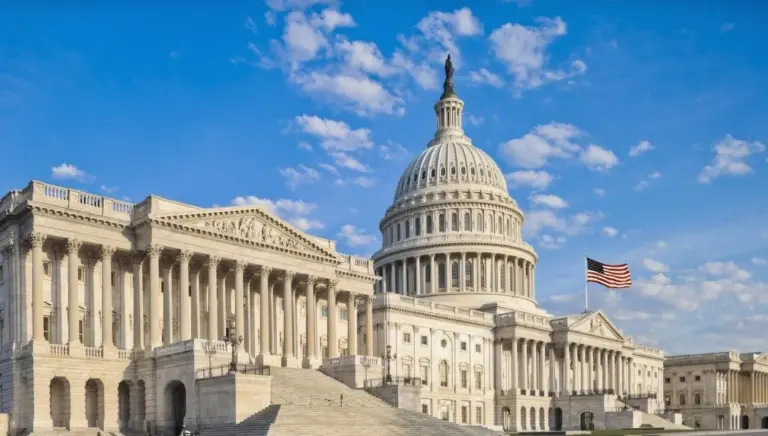
Wall Street experienced a whirlwind of emotions following the midterm elections, where voters handed Democrats control of both the House and the Senate. While the initial reaction was positive, sending the Dow to its largest daily gain of the year, the optimism evaporated quickly. By November 5, investor nerves frayed and the tech-heavy indices plummeted as fears mounted over potential regulatory crackdowns on artificial intelligence infrastructure. This sudden spike in volatility left many wondering if the usual political playbook still applies to a modern economy dominated by silicon and software.

Historically, however, there is plenty of reason for confidence. Over the last eighty years, the S&P 500 has risen in every single twelve month period following a midterm election since 1946. Interestingly, whether government is unified or divided seems to matter very little to the bottom line, with average gains hovering around fourteen percent regardless of who holds power. In fact, the specific scenario we face now—a Republican president paired with a Democratic Congress—has actually yielded an even higher historical average return of sixteen percent, largely because legislative gridlock often prevents drastic policy shocks that spook markets.

Despite these comforting statistics, current market dynamics introduce a wild card that didn’t exist in previous decades. Artificial intelligence firms now comprise more than thirty percent of the S&P 500, making the broader market hypersensitive to sector-specific regulations. There are growing concerns that Democrats may target the massive amounts of electricity and water consumed by data centers, potentially slowing expansion through aggressive committee hearings and stricter permitting processes. This explains why tech trusts have seen significant declines recently while more traditional industrial stocks have remained relatively stable.

Ultimately, analysts suggest that macro fundamentals like GDP growth and Federal Reserve interest rates will carry more weight than ballot boxes over the long term. Investors should keep a close eye on upcoming corporate earnings reports and congressional appointments to see if cloud giants maintain their spending levels or pull back in anticipation of new rules. If volatility subsides soon, this recent dip may be viewed simply as a brief repricing event rather than a fundamental shift in fortunes for American equities.