
Archive

November 14, 2026

Browsing

Many investors believe they are safe from the volatility of individual stocks if they avoid buying shares directly, but the recent collapse of Nvidia proves otherwise. Because the chipmaking giant is a massive component of major benchmarks like the S&P 500 and the Nasdaq 100, its fortunes are inextricably linked to millions of employer sponsored retirement plans. With nearly 97 percent of retirement plans now offering index funds, most workers find themselves indirectly exposed to Nvidia regardless of whether they ever intentionally invested in the company.

The current crisis was sparked by shocking revelations regarding cofounder Jensen Huang, whose resignation as CEO followed reports of an extramarital affair with a suspected Chinese spy. This leadership vacuum sent shockwaves through the market, erasing more than 550 billion dollars in company value in just one week. For those holding broad ETFs like SPY or VOO, this dip creates a tangible drag on their balances since Nvidia makes up roughly six percent of the S&P 500, ranking it as one of the index’s largest holdings.

Financial experts warn that this situation exposes a fragile reality within the Magnificent Seven tech giants. Professor Shiva Rajgopal of Columbia Business School notes that while these companies create immense wealth, they often rely heavily on charismatic leaders who become synonymous with the brand’s success. When a figurehead like Huang falls, the fallout spills over rapidly into the stock price, reminding investors that extreme growth often comes with concentrated risk.

Despite the drama, there is a silver lining for those using diversified strategies. Even with Nvidia’s steep decline, the S&P 500 actually posted a weekly gain thanks to strength in other sectors. Experts suggest that instead of panic selling during temporary fluctuations, investors should trust the fundamental purpose of diversification. Since Nvidia’s hardware remains essential to the global AI infrastructure, many analysts argue that the long term value lies in the technology itself rather than any single executive’s tenure.
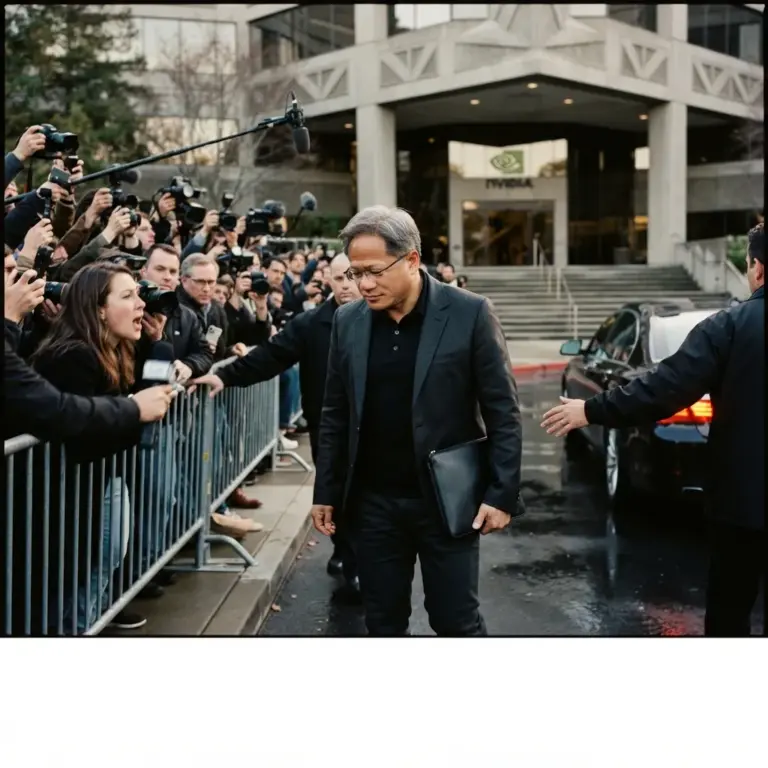
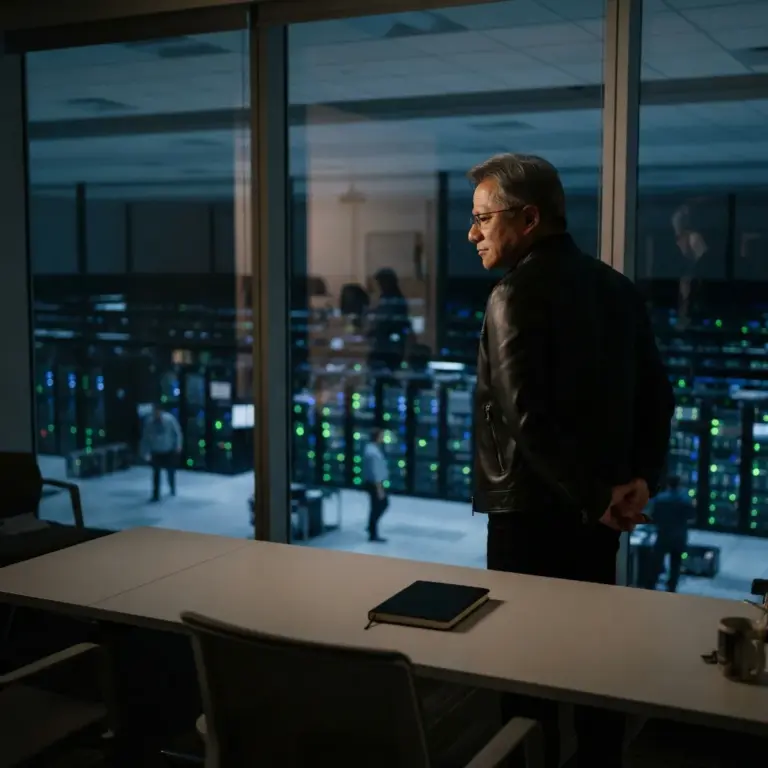
The artificial intelligence revolution has always felt less like a corporate climb and more like a kingdom governed by Jensen Huang. For years, the Nvidia chief served as both the technical mastermind and the industry’s unofficial central banker, weaving a complex web of financing and partnerships that pushed the entire sector forward. Now, following his abrupt resignation amid scandals involving personal misconduct and concerns over foreign intelligence targets, the industry finds itself staring into a massive vacuum. While Nvidia continues to produce the chips that power today’s leading models, the loss of Huang removes the singular animating force that turned hardware sales into a global financial engine.

Huang did far more than sell graphics processing units; he engineered a system of circular financing that acted as a safety net for the AI boom. By investing in startups and providing revenue guarantees for neocloud providers like CoreWeave, he ensured that his customers had the capital necessary to keep buying his products. This aggressive strategy extended to staggering sums, including a promised 105 billion dollars for an OpenAI data center and efforts to mobilize half a trillion dollars by convincing major financial institutions to treat AI infrastructure as a legitimate asset class. With Huang gone, these fragile high-stakes agreements now face intense scrutiny and potential collapse.

The immediate fallout creates a precarious moment for smaller players who relied on Huang’s personal seal of approval to maintain investor confidence. In several instances, a few optimistic words from Huang were enough to stop stock slides and stabilize bond yields. CFO Colette Kress has stepped in as interim CEO to steady the ship, but analysts warn that managing balance sheets is not the same as possessing Huang’s rare blend of technological foresight and dealmaking aggression. As competitors like AMD and Broadcom circle, Nvidia must figure out how to remain the axis of the AI universe without its most powerful orbit.

Ultimately, the crisis exposes how dependent the current economic surge has been on one man’s willpower and reputation. While existing contracts should prevent an overnight crash, the long-term trajectory of AI expansion may slow as the era of creative vendor financing fades. The industry now waits to see if giants like Amazon or Google will step up to fill the role of capital allocator, or if the ecosystem Huang meticulously crafted will begin to fracture under the weight of its own ambition.

The sudden departure of Jensen Huang from his role as chief executive officer has sent shockwaves through a global market that had come to view him as the steady hand guiding the artificial intelligence revolution. For years, Nvidia was more than just a chipmaker; it served as the foundational infrastructure upon which almost every major AI breakthrough was built. With Huang stepping down amidst a whirlwind of internal turmoil, investors and competitors alike are left wondering if the company can maintain its dominance without its visionary leader at the helm.

This leadership vacuum comes at a precarious time for an industry already struggling with extreme volatility and unsustainable valuations. Because so many startups and tech giants rely exclusively on Nvidia’s hardware to power their large language models, any instability within the firm creates a ripple effect across the entire ecosystem. Industry analysts worry that this period of chaos could slow down production cycles or lead to strategic pivots that leave current clients stranded during a critical growth phase.

As Nvidia attempts to navigate this transition, the broader AI sector is facing a reckoning over its dependence on a single provider. While some see this as an opportunity for rivals like AMD or Intel to seize market share, others fear that losing Huang’s specific brand of aggressive innovation could stall the pace of progress for generative AI globally. For now, the eyes of Wall Street remain fixed on who will step into the void and whether they can keep the engine of the AI economy running at full speed.

The sudden resignation of Jensen Huang from Nvidia has sent shockwaves through both Silicon Valley and the halls of power in Washington, marking a dramatic end for the leather jacket clad visionary who built the world’s most pivotal chipmaking empire. Huang stepped down on Thursday following explosive allegations that he engaged in an affair with Alice Huang, an executive at the Singaporean firm Megaspeed who is suspected of being a Chinese spy. While the corporate transition sees Colette Kress stepping in as interim chief, the political storm surrounding the former CEO is only just beginning to intensify.

Lawmakers on both sides of the aisle are now scrambling to determine if this personal entanglement compromised U.S. artificial intelligence dominance or leaked critical national security secrets. Republicans, currently holding control of Congress for a few remaining weeks, have moved quickly to summon Huang to Capitol Hill, with Senate Banking Committee Chair Tim Scott threatening subpoenas to ensure the ex-CEO provides answers regarding protected technology. The scrutiny extends beyond Huang himself, reaching deep into the Trump administration as questions arise about why Commerce Secretary Howard Lutnick may have stalled crackdowns on firms smuggling Nvidia chips into China.

The timing of the scandal creates a volatile political landscape, as Democrats prepare to seize control of the House and Senate in January. Figures like Senator Elizabeth Warren and Minority Leader Chuck Schumer are already signaling that Nvidia will be a primary target for oversight once they take power. They are demanding full transparency concerning export control compliance and have ordered federal officials to preserve all communications related to advanced AI shipments destined for China or diverted entities.

As the legal pressure mounts, Huang appears to be coordinating his initial responses with House committees led by Representative Brian Mast, including panels focused on intelligence and China relations. These upcoming testimonies, conducted under oath, aim to uncover whether the intimacy between a titan of industry and an alleged foreign agent created a backdoor for adversaries to bypass strict trade restrictions. For now, what began as a tabloid scandal has evolved into a sweeping probe into the intersection of private profit and global security.