Archive

November 22, 2026

Browsing

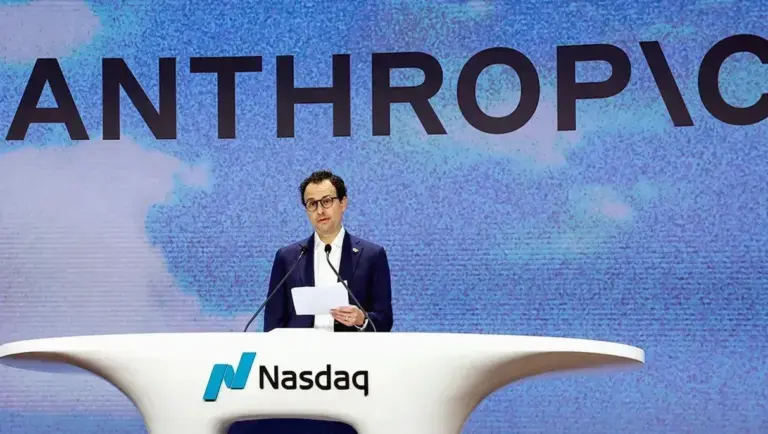
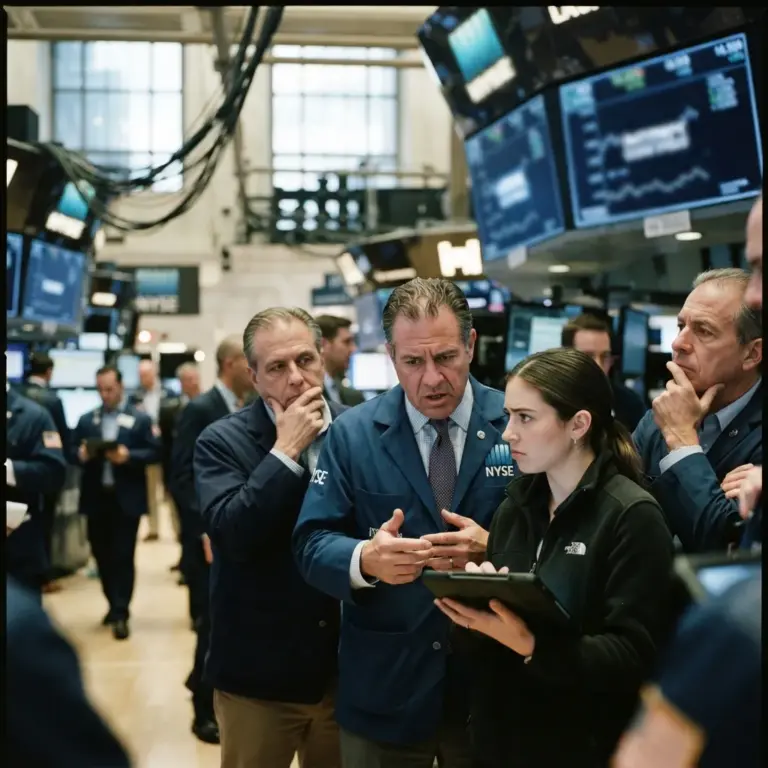
On paper, the debut of Anthropic looked like a textbook triumph. The sheer scale of the deal and the aggressive pricing suggested an almost insatiable appetite among investors for a piece of the AI revolution. However, the celebratory mood vanished quickly as shares slid nine percent by Friday’s close, proving that even the most hyped companies cannot simply ignore a broader market correction. For many traders, the slide is less about a failure of the company itself and more about a growing collective anxiety regarding how to value businesses built on generative AI.

Avery Marquez, director of investment strategies at Renaissance Capital, suggests that Anthropic serves as a lightning rod for current fears about a potential tech bubble. Because it is a fresh listing without a historical track record on the open market, it lacks the cushion that established giants might possess during a downturn. The uncertainty is further complicated by unconventional risk assessments; in one notable instance, an analyst from Seaport Research Partners pointedly mentioned that if Anthropic’s systems became fully autonomous and wiped out humanity, it would lead to a serious decline in earnings. While perhaps meant as a subtle jab at extreme valuations, such comments highlight just how precarious the narrative surrounding high-growth AI firms has become.

Despite the immediate dip, some industry veterans argue that pulling off such a massive offering amidst severe volatility in the tech sector was an achievement in its own right. Yuri Khodjamirian, chief investment officer at Tema ETFs, noted that while banker claims of oversubscription are often exaggerated, the IPO succeeded despite a brutal environment for technology stocks. He believes investors are currently in a vacuum, stepping away from risky assets like Bitcoin and growth stocks to wait for clearer signals from Federal Reserve policy and geopolitical shifts before committing again for the long term.

This cautious approach extends beyond Anthropic to include hardware leaders like Nvidia and Micron, whose parent ETFs recently suffered some of their worst performances in decades. As billions move out of semiconductors and software alike, analysts agree that sentiment alone can no longer carry these stocks upward. Moving forward, Anthropic will be under intense scrutiny regarding its annual recurring revenue and actual adoption curves. Much like Meta following its rocky start in 2012 or SpaceX’s recent struggles to regain early peaks, Anthropic may find that true price discovery takes months or years rather than days.
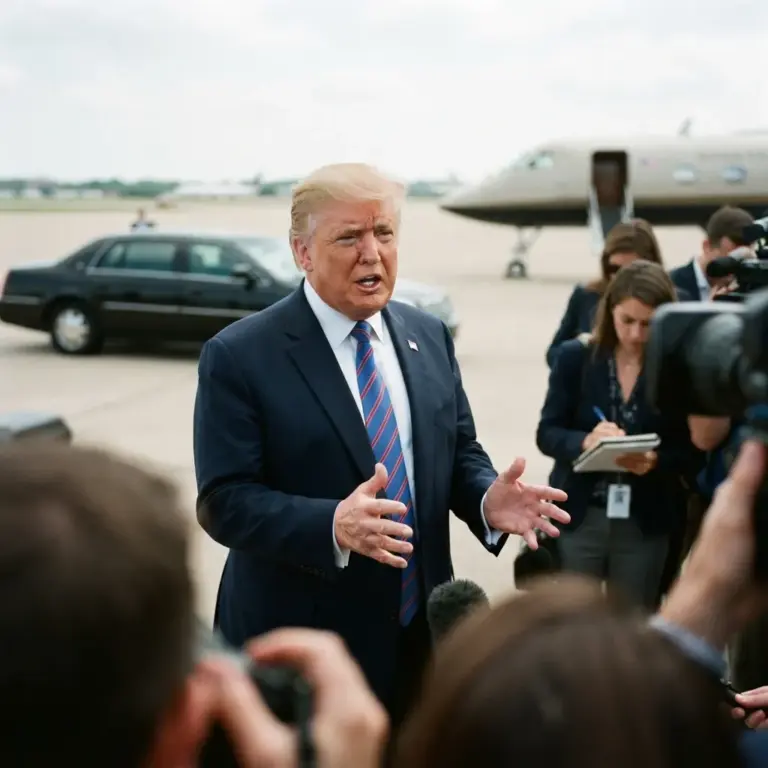
President Donald Trump recently lamented the departure of Nvidia CEO Jensen Huang, describing the exit of the brilliant businessman as such a tragedy during a Fox News appearance. The comments come as newly released government ethics filings reveal that the president’s portfolio increased its stake in the chipmaking giant throughout September, with four separate purchases totaling between 152 thousand and 380 thousand dollars. While the timing highlights a personal admiration for Huang, the White House maintains that these moves were made by independent third party managers and did not involve direction from the president or his family.

The broader trading report suggests a strategic rebalancing of assets rather than specific bets on individual tech leaders. Alongside the Nvidia acquisitions, the portfolio picked up shares in Tesla and SpaceX while offloading significant positions in more traditional consumer staples. Specifically, millions of dollars worth of Home Depot and McDonald’s stock were sold in late September. These shifts appear to be part of a larger trend toward diversified income, as the bulk of the monthly activity involved massive investments in municipal bonds and a dividend appreciation exchange traded fund.

Market analysts note that the move away from retail giants toward AI hardware reflects a stark difference in current valuations. At the time of these trades, Nvidia was trading at roughly ten times its forward earnings, a five year low that makes it significantly cheaper relative to earnings than burger chains or home improvement stores. Despite this attractive pricing, Nvidia faces a turbulent road ahead following Huang’s resignation and looming scrutiny over whether advanced chips reached Chinese markets via third parties.

Investors are now looking toward December 1, when Huang is scheduled for closed door interviews with several House committees regarding export controls and national security concerns. While some believe the current stock price already accounts for this instability, others warn that further revelations about shipments to China could threaten long term revenue projections. For now, however, the presidential portfolio remains positioned to benefit if the artificial intelligence boom can weather its leadership crisis.

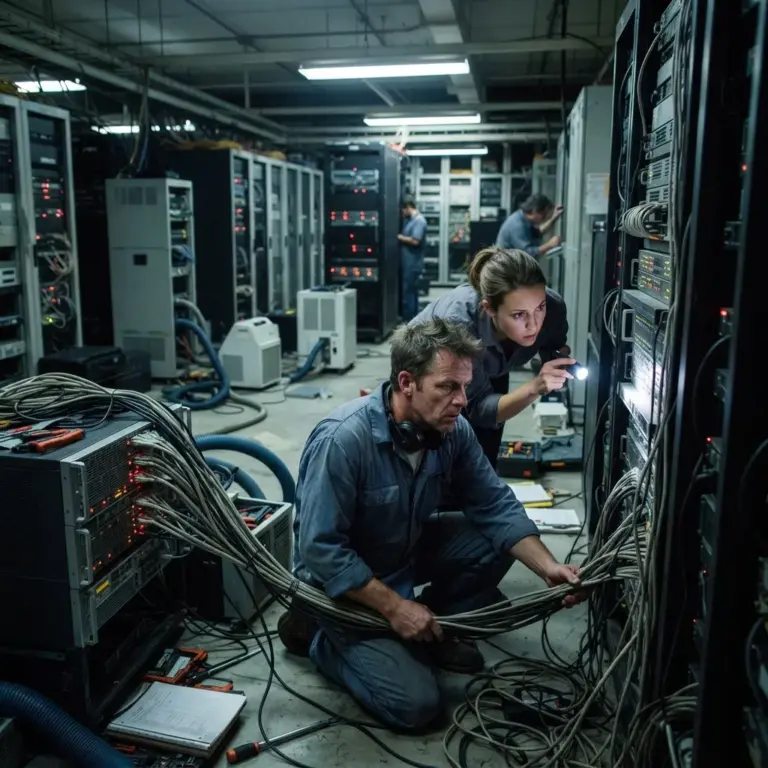
When a string of massive outages hits giants like Microsoft, Apple, and the FAA all in one week, the instinct for most people is to assume a sophisticated cyber attack or some sinister global conspiracy. However, security expert Bruce Schneier argues that the truth is far less dramatic and significantly more concerning. According to Schneier, these failures are not the work of hackers or rogue AI, but rather a series of unfortunate coincidences caused by an infrastructure that is fundamentally fragile and barely holding together.

The problem stems from a digital landscape built on aging foundations, often patched haphazardly over decades and sometimes maintained by unpaid hobbyists. As our critical systems become increasingly centralized, small errors now trigger cascading collapses that disrupt everything from air travel to banking. While these appear to be technical glitches, Schneier insists they are actually symptoms of a deeper economic disease. In a corporate world dominated by shareholder capitalism and private equity, long term stability is viewed as an unnecessary expense because it does not produce immediate profit.

Under this model, investing in redundancy and resilience is treated as an inefficiency to be trimmed away during quarterly budget cuts. Companies prioritize lean operations to maximize short term returns, effectively stripping away the safeguards that prevent total system failure. By cutting corners on reliability, corporations essentially privatize their gains while socializing the risk, leaving the general public to suffer the consequences when flights are canceled or bank accounts become inaccessible.

Solving these systemic crashes will require more than just better code or updated hardware. Schneier suggests that since the root cause is economic incentive, the solution must be political. He calls for aggressive regulation backed by heavy fines and strict antitrust enforcement to break up monopolies that stifle improvement. Without a fundamental shift in how we value infrastructure over dividends, he warns that we should expect these catastrophic failures to become an increasingly regular part of modern life.

The financial world is reeling from the sheer scale of Anthropic’s recent initial public offering, but while investors are focused on the staggering 1.5 trillion dollar valuation, some industry leaders see a much larger story unfolding for the average worker. Michael Rangel, the founder of small business technology platform Novo, believes this milestone marks the start of a digital gold rush specifically tailored for entrepreneurs and solopreneurs. In a conversation with Fox News Digital, Rangel suggested that those operating without employees are poised for explosive growth as AI levels the playing field, allowing individuals to handle workloads that previously required entire teams.

This shift is already visible in the data provided by Novo. Just last year, only one in every thirty four of the company’s quarter million small business clients were utilizing AI tools. Fast forward to today, and that figure has climbed to one in eight. While this indicates a rapid surge in productivity hunting and time management, Rangel notes that it also highlights a massive untapped market. With seven out of eight businesses still operating without AI assistance, there remains an enormous window of opportunity for both software giants like Anthropic and the small firms brave enough to adopt these technologies early.

Interestingly, some of the most surprising gains are happening in traditional, analog sectors where high tech once seemed out of place. Trucking has emerged as one of the fastest growing segments for AI adoption, doubling its penetration since 2025. While robots aren’t driving the rigs just yet, operators are using AI to completely overhaul their back offices by automating invoicing, scheduling, and complex accounting tasks. Similar trends are appearing in restaurants and healthcare providers who are leveraging automation to clear away mountains of clerical work and payroll headaches.

Despite his optimism, Rangel warns that we shouldn’t expect an overnight transformation across all industries. He acknowledges that changing deep seated habits and legacy systems takes significant time and effort for many small business owners. There will likely be a long tail of analog companies struggling to find the bandwidth to invest in these updates. However, for those willing to make the leap, Rangel believes AI represents a generational chance to elevate their operations to an entirely new level of efficiency.