Archive

November 18, 2026

Browsing

When a banking crisis hits, the Federal Reserve acts as the lender of last resort, providing essential lifelines to keep financial institutions afloat. However, for many banks, taking that help comes with a psychological price known as stigma. There is a long standing fear that borrowing from the central bank serves as a public admission of weakness, signaling to the stock market that a bank is in deeper trouble than it lets on. This creates a dangerous paradox where banks might avoid necessary funding to protect their stock price, potentially worsening a systemic collapse.

A recent study by Natalia Fischl Lanzoni, Martin Hiti, and Asani Sarkar suggests that not all Fed loans are created equal in the eyes of investors. By analyzing the chaos of the 2023 bank runs, researchers found a stark difference between how the market reacted to two different lending tools. When banks turned to the traditional Discount Window for short term loans, investors quickly became more sensitive to that bank’s vulnerabilities, specifically regarding their capital strength and reliance on uninsured deposits. Essentially, using the Discount Window acted as a red flag that alerted shareholders to look closer at a bank’s flaws.

Interestingly, this negative reaction disappeared when banks utilized the newer Bank Term Funding Program introduced during the height of the 2023 turmoil. Unlike the old system, borrowing through this specific program did not seem to trigger an increase in investor anxiety or heighten suspicions about a bank’s stability. While both programs offer anonymity for two years, the nature of the BTFP seemed to neutralize the usual social cost associated with seeking emergency aid.

These findings suggest that while stigma still haunts traditional Fed facilities, carefully designed policy interventions can bypass these market biases. For regulators and policymakers, this implies that creating specialized windows for liquidity can encourage struggling banks to seek help without fearing a sudden crash in their share price. By removing the perceived shame of borrowing, the Federal Reserve can more effectively stabilize the economy during times of panic without inadvertently triggering further sell offs by nervous investors.

While most dividend hunters have grown accustomed to receiving checks four times a year, Main Street Capital is offering a far more frequent reward system. The business development company operates on a unique payout schedule that delivers funds sixteen times annually. By combining a reliable monthly distribution with additional supplemental payments every quarter, the firm creates a consistent flow of cash that appeals to investors looking for steady passive income rather than sporadic windfalls.

The financial mechanics behind this strategy rely on two different tiers of payment. On the baseline level, shareholders receive a regular monthly dividend that has remained resilient since the company went public in 2007. This core payment provides a stable foundation and has seen several increases recently, reflecting the company’s growth. Layered on top of that is a supplemental quarterly dividend which pushes the overall annual yield toward the eight percent mark. While these extra payments are subject to change based on market health, they have been consistently declared for over five years.

For someone putting their money into action today, the math becomes quite tangible. A twenty five thousand dollar investment would secure roughly 446 shares at current prices. In practical terms, this translates to about 120 dollars landing in an account every single month from the regular distributions. When you factor in those larger quarterly bonuses, the effective average jumps to approximately 165 dollars per month throughout the year.

Ultimately, Main Street Capital represents an interesting hybrid for those tired of waiting months between payouts. Because the base income tends to trend upward and the supplemental checks provide periodic boosts, it functions as both a predictable salary replacement and a performance bonus. For investors prioritizing immediate liquidity and frequent deposits, this unconventional calendar turns traditional investing on its head.

Federal Reserve Chairman Kevin Warsh believes the American economy has reached a critical hinge point as artificial intelligence begins to permeate every sector of industry. Speaking at a recent conference in San Francisco, Warsh signaled that the central bank is actively preparing for an economic shift that could mirror the disruptive nature of the China shock from decades ago. While that previous era decimated manufacturing jobs while lowering the cost of consumer goods, Warsh suggests AI could trigger a similar phenomenon within the service sector, potentially slashing costs for legal and administrative work while displacing millions of white collar employees.

The urgency of this transition is reflected in the dizzying pace of the tech market, highlighted by Anthropic’s imminent multi billion dollar public offering. This surge in corporate spending is creating a complex dilemma for the Fed, which is currently weighing whether to hike interest rates in December to cool an overheating tech sector. At the same time, political headwinds are mounting as voters increasingly push back against the expansion of data centers, adding a layer of regulatory uncertainty to an already volatile landscape.

In a departure from traditional Federal Reserve culture, Warsh is bypassing some of his internal phalanx of economists to seek guidance from external disruptors. By assembling a specialized task force featuring figures like venture capitalist Marc Andreessen, Warsh is attempting to break through what he describes as an insular institutional mindset. These advisors are debating whether heavy government regulation will act as a buffer against mass unemployment or if a true free market approach will lead to rapid worker displacement.

Ultimately, these academic and entrepreneurial discussions must translate into concrete monetary policy. If AI successfully drives down the cost of services across the board, it could create long term disinflationary pressure that would allow the Fed to lower interest rates. However, until the task force delivers its formal findings and the Fed debates their implications, Warsh remains in a holding pattern, searching for clarity on how to steer the national economy through a technological revolution that refuses to wait for permission.

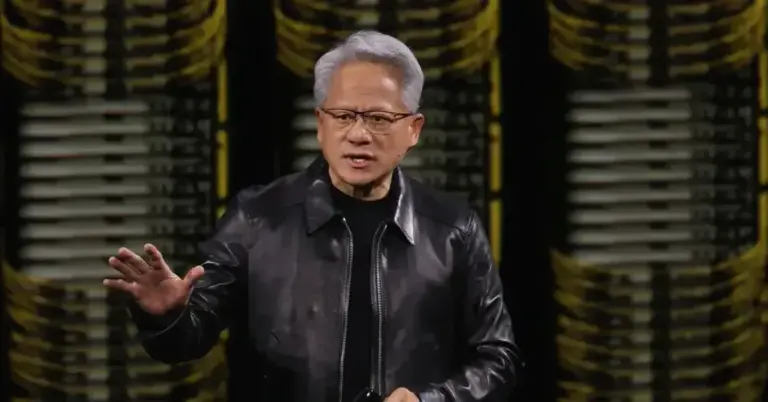
Jensen Huang has finally spoken out following his abrupt resignation from Nvidia, admitting that he failed to meet the company’s standards through serious personal mistakes. In a statement released Tuesday morning, the co-founder took full responsibility for the controversies surrounding his private life and expressed deep regret for the difficulties he caused the board. While acknowledging his errors, Huang left the door open for a comeback, stating he would be honored to resume his role as CEO if the board decided such a move served the best interests of shareholders, employees, and the country.

Despite this olive branch and a groundswell of public support, including a massive petition signed by thousands of employees and a nod of approval from President Trump, Nvidia’s leadership appears finished with Huang. Company Chair Harvey Jones clarified later Tuesday that there are no plans to rehire him. Instead, the board is actively searching for a permanent replacement among both internal and external candidates, though they expressed complete confidence in current interim leader Kress during this transition period.

The situation extends beyond workplace conduct into the realm of international espionage. Huang has agreed to testify before House lawmakers on December 1 regarding concerns that an affair with an alleged Chinese spy may have compromised national security. To manage these risks moving forward, Nvidia has established a new committee dedicated to overseeing national security policies and ensuring strict adherence to U.S. export controls.

Market analysts suggest that any hope of Huang’s return is likely misplaced. Dan Ives of Yorkville Ives & Co. noted that the board’s immediate focus on building compliance structures suggests they are moving past their former leader rather than planning his reinstatement. This instability has already taken a toll on investors, with Nvidia shares sliding further today and losing roughly 16 percent of their total value since the scandal first broke.