
Archive

November 25, 2026

Browsing

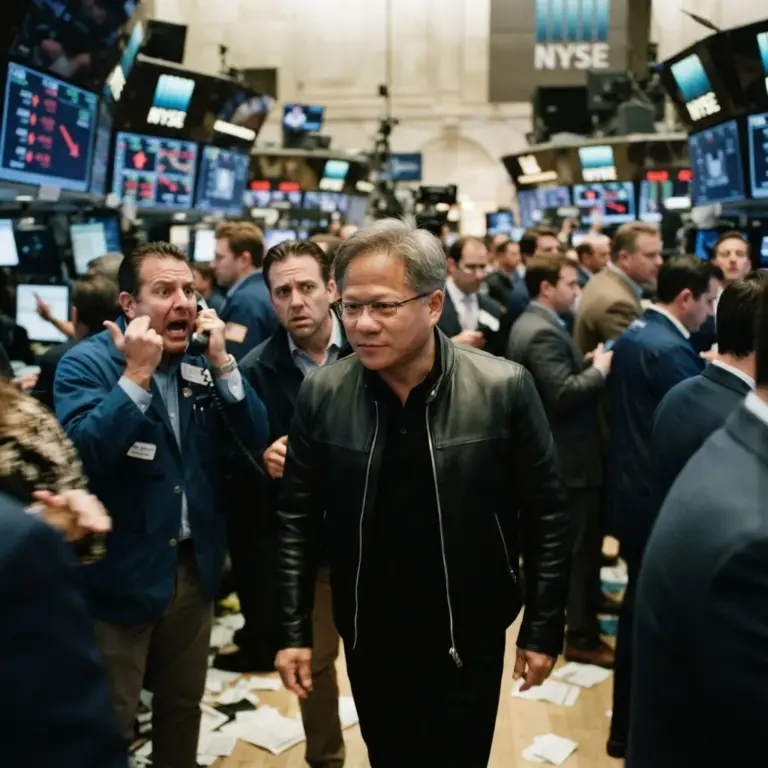
Wall Street experienced a sharp reversal today as technology shares slid following the surprising announcement that Jensen Huang has returned to lead Nvidia once again. While the return of such a visionary leader would typically be greeted with cheers from investors, the move seems to have triggered an immediate wave of uncertainty across the broader semiconductor sector. The sudden shift in leadership came amidst an already volatile climate, contributing to a wider tech sell off that pushed several major indices toward correction territory.

The dip reflects a complex mix of investor anxiety regarding future strategy and general instability within the artificial intelligence bubble. Analysts suggest that while Huang is credited with building Nvidia into a powerhouse, his reentry coincides with heightened fears about whether AI growth can sustain its current trajectory. This skepticism was further amplified by reports of systemic volatility and political uncertainty, leaving traders hesitant to bet on old guards even when they possess proven track records.

This market turbulence did not happen in isolation, as it coincided with other seismic shifts in the industry, including Anthropic’s massive two trillion dollar Nasdaq debut. As capital rotates between established giants and newcomers, the resulting friction has wiped billions in paper wealth off the boards in a matter of hours. Financial strategists note that we are seeing a moment of profound recalibration where even positive personnel news can be interpreted through a lens of risk rather than opportunity.
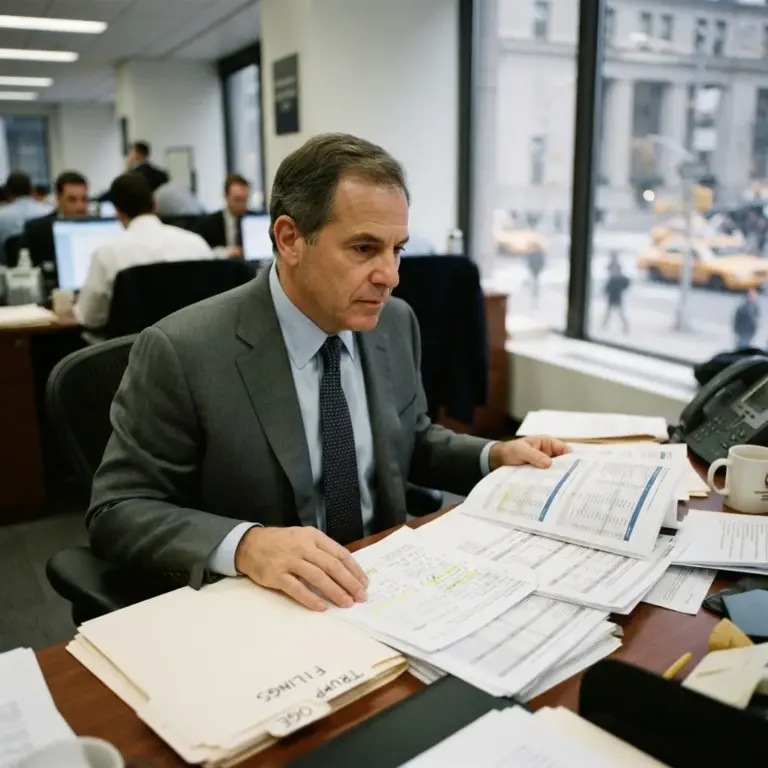
While President Donald Trump remains well known for his fondness for McDonald’s meals, his financial advisors seem less enthusiastic about the burger giant’s stock. According to recent filings with the U.S. Office of Government Ethics, the president’s independent investment team moved away from the fast food chain in September, selling off between one and five million dollars worth of shares. The move comes as McDonald’s struggles to balance rising operational costs caused by inflation against the risk of alienating its core budget conscious customer base with higher menu prices.

This divestment is part of a whirlwind of activity within the president’s accounts, which have seen an astonishing volume of movement since January 2025. Reports indicate that his third party managers have executed roughly 30,000 trades across various stocks, bonds, and ETFs during that period alone. In September specifically, the team managed 751 separate transactions, signaling a highly aggressive approach to portfolio management that far exceeds the typical pace of even the most active institutional money managers.

As they exited their position in McDonald’s, the investment team shifted significant capital into safer territory by purchasing up to 25 million dollars of the Vanguard Dividend Appreciation ETF. This specific fund focuses on large cap companies with a proven track record of increasing dividends for at least a decade, offering a conservative alternative in a stock market many analysts currently view as overpriced. Because it targets sustainable growth rather than high yields that might signal trouble, it serves as a defensive hedge against volatility.

Beyond its stability, the choice reflects a preference for efficiency and low overhead. With an extremely low expense ratio, very little of the investment is lost to management fees, allowing more capital to remain invested in profitable enterprises. Historically, companies that consistently grow their dividends have significantly outperformed those that do not pay them at all, making this strategic pivot a play for reliable long term gains over speculative short term wins.

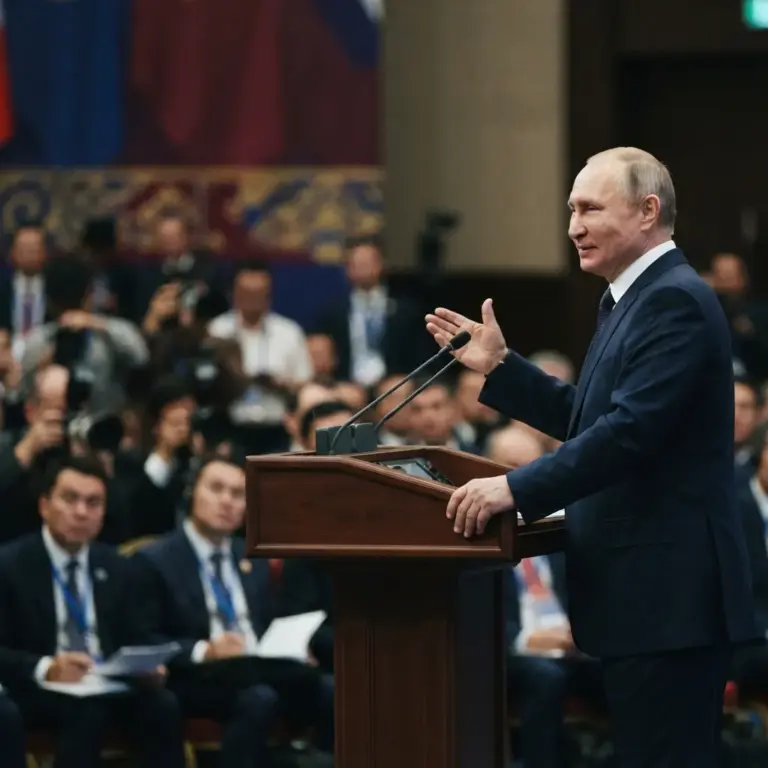
Vladimir Putin is projecting an image of absolute confidence following a series of economic reports that suggest Russia is faring better than Western critics anticipated. Speaking at the Asia-Pacific Economic Cooperation summit, the Russian president dismissed notions of economic collapse, claiming instead that external pressures have acted as a catalyst for domestic growth. With GDP rising beyond expectations and Russia emerging as one of the world’s largest economies by purchasing power parity, Putin has used these figures to signal that Moscow possesses the financial stamina to sustain its military campaign in Ukraine well into 2027.

The backdrop for this defiance is a dramatic geopolitical shift in trade. While the European Union continues to roll out sanction packages targeting banking and cryptocurrency, Russia has successfully pivoted its commercial interests toward Asia. Trade turnover with Asian partners now accounts for more than half of Russia’s total commerce, with ties to Beijing seeing a surge of over thirty percent. This transition has effectively neutralized much of the impact from lost European markets, turning what was once a dependence on EU energy imports into a strategic partnership with Eastern powers.

Putin did not mince words when comparing his nation’s trajectory to that of the West, accusing the European Union of industrial decline and economic ineptitude. By highlighting stagnant growth across major Eurozone economies like Germany and France, he sought to paint Europe as an entity unable to adapt to a world without cheap Russian energy. This rhetorical attack comes at a moment of perceived vulnerability for European leaders who are struggling to balance aggressive anti-Russian policies with slowing internal economic momentum.

Financially, this resurgence is manifesting in a tightening federal budget deficit and bolstered revenues from mineral fuels, metals, and agriculture. New projections indicate that increased income will allow the Russian Duma to prioritize national defense and security spending through 2029. Emboldened by these numbers and the lack of European influence at recent global summits, Putin appears increasingly likely to ignore EU diplomatic channels entirely, viewing the current economic climate as a green light to pursue his military objectives indefinitely.

Utah officials have dropped fourteen criminal charges against prediction market platform Kalshi and its co-founders, Tarek Mansour and Luana Lopes Lara, after the company agreed to stop operating within the state. The legal battle began in late October when prosecutors alleged that Kalshi was running an illegal gambling operation. This clash highlighted a broader tension between state authorities and federal regulators at the Commodity Futures Trading Commission, which claims exclusive authority over how these types of financial markets are governed.

The resolution came swiftly after Kalshi officially suspended its services for Utah residents on Monday, citing overwhelming legal uncertainty. While the charges have been dismissed, Utah Attorney General Derek Brown warned that the move is without prejudice, meaning the state can refile those same charges if the company attempts to return. Brown used the victory as a warning to other firms in the sector, stating that anyone promoting or enabling gambling in his state would be held accountable.

From their perspective, Kalshi representatives argue that simple disagreements over which government agency has jurisdiction should not lead to criminal prosecutions. General counsel Yaakov Roth expressed a willingness to collaborate with state attorneys general on interim solutions while waiting for courts to settle the regulatory debate once and for all. It remains a precarious time for the firm as it navigates different laws across various states.

Despite the retreat from Utah, Kalshi found some breathing room elsewhere this week. A judge in New York recently denied an emergency request to shut down the platform’s operations in that city, though further arguments on the legality of their business model are scheduled for January. For now, Kalshi continues to fight a fragmented legal war as it seeks legitimacy in a rapidly evolving industry.