
Archive

November 23, 2026

Browsing

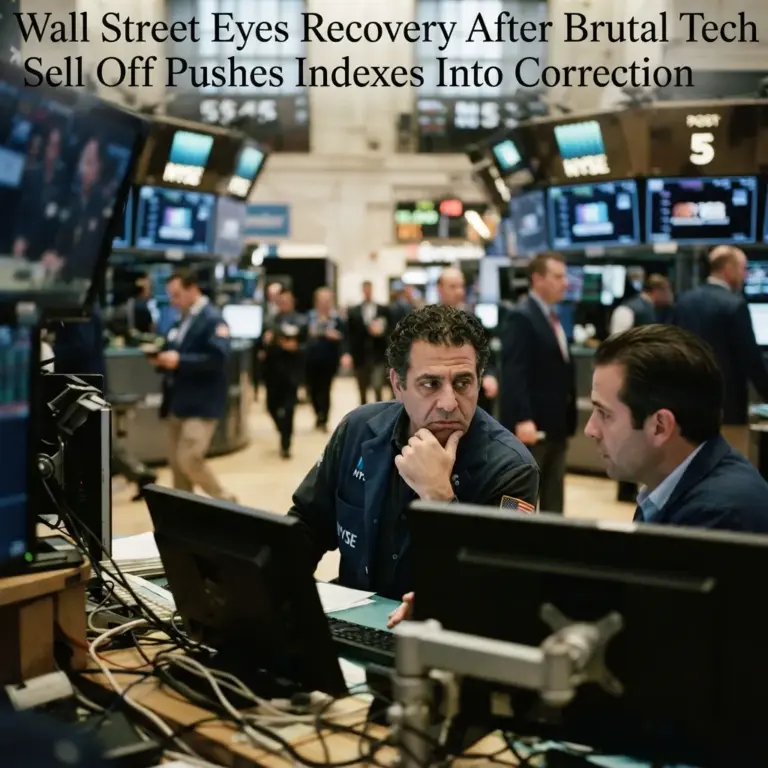
Wall Street is attempting to find its footing as U.S. equity futures climbed on Sunday evening, offering a glimmer of hope following a devastating week for investors. All three major averages entered correction territory by Friday’s close, marking some of the steepest declines seen in years. The carnage was particularly acute for the Nasdaq Composite and the Dow, both of which suffered their worst weekly drops in over six years, leaving the Nasdaq in negative territory for the calendar year.

While American traders look toward a bounce back, global markets remain cautious. In Asia, indices opened lower on Monday, with Australia’s S&P/ASX 200 continuing a losing streak and Hong Kong’s Hang Seng Index futures signaling further declines. This lingering pessimism stems largely from a sudden souring of investor appetite for artificial intelligence stocks, creating a volatile environment where even strong debuts failed to stem the tide of selling.

Analysts are now debating whether the market has finally hit a durable bottom or if there is more pain to come. Drew Pettit, chief investment strategist at Roundhill, suggested that the broad nature of last week’s selling might actually indicate the rout is ending. However, he noted that the burden of proof now lies with the bulls to demonstrate that corporate earnings stories haven’t been fundamentally broken by the recent volatility.

Attention will shift heavily toward upcoming earnings reports from hardware giants Hewlett Packard Enterprise and Dell Technologies early this week. Both companies have been hammered recently due to their ties to AI infrastructure, making their financial disclosures critical benchmarks for the sector’s health. Traders will be navigating these moves during a truncated schedule, as markets prepare for an early exit ahead of the Thanksgiving holiday on Thursday.
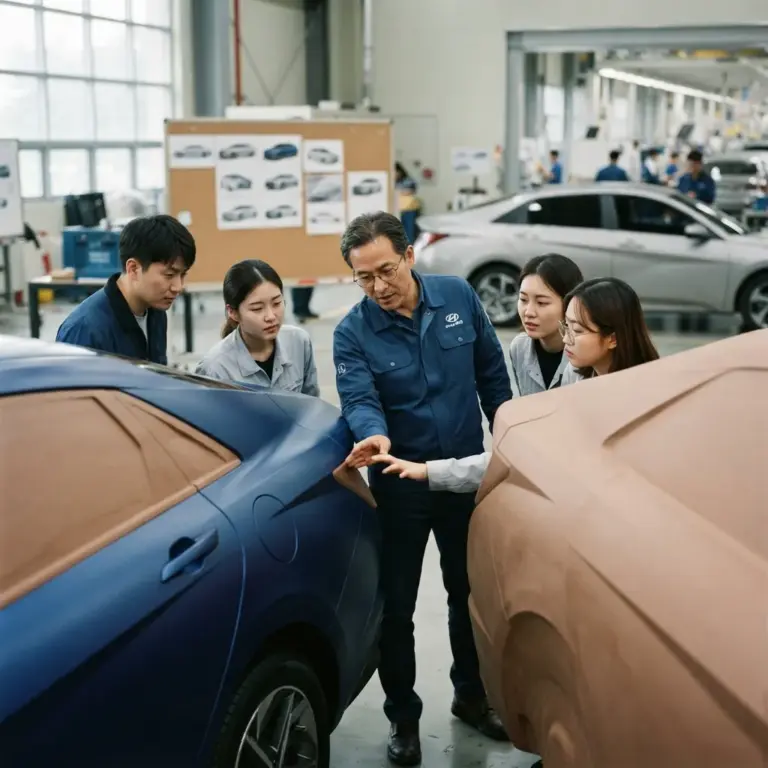
For years, the automotive industry has operated under the assumption that the traditional sedan was headed for extinction. As consumers flocked toward towering SUVs and crossovers, many manufacturers chose the safest financial route by simply stretching out the lifespans of their remaining car models to avoid costly development. Hyundai, however, is refusing to let the three box design fade quietly into history. Instead of playing it safe, they have unveiled a dramatic redesign of the Elantra featuring complex body panels and a daring aesthetic that looks more like a futuristic concept than a budget commuter.

This aggressive investment comes at a time when high prices are forcing buyers to rethink their priorities. According to Olabisi Boyle, Hyundai Motor North America’s Senior Vice President of Product Planning, there has been a noticeable shift in consumer behavior recently. While the American love affair with SUVs remains strong, an increasing number of drivers are returning to sedans in search of better affordability and efficiency. This trend isn’t isolated to one brand; several automakers are seeing sedan sales climb back toward levels previously dominated by larger vehicles.

Despite this optimism, Hyundai isn’t abandoning its SUV strategy or pivoting entirely away from trucks. The company continues to push hard into body on frame pickups and electric crossovers, while simultaneously trimming some of its less popular sedan variants. However, by transforming the Elantra into something visually striking and modern, Hyundai is proving that these cars don’t have to be boring appliances meant solely for those who cannot afford an SUV.

The broader industry is now watching closely as others reconsider their options. Even companies like Ford, which famously purged most sedans from their lineups, are finding that SUVs cannot fill every single market niche. While the era of total sedan dominance is long gone, Hyundai’s willingness to spend heavily on design suggests that we may have finally hit the bottom of the decline and entered a period where stylish, affordable cars are actually cool again.

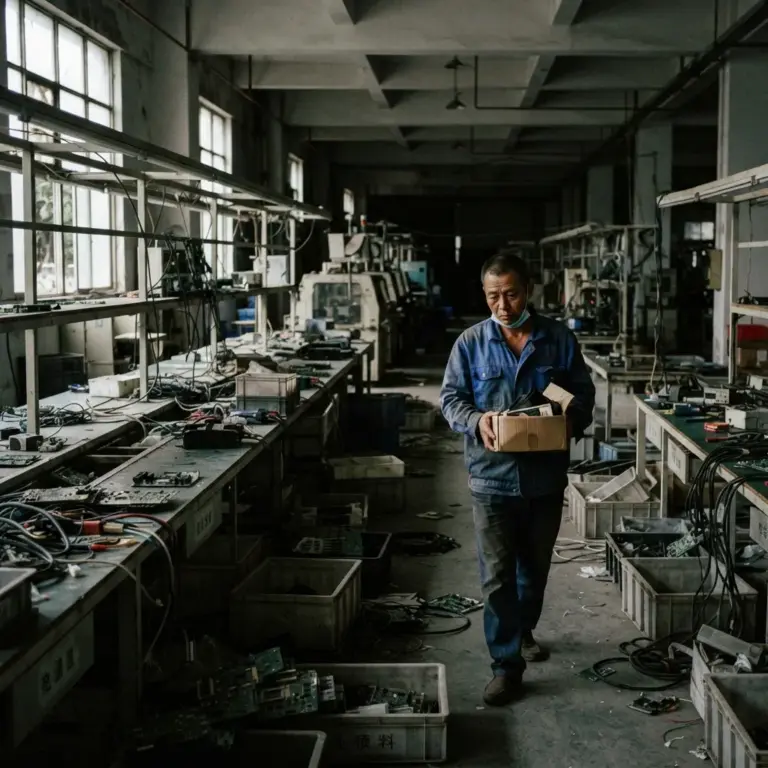
While American investors are currently bracing for a potential cooling of the artificial intelligence craze, analysts warn that the bubble has already burst in China with devastating effects. The country’s tech-heavy STAR 50 index has plummeted forty four percent from its summer highs, far outpacing recent volatility seen in the US Nasdaq. This collapse arrives at a critical juncture for President Xi Jinping, whose economic strategy relies on shifting household wealth away from a crumbling real estate market and toward stock investments capable of financing the next generation of AI infrastructure.

The stakes are particularly high because real estate historically accounts for seventy percent of Chinese household wealth. With property investment sinking nearly twenty two percent and deflation lingering, Beijing has attempted to prop up growth through cheap exports and state backed bank interventions. However, these efforts are fighting against a tide of cutthroat internal competition, rising energy costs, and increasing international tariffs. Without a thriving equity market, there is a significant risk that AI development will be absorbed into inefficient state owned enterprises, further stifling the private innovation Xi claims to support.

Public trust remains a massive hurdle for the government’s vision of a Chinese Wall Street. Many retail investors suffer from what analysts describe as financial PTSD following years of regulatory crackdowns and previous market crashes. To many ordinary citizens, the Shanghai exchange feels less like a venue for long term retirement savings and more like a rigged casino where the house always wins. Despite huge leaps in overall GDP since 2007, the Shanghai Composite has struggled to regain its former peaks, reflecting a deep seated skepticism among those tasked with fueling the AI boom.

Adding to this instability is an increasingly hostile geopolitical environment. New technology curbs from Washington are targeting China’s access to essential high end chips and overseas computing power, threatening to stall the rollout of cutting edge AI models. Between domestic distrust and foreign restrictions, Premier Li Qiang has labeled stabilizing capital markets as his top priority for the year. Yet if Beijing cannot convince its people that the stock market is safe, Xi’s ambition to pivot the entire national economy onto a foundation of digital intelligence may prove impossible.

National Intelligence Director Jay Clayton has cautioned the public to expect further technical disruptions as the United States works to modernize its digital infrastructure for the era of artificial intelligence. Speaking on CNN’s State of the Union, Clayton suggested that recent failures affecting everything from airline schedules to email services are likely symptoms of necessary system upgrades rather than malicious activity. He noted that whenever there is a significant leap in computing power and application capabilities, some instability is inevitable during the transition.

These warnings come at a particularly sensitive time, arriving just before the Thanksgiving holiday rush when millions of travelers rely on seamless connectivity. Recent chaos included a nationwide aviation ground stop attributed to router updates and widespread issues with Microsoft Outlook caused by network capacity adjustments. While these events sparked fears of a coordinated cyberattack, government officials have largely dismissed those concerns, framing the glitches instead as side effects of essential maintenance.

The sentiment was echoed by Treasury Secretary Scott Bessent, who urged citizens not to panic about the stability of their financial institutions despite ongoing security patches designed to thwart AI threats. Comparing these software updates to a medical vaccine, Bessent argued that while users might experience temporary discomfort or minor glitches, these steps are vital for building long term resilience against future vulnerabilities. Together, the administration’s message is clear: short term headaches are the price of securing the nation’s digital future.