
Archive

April 2026

Browsing

The S&P 500 ($SPX) just logged its fifth straight trading box breakout, which means that, of the five trading ranges the index has experienced since the April lows, all have been resolved to the upside.

How much longer can this last? That’s been the biggest question since the massive April 9 rally. Instead of assuming the market is due to roll over, it’s been more productive to track price action and watch for potential changes along the way. So far, drawdowns have been minimal, and breakouts keep occurring. Nothing in the price action hints at a lasting change — yet.

While some are calling this rally “historic,” we have a recent precedent. Recall that from late 2023 through early 2024, the index had a strong start and gave way to a consistent, steady trend.

From late October 2023 through March 2024, the S&P 500 logged seven consecutive trading box breakouts. That streak finally paused with a pullback from late March to early April, which, as we now know, was only a temporary hiccup. Once the bid returned, the S&P 500 went right back to carving new boxes and climbing higher.

New 52-Week Highs Finally Picking Up

If there’s been one gripe about this rally, it’s that the number of new highs within the index has lagged. As we’ve discussed before, among all the internal breadth indicators available, new highs almost always lag — that’s normal. What we really want to see is whether the number of new highs begins to exceed prior peaks as the market continues to rise, which it has, as shown by the blue line in the chart below.

As of Wednesday’s close, 100 S&P 500 stocks were either at new 52-week highs or within 3% of them. That’s a strong base. We expect this number to continue rising as the market climbs, especially if positive earnings reactions persist across sectors.

Even when we get that first day with 100+ S&P 500 stocks making new 52-week highs, though, it might not be the best time to initiate new longs.

The above chart shows that much needs to align for that many stocks to peak in unison, which has historically led to at least a short-term consolidation, if not deeper pullbacks — as highlighted in yellow. Every time is different, of course, but this is something to keep an eye on in the coming weeks.

Trend Check: GoNoGo Still “Go”

The GoNoGo Trend remains in bullish mode, with the recent countertrend signals having yet to trigger a greater pullback.

Active Bullish Patterns

We still have two live bullish upside targets of 6,555 and 6,745, which could be with us for a while going forward. For the S&P 500 to get there, it will need to form new, smaller versions of the trading boxes.

Failed Bearish Patterns

In the chart below, you can view a rising wedge pattern on the recent price action, the third since April. The prior two wedges broke down briefly and did not lead to a major downturn. The largest pullbacks in each case occurred after the S&P 500 dipped below the lower trendline of the pattern.

The deepest drawdown so far is 3.5%, which is not exactly a game-changer. Without downside follow-through, a classic bearish pattern simply can’t be formed, let alone be broken down from.

We’ll continue to monitor these formations as they develop because, at some point, that will change.

Global oil prices continued their recent climb and the S&P 500 closed lower Monday after a weekend when Iran-backed Houthi militants launched ballistic missiles at Israel and 3,500 additional U.S. troops arrived in the Middle East.

The conflict between Iran, the U.S. and Israel has entered its second month, with disruptions to oil and other energy and commodities supplies starting to reverberate around the world.

Brent crude oil, the global benchmark, gained 1.5%, to more than $114 a barrel, while U.S. West Texas Intermediate crude climbed almost 5%, to about $104 a barrel, settling above $100 for the first time since 2022.

Rising oil prices are one of the more immediate consequences of the war. Average U.S. gasoline prices hit $3.99 a gallon Monday, according to AAA, the highest since the summer of 2022. Patrick De Haan, chief analyst at Gas Buddy, projected Monday afternoon they would rise to $4 within 24 hours as the average price of gasoline in Florida surged to $4.29.

De Haan estimates that U.S. drivers will soon have spent an additional $10 billion on gasoline since the conflict began just one month ago.

The S&P 500, one of the broadest measures of stocks, fell 0.4% Monday and is now within less than a full percentage point of having declined 10% since its most recent high in January. The tech-focused Nasdaq Composite Index is already in correction territory, down more than 13% from its October high.

Some investors have begun to question President Donald Trump’s ability to reassure financial markets without material progress on the ground.

Investors also increased their purchases of U.S. government bonds Monday over fears of an economic slowdown, sending bond yields lower and dragging down stocks.

Traders now believe higher oil prices may put a damper on overall demand for goods and services.

Bloomberg News reported that U.S. officials and Wall Street analysts have begun considering the prospect that oil prices could surge to as much as $200 a barrel as the largest oil shock in decades continues to reverberate.

That prospect has led analysts to project a global economic slowdown that would hit a U.S. economy already facing suddenly higher gasoline prices.

Earlier Monday, Trump said “great progress has been made” in talks with Iran. At the same time, he threatened to destroy Iran’s civilian energy and water infrastructure if a deal to end the war and reopen the crucial Strait of Hormuz is not reached soon.

Tehran has said U.S. proposals were “unrealistic” and “unreasonable.”

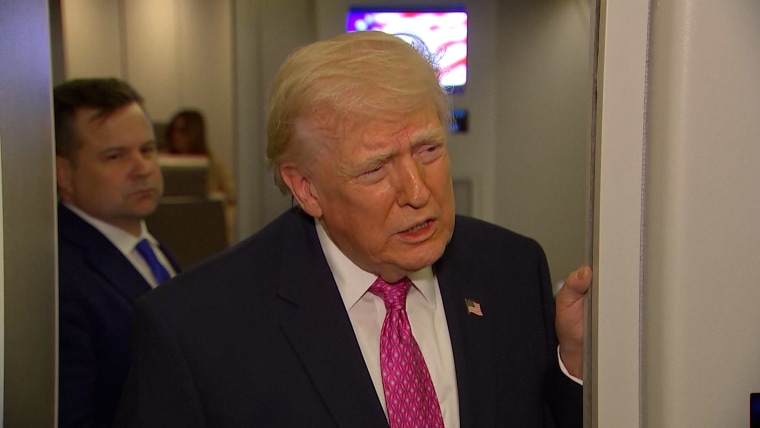
“I think we’ll make a deal with them, pretty sure, but it’s possible we won’t,” Trump told reporters late Sunday. He later said a deal could come “soon.”

Trump also said that Iran “gave us most” of a 15-point plan the U.S. sent Tehran to end the war, which Iran has yet to publicly confirm, and that 20 boatloads of oil — on top of 10 the previous week — will be passing through the Strait of Hormuz beginning Monday “out of a sign of respect.”

Trump separately told the Financial Times on Sunday that an Iran deal could be made “fairly quickly” and that he wants to “take the oil in Iran.”

Surging oil prices continue to ripple through the global economy because of the war with Iran. Now, some analysts say the worst could still be ahead as the conflict drags on.

The concern is that beyond immediate knock-on effects from rising gasoline prices, the war’s disruption could come in waves — ones that will play out over weeks and months and leave few parts of the global economy untouched.

“We haven’t seen the brunt of it yet,” said Samantha Gross, director of energy security and climate at the Brookings Institute. “I feel like markets are so far underestimating the effect of the war. It seems that they expect this war to go quickly, and they expect that we can go back to the world before when it’s over. And I don’t think either of those ideas is true.”

The warning signs are already here. The global oil price benchmark, Brent crude — which heavily influences U.S. gasoline prices — briefly topped $119 a barrel last week, the highest since the war began and a level last seen in July 2022 amid the pandemic-era inflation wave. As of Monday, Brent prices had settled at about $113 a barrel.

The S&P 500 ($SPX) just logged its fifth straight trading box breakout, which means that, of the five trading ranges the index has experienced since the April lows, all have been resolved to the upside.

How much longer can this last? That’s been the biggest question since the massive April 9 rally. Instead of assuming the market is due to roll over, it’s been more productive to track price action and watch for potential changes along the way. So far, drawdowns have been minimal, and breakouts keep occurring. Nothing in the price action hints at a lasting change — yet.

While some are calling this rally “historic,” we have a recent precedent. Recall that from late 2023 through early 2024, the index had a strong start and gave way to a consistent, steady trend.

From late October 2023 through March 2024, the S&P 500 logged seven consecutive trading box breakouts. That streak finally paused with a pullback from late March to early April, which, as we now know, was only a temporary hiccup. Once the bid returned, the S&P 500 went right back to carving new boxes and climbing higher.

New 52-Week Highs Finally Picking Up

If there’s been one gripe about this rally, it’s that the number of new highs within the index has lagged. As we’ve discussed before, among all the internal breadth indicators available, new highs almost always lag — that’s normal. What we really want to see is whether the number of new highs begins to exceed prior peaks as the market continues to rise, which it has, as shown by the blue line in the chart below.

As of Wednesday’s close, 100 S&P 500 stocks were either at new 52-week highs or within 3% of them. That’s a strong base. We expect this number to continue rising as the market climbs, especially if positive earnings reactions persist across sectors.

Even when we get that first day with 100+ S&P 500 stocks making new 52-week highs, though, it might not be the best time to initiate new longs.

The above chart shows that much needs to align for that many stocks to peak in unison, which has historically led to at least a short-term consolidation, if not deeper pullbacks — as highlighted in yellow. Every time is different, of course, but this is something to keep an eye on in the coming weeks.

Trend Check: GoNoGo Still “Go”

The GoNoGo Trend remains in bullish mode, with the recent countertrend signals having yet to trigger a greater pullback.

Active Bullish Patterns

We still have two live bullish upside targets of 6,555 and 6,745, which could be with us for a while going forward. For the S&P 500 to get there, it will need to form new, smaller versions of the trading boxes.

Failed Bearish Patterns

In the chart below, you can view a rising wedge pattern on the recent price action, the third since April. The prior two wedges broke down briefly and did not lead to a major downturn. The largest pullbacks in each case occurred after the S&P 500 dipped below the lower trendline of the pattern.

The deepest drawdown so far is 3.5%, which is not exactly a game-changer. Without downside follow-through, a classic bearish pattern simply can’t be formed, let alone be broken down from.

We’ll continue to monitor these formations as they develop because, at some point, that will change.

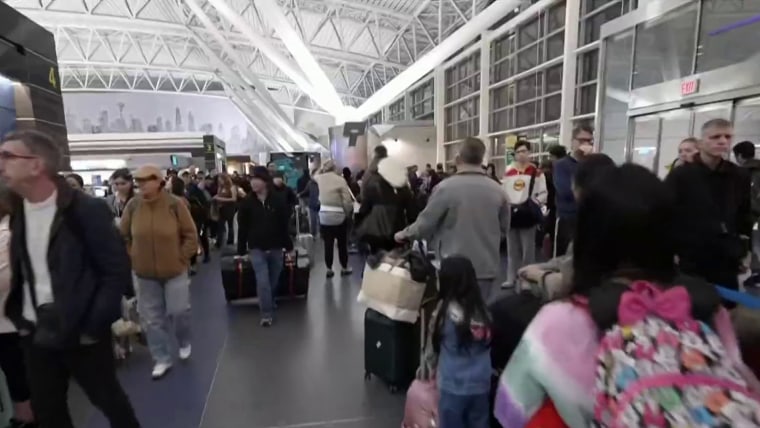
Travelers frustrated by long security lines may not see immediate relief, even as Transportation Security Administration officers begin receiving pay again on Monday after working without wages for more than a month during the partial government shutdown.

President Donald Trump signed an executive order Thursday directing federal officials to ensure that TSA workers are paid despite the shutdown, breaking a more than 40-day stretch in which officers went without salaries.

But the move is unlikely to bring instant relief at airport checkpoints, according to former TSA Administrator John S. Pistole.

“It’s a temporary fix,” he told NBC News.

The more pertinent question, he said, is how many workers actually return to their posts now that paychecks are set to resume Monday.

More than 500 officers have quit during the shutdown, according to the Department of Homeland Security, while thousands more have called out because they can’t afford basic expenses.

TSA callout rates reached a high of 12.35% of the workforce on Friday, accounting for more than 3,560 employees, a DHS spokesperson said Saturday. The department added that at Trump’s direction and under Homeland Security Secretary Markwayne Mullin, TSA has “immediately begun the process of paying its workforce” and that officers “should begin seeing paychecks as early as Monday, March 30.”

Those shortages have forced travelers to contend with missed and canceled flights, long security lines and growing uncertainty around air travel.

If most officers report back beginning Monday and airports are able to restore staffing, wait times could start to ease within several days to a couple of weeks, Pistole said.

“It really depends on that asterisk of how many people show up,” he said.

Some workers who left may already have other jobs lined up, raising questions about whether some will return at all.

“How many of them come back after they get this paycheck? Or maybe they already have another full-time job lined up, they’re just waiting to inform TSA after they get their check on Monday,” Pistole said. “So there are a number of variables there.”

Pistole said the uncertainty, coupled with TSA’s typical annual attrition rate of about 7%, could mean delays will continue even after pay resumes.

Until then, some travelers may want to consider alternatives such as driving, rail or bus.

“I think many will and are looking at those options to say, ‘Is that more reliable? Because the last thing I want to do is get to Bush International Airport in Houston and have a four-hour wait,’” Pistole said.

Colombian officials discovered a body Friday amid the search for a U.S. flight attendant who went missing in the country last weekend.

Medellin Mayor Federico Gutiérrez announced the discovery in a post on X, saying that “a lifeless body has just been found between the municipality of Jericó and Puente Iglesias,” in the northeast region of the South American country.

The mayor said the body was likely that of Eric Fernando Gutierrez Molina, a 32-year-old American Airlines flight attendant from Texas who vanished while out with colleagues in Medellín, Colombia, during a layover.

“There is a very high probability that it is this person. The lifeless body is being transported to legal medicine in Medellín for identification and recognition,” Gutiérrez wrote on X. “We express our solidarity to his family and friends. I have just personally delivered the painful news to his father, who is in Medellín.”

Gutiérrez also said authorities suspect foul play, adding that officials “have very clear leads on those responsible” and calling for those individuals to be sought through extradition.

The mayor said he informed the U.S. ambassador to Colombia of the discovery. The State Department did not immediately respond to a request for comment, nor did Gutierrez Molina’s family.

In a news briefing, Medellín Security Secretary Manuel Villa said Gutierrez Molina was in Colombia on business and was out in the city of Itagüí with two co-workers that he identified as a man and a woman. Gutierrez Molina and the man then left the first establishment to go to a second location with others, also in Itagüí.

“And from there, once they left, there has been no further information on the whereabouts of Eric,” Villa said. “The woman arrived at the hotel where she was staying. However, she arrived somewhat disoriented.”

Villa said law enforcement have determined through their investigation that Gutierrez Molina and the woman encountered individuals “with a history of committing theft under the influence of scopolamine.”

The investigation remains under investigation and national police are still deployed throughout the area, Villa said.

Gutierrez Molina’s sister, Mayra Gutierrez, said in a phone call earlier this week that her brother had been out with another crew member over the weekend. She said the family last heard from him in the early hours of Sunday and confirmed that he worked for American Airlines.

American Airlines did not immediately respond to a request for comment. In a statement earlier this week, the airline said it is “actively engaged with local law enforcement officials in their investigation and doing all we can to support our team member’s family during this time,” but did not mention Gutierrez Molina by name.