Global oil prices continued their recent climb and the S&P 500 closed lower Monday after a weekend when Iran-backed Houthi militants launched ballistic missiles at Israel and 3,500 additional U.S. troops arrived in the Middle East.
Subscribe to read this story ad-free
Get unlimited access to ad-free articles and exclusive content.
The conflict between Iran, the U.S. and Israel has entered its second month, with disruptions to oil and other energy and commodities supplies starting to reverberate around the world.
Brent crude oil, the global benchmark, gained 1.5%, to more than $114 a barrel, while U.S. West Texas Intermediate crude climbed almost 5%, to about $104 a barrel, settling above $100 for the first time since 2022.
Rising oil prices are one of the more immediate consequences of the war. Average U.S. gasoline prices hit $3.99 a gallon Monday, according to AAA, the highest since the summer of 2022. Patrick De Haan, chief analyst at Gas Buddy, projected Monday afternoon they would rise to $4 within 24 hours as the average price of gasoline in Florida surged to $4.29.
De Haan estimates that U.S. drivers will soon have spent an additional $10 billion on gasoline since the conflict began just one month ago.
The S&P 500, one of the broadest measures of stocks, fell 0.4% Monday and is now within less than a full percentage point of having declined 10% since its most recent high in January. The tech-focused Nasdaq Composite Index is already in correction territory, down more than 13% from its October high.
Some investors have begun to question President Donald Trump’s ability to reassure financial markets without material progress on the ground.
Investors also increased their purchases of U.S. government bonds Monday over fears of an economic slowdown, sending bond yields lower and dragging down stocks.
Traders now believe higher oil prices may put a damper on overall demand for goods and services.
Bloomberg News reported that U.S. officials and Wall Street analysts have begun considering the prospect that oil prices could surge to as much as $200 a barrel as the largest oil shock in decades continues to reverberate.
That prospect has led analysts to project a global economic slowdown that would hit a U.S. economy already facing suddenly higher gasoline prices.
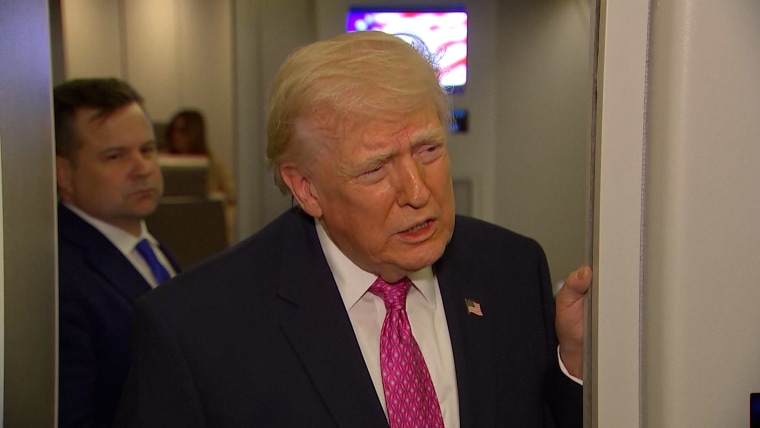
Earlier Monday, Trump said “great progress has been made” in talks with Iran. At the same time, he threatened to destroy Iran’s civilian energy and water infrastructure if a deal to end the war and reopen the crucial Strait of Hormuz is not reached soon.
Tehran has said U.S. proposals were “unrealistic” and “unreasonable.”
“I think we’ll make a deal with them, pretty sure, but it’s possible we won’t,” Trump told reporters late Sunday. He later said a deal could come “soon.”
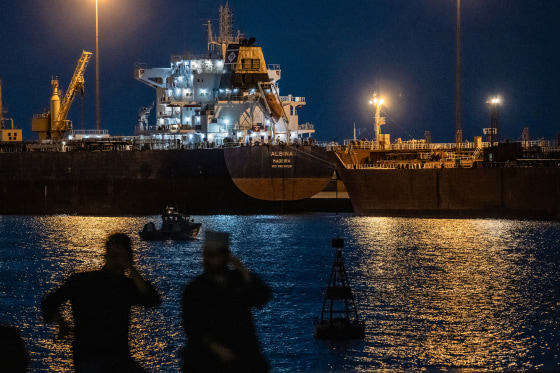
Trump also said that Iran “gave us most” of a 15-point plan the U.S. sent Tehran to end the war, which Iran has yet to publicly confirm, and that 20 boatloads of oil — on top of 10 the previous week — will be passing through the Strait of Hormuz beginning Monday “out of a sign of respect.”
Trump separately told the Financial Times on Sunday that an Iran deal could be made “fairly quickly” and that he wants to “take the oil in Iran.”