

Archive

April 7, 2026

Browsing

The S&P 500 ($SPX) just logged its fifth straight trading box breakout, which means that, of the five trading ranges the index has experienced since the April lows, all have been resolved to the upside.

How much longer can this last? That’s been the biggest question since the massive April 9 rally. Instead of assuming the market is due to roll over, it’s been more productive to track price action and watch for potential changes along the way. So far, drawdowns have been minimal, and breakouts keep occurring. Nothing in the price action hints at a lasting change — yet.

While some are calling this rally “historic,” we have a recent precedent. Recall that from late 2023 through early 2024, the index had a strong start and gave way to a consistent, steady trend.

From late October 2023 through March 2024, the S&P 500 logged seven consecutive trading box breakouts. That streak finally paused with a pullback from late March to early April, which, as we now know, was only a temporary hiccup. Once the bid returned, the S&P 500 went right back to carving new boxes and climbing higher.

New 52-Week Highs Finally Picking Up

If there’s been one gripe about this rally, it’s that the number of new highs within the index has lagged. As we’ve discussed before, among all the internal breadth indicators available, new highs almost always lag — that’s normal. What we really want to see is whether the number of new highs begins to exceed prior peaks as the market continues to rise, which it has, as shown by the blue line in the chart below.

As of Wednesday’s close, 100 S&P 500 stocks were either at new 52-week highs or within 3% of them. That’s a strong base. We expect this number to continue rising as the market climbs, especially if positive earnings reactions persist across sectors.

Even when we get that first day with 100+ S&P 500 stocks making new 52-week highs, though, it might not be the best time to initiate new longs.

The above chart shows that much needs to align for that many stocks to peak in unison, which has historically led to at least a short-term consolidation, if not deeper pullbacks — as highlighted in yellow. Every time is different, of course, but this is something to keep an eye on in the coming weeks.

Trend Check: GoNoGo Still “Go”

The GoNoGo Trend remains in bullish mode, with the recent countertrend signals having yet to trigger a greater pullback.

Active Bullish Patterns

We still have two live bullish upside targets of 6,555 and 6,745, which could be with us for a while going forward. For the S&P 500 to get there, it will need to form new, smaller versions of the trading boxes.

Failed Bearish Patterns

In the chart below, you can view a rising wedge pattern on the recent price action, the third since April. The prior two wedges broke down briefly and did not lead to a major downturn. The largest pullbacks in each case occurred after the S&P 500 dipped below the lower trendline of the pattern.

The deepest drawdown so far is 3.5%, which is not exactly a game-changer. Without downside follow-through, a classic bearish pattern simply can’t be formed, let alone be broken down from.

We’ll continue to monitor these formations as they develop because, at some point, that will change.
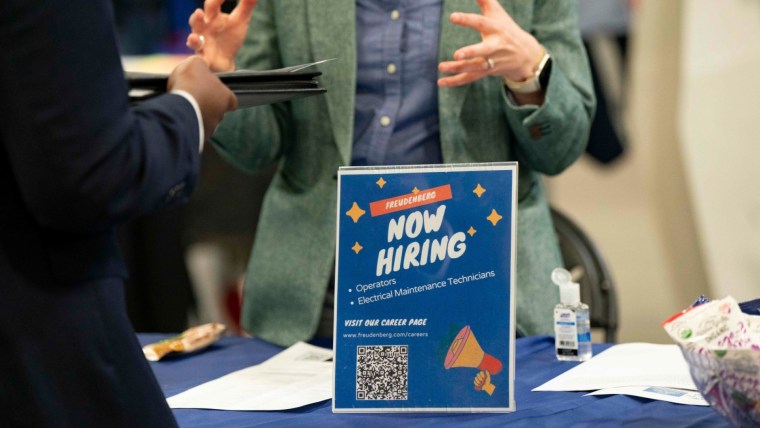
The United States added 178,000 jobs in March, blowing past expectations and showing a resilient labor market just as the war with Iran began escalating, sending up oil prices.

The unemployment rate fell to 4.3% last month, down from 4.4%. The gains were concentrated in health care, construction, transportation and warehousing.

Despite the outsized headline figure, there were further indications that the job market remains wobbly. Wage growth declined to 3.5% in March from 3.8% in February, falling short of forecasts.

Jobs report estimates from January and February were also revised, upward and downward respectively. Combined, they show that U.S. payrolls fell by a net 7,000 over those two months.

The labor force participation rate, or the share of the overall population either employed or looking for work, fell to its lowest level since November of 2021.

“While this month’s jobs report delivered an upside surprise, we continue to believe that risks to the labor market remain elevated and higher oil prices from the Iran conflict could prove an additional impediment in the months ahead,” Scott Helfstein, head of investment strategy at Global X financial group, said in a note to clients.

Surveys conducted by the BLS for this report were completed by March 12. At the time, the full brunt of the war had yet to hit the job market.

Three weeks later, gasoline prices have surged to more than $4 a gallon, a level that, if it is sustained, would sap U.S. consumers of hundreds of dollars in annual discretionary income.

On Wednesday, the Atlanta Federal Reserve lowered its real-time gross domestic product estimate to 1.9%, down from more than 3% just before the start of the war.

On Tuesday, the BLS reported the hiring rate in February fell to just 3.1% of the U.S. workforce, a level last recorded in April 2020, as the Covid pandemic bore down.

Job openings also fell in February, though they appear to be stabilizing overall. The rate of layoffs also remains at an all-time low.

Meanwhile, many Americans’ views of the economy and Trump’s handling of it continue to sink to new depths.

A CNN poll out this week found that just 31% of respondents approved of how Trump is managing U.S. economic performance, with just 27% saying they approved of his handling of inflation, down from 44% a year ago. His overall approval rating appears to have stabilized at about 35%.

A construction worker at a new building in Pasadena, Calif.Mario Tama / Getty Images file

A debate is now underway about how many jobs the U.S. would need to add each month to keep the unemployment rate — 4.3% as of Friday — stable.

Over the past year, a massive drop in overall immigration to the U.S., coupled with a growing number of baby boomers leaving the workforce, mean fewer overall jobs need to be created for the economy to absorb newcomers to the labor force and keep the overall unemployment rate steady, according to economists with the Dallas Federal Reserve.

That overall number of new jobs needed is known as the “breakeven” employment rate. The economists wrote in a note published this week that the breakeven employment rate now may be close to zero.

If the overall workforce continues to shrink, even fewer new jobs will be needed to incorporate workers entering the labor force, such as recent college graduates or parents who put their careers on hold for a few years.

That won’t necessarily make looking for a job any easier. The median spell of unemployment is now about 2½ months, with the average much longer — about six months. About 25% of all unemployed workers are out of work for at least 27 weeks.

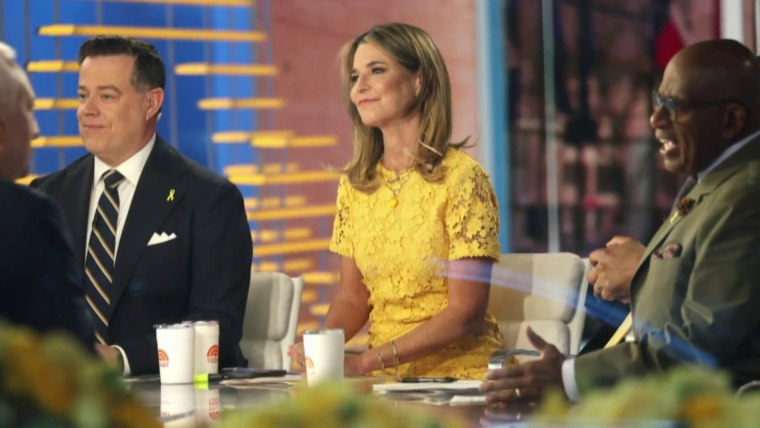
Savannah Guthrie returned to the “TODAY” anchor desk Monday, more than two months after her mother disappeared.

“We are so glad you started your week with us, and it is good to be home,” Guthrie said at the start of the show. She wore a bright yellow dress, echoing the yellow ribbons and flowers left at her mother’s home.

“TODAY” co-anchor Craig Melvin, wearing a yellow tie, patted Guthrie’s hand and replied: “Yes, it is good to have you at home.”

The two anchors then turned to the morning’s top headlines, including an opening segment about the U.S.-Israeli war with Iran. “Well, here we go, ready or not,” Guthrie said. “Let’s do the news.”

Savannah Guthrie on Monday’s “TODAY.”TODAY

Guthrie, who has co-anchored “TODAY” since 2012, stepped away from her role in early February after Nancy Guthrie, 84, went missing from her home near Tucson, Arizona. Authorities have described the case as a possible kidnapping or abduction.

Guthrie told Hoda Kotb last month that she believed returning to the “TODAY” anchor desk is “part of my purpose right now,” even though it was difficult to imagine going back to a workplace she associates with “joy and lightness.”

“I can’t come back and try to be something that I’m not. But I can’t not come back because it’s my family,” Guthrie said in the interview, her first since the start of the ordeal. “I don’t know if I can do it. I don’t know if I’ll belong anymore, but I would like to try.”

Savannah Guthrie greets fans Monday in Rockefeller Plaza.TODAY

In the second hour of Monday’s show, Guthrie greeted “TODAY” fans gathered outside on Rockefeller Plaza, some wearing yellow pins and holding signs with her mother’s photo. Guthrie fought back tears as she held co-host Jenna Bush Hager’s hand and thanked her supporters for their prayers and letters.

“You guys have been so beautiful,” she said. “I’ve received so many letters, so much kindness to me and my whole family. We feel it. We feel your prayers.”

Savannah Guthrie walks with Jenna Bush Hager outside the “TODAY” studios.TODAY

Nancy Guthrie’s family reported her missing around noon Feb. 1 after she did not show up at a friend’s house for virtual church services, according to the Pima County Sheriff’s Office. She was last seen the previous night around 9:45 p.m. after having dinner at her daughter Annie Guthrie’s home, according to authorities.

The investigation into her disappearance gripped the nation and put an intense spotlight on the quiet Catalina Foothills area of Tucson. Authorities have not identified a suspect or motive, though the FBI released chilling doorbell camera video of an armed and masked man outside Nancy Guthrie’s home on the morning she was reported missing.

The bureau described him as a man of average build, 5 feet, 9 inches to 5 feet, 10 inches tall, wearing a black Ozark Trail Hiker Pack 25-liter backpack.

Guthrie and her siblings, Camron Guthrie and Annie Guthrie, have provided updates on the case via social media. In emotionally wrenching videos on Instagram, they have thanked members of the public for their prayers and made direct appeals to Nancy Guthrie’s possible abductor.

“Someone knows how to find our mom and bring her home,” Guthrie wrote in the caption to a Feb. 24 video post.

The family is offering up to $1 million for information that leads to the 84-year-old’s recovery. The FBI is offering a reward of up to $100,000 for “information leading to the recovery of Nancy Guthrie and/or the arrest and conviction of anyone involved in her disappearance.”

Kotb, a “TODAY” contributor, substituted for Guthrie. In that period, Guthrie withdrew from NBC’s coverage of the Milan Cortina Winter Olympics; Mary Carillo stepped in to co-host the opening ceremony alongside NBC Sports’ Terry Gannon.

Guthrie visited the “TODAY” set March 5. In photos taken from outside the studio by a photographer for The Associated Press, Guthrie could be seen wiping tears and embracing her colleagues. The visit was not televised.

Savannah Guthrie hugs Al Roker during a visit to “TODAY” on March 5.Charles Sykes / Invision / AP

“I really wanted to come and see everybody. I just love this beautiful place that we call home, where we get to come and be every day,” Guthrie told Kotb, adding: “When times are hard, you want to be with your family.”