Archive

March 2026

Browsing

CALGARY, AB / ACCESS Newswire / March 9, 2026 / Valeura Energy Inc. (TSX:VLE,OTC:VLERF)(OTCQX:VLERF) (‘Valeura’ or the ‘Company’) announces completion of a successful infill drilling campaign at its Gulf of Thailand Manora field (Block G1/48, 70% operated working interest).

Dr. Sean Guest, President and CEO commented:
‘Our Manora drilling campaign illustrates that we can continue adding to the ultimate production potential of our Gulf of Thailand fields. Our approach is to take every opportunity to appraise potential future development locations while developing known reservoir intervals. We have once again delivered new production from the field and also laid the basis for further development in the future.’

Valeura successfully drilled a campaign comprised of two infill development targets and one appraisal well from the Manora A platform. All wells were successful, and notably the appraisal well was found to be optimally positioned for use as a production well. As a result, all three wells have been completed as oil producers and are now on stream. Manora’s oil production has increased from an average of 1,950 bbls/d prior to the first new well coming onstream, to a more recent average of 2,626 bbls/d (working interest share oil production before royalites)(1).

Valeura’s management expects that the newly encountered reservoir intervals will be considered in the next evaluation of reserves and could therefore be additive to the ultimate potential and economic life of the asset.

MNA-41 was drilled as a deviated appraisal well to evaluate the potential of two reservoir intervals. The well encountered oil pay in the 300-series sand reservoir, which will be analysed to identify future prospects in this zone. In addition, the well encountered five oil pay zones in the 400/500-series reservoir. It has been completed as a comingled oil producer and is now on production. Results have exceeded management’s expectations, which sought only to assess the potential for future development of these intervals.

MNA-35ST1 was drilled as a sidetrack to the pre-exisitng MNA-35 well, with the objective of developing the same two reservoir intervals access in MNA-41. Two pay zones were encountered in the 300 sands, which will be completed for production in the future. In the meantime, the well has been completed as a producer of five oil pay zones within the 400/500 reservoir sands and is now on production.

MNA-42H was geo-steered as a horizontal development well within the 300 series sand reservoir. The well’s 1,046 ft lateral section encountered 556′ of net oil pay, which has exceeded management’s expectations. The well has been completed and is now online as a horizontal oil producer.

The Manora drilling campaign was completed safely, on time, and on budget. Valeura’s contracted drilling rig has now been mobilised to the Nong Yao field on block G11/48 (90% operated working interest) where the Company is planning to drill a production-oriented campaign from the Nong Yao A and Nong Yao B wellhead facilities.

(1) 15-24 February 2026 vs 03-12 February 2026.

Future Disclosure
Valeura intends to release its audited financial results for the year ended 31 December 2025, along with its annual information form for 2025 and its estimates of reserves and resources in accordance with the requirements of National instrument 51-101 – Standards of Disclosure for Oil and Gas Activities on 18 March 2026.

For further information, please contact:

Valeura Energy Inc. (General Corporate Enquiries)
Sean Guest, President and CEO
Yacine Ben-Meriem, CFO
Contact@valeuraenergy.com

+65 6373 6940

Valeura Energy Inc. (Investor and Media Enquiries)
Robin James Martin, Vice President, Communications and Investor Relations
IR@valeuraenergy.com

+1 403 975 6752 / +44 7392 940495

Contact details for the Company’s advisors, covering research analysts and joint brokers, including Auctus Advisors LLP, Beacon Securities Limited, Canaccord Genuity Ltd (UK), Cormark Securities Inc., Research Capital Corporation, Roth Canada Inc., and Stifel Nicolaus Europe Limited, are listed on the Company’s website at www.valeuraenergy.com/investor-information/analysts/.

About the Company

Valeura Energy Inc. is a Canadian public company engaged in the exploration, development and production of petroleum and natural gas in Thailand and in Türkiye. The Company is pursuing a growth-oriented strategy and intends to re-invest into its producing asset portfolio and to deploy resources toward further organic and inorganic growth in Southeast Asia. Valeura aspires toward value accretive growth for stakeholders while adhering to high standards of environmental, social and governance responsibility.

Additional information relating to Valeura is also available on SEDAR+ at http://www.sedarplus.ca.

Advisory and Caution Regarding Forward-Looking Information

Certain information included in this news release constitutes forward-looking information under applicable securities legislation. Such forward-looking information is for the purpose of explaining management’s current expectations and plans relating to the future. Readers are cautioned that reliance on such information may not be appropriate for other purposes, such as making investment decisions. Forward-looking information typically contains statements with words such as ‘anticipate’, ‘believe’, ‘expect’, ‘plan’, ‘intend’, ‘estimate’, ‘propose’, ‘project’, ‘target’ or similar words suggesting future outcomes or statements regarding an outlook.

Forward-looking information in this news release includes, but is not limited to, the Manora drilling results laying the basis for further development work in the future; and management’s expectation that the newly encountered reservoir intervals will be considered in the next evaluation of reserves and could therefore be additive to the ultimate potential and economic life of the asset.

Forward-looking information is based on management’s current expectations and assumptions regarding, among other things: political stability of the areas in which the Company is operating; continued safety of operations and ability to proceed in a timely manner; continued operations of and approvals forthcoming from governments and regulators in a manner consistent with past conduct; future drilling activity on the required/expected timelines; the prospectivity of the Company’s lands; the continued favourable pricing and operating netbacks across its business; future production rates and associated operating netbacks and cash flow; decline rates; future sources of funding; future economic conditions; the impact of inflation of future costs; future currency exchange rates; interest rates; the ability to meet drilling deadlines and fulfil commitments under licences and leases; future commodity prices; the impact of the Russian invasion of Ukraine; royalty rates and taxes; future capital and other expenditures; the success obtained in drilling new wells and working over existing wellbores; the performance of wells and facilities; the availability of the required capital to funds its exploration, development and other operations, and the ability of the Company to meet its commitments and financial obligations; the ability of the Company to secure adequate processing, transportation, fractionation and storage capacity on acceptable terms; the capacity and reliability of facilities; the application of regulatory requirements respecting abandonment and reclamation; the recoverability of the Company’s reserves and contingent resources; future growth; the sufficiency of budgeted capital expenditures in carrying out planned activities; the impact of increasing competition; the ability to efficiently integrate assets and employees acquired through acquisitions; global energy policies going forward; future debt levels; and the Company’s continued ability to obtain and retain qualified staff and equipment in a timely and cost efficient manner. In addition, the Company’s work programmes and budgets are in part based upon expected agreement among joint venture partners and associated exploration, development and marketing plans and anticipated costs and sales prices, which are subject to change based on, among other things, the actual results of drilling and related activity, availability of drilling, offshore storage and offloading facilities and other specialised oilfield equipment and service providers, changes in partners’ plans and unexpected delays and changes in market conditions. Although the Company believes the expectations and assumptions reflected in such forward-looking information are reasonable, they may prove to be incorrect.

Forward-looking information involves significant known and unknown risks and uncertainties. Exploration, appraisal, and development of oil and natural gas reserves and resources are speculative activities and involve a degree of risk. A number of factors could cause actual results to differ materially from those anticipated by the Company including, but not limited to: the ability of management to execute its business plan or realise anticipated benefits from acquisitions; the risk of disruptions from public health emergencies and/or pandemics; competition for specialised equipment and human resources; the Company’s ability to manage growth; the Company’s ability to manage the costs related to inflation; disruption in supply chains; the risk of currency fluctuations; changes in interest rates, oil and gas prices and netbacks; potential changes in joint venture partner strategies and participation in work programmes; uncertainty regarding the contemplated timelines and costs for work programme execution; the risks of disruption to operations and access to worksites; potential changes in laws and regulations, the uncertainty regarding government and other approvals; counterparty risk; the risk that financing may not be available; risks associated with weather delays and natural disasters; and the risk associated with international activity. See the most recent annual information form and management’s discussion and analysis of the Company for a detailed discussion of the risk factors.

The forward-looking information contained in this new release is made as of the date hereof and the Company undertakes no obligation to update publicly or revise any forward-looking information, whether as a result of new information, future events or otherwise, unless required by applicable securities laws. The forward-looking information contained in this new release is expressly qualified by this cautionary statement.

This news release does not constitute an offer to sell or the solicitation of an offer to buy securities in any jurisdiction, including where such offer would be unlawful. This news release is not for distribution or release, directly or indirectly, in or into the United States, Ireland, the Republic of South Africa or Japan or any other jurisdiction in which its publication or distribution would be unlawful.

Neither the Toronto Stock Exchange nor its Regulation Services Provider (as that term is defined in the policies of the Toronto Stock Exchange) accepts responsibility for the adequacy or accuracy of this news release.

This information is provided by Reach, the non-regulatory press release distribution service of RNS, part of the London Stock Exchange. Terms and conditions relating to the use and distribution of this information may apply. For further information, please contact rns@lseg.com or visit www.rns.com.

SOURCE: Valeura Energy Inc.

View the original press release on ACCESS Newswire

News Provided by ACCESS Newswire via QuoteMedia

This post appeared first on investingnews.com

Adrian Day, president of Adrian Day Asset Management, shares his latest thoughts on what’s moving the gold price, emphasizing that its bull run isn’t over yet.

‘It’s monetary factors that are driving gold — that’s what’s fundamentally driving gold,’ he said. ‘Monetary factors, lack of trust in governments and particularly lack of trust in fiat currencies.’

Securities Disclosure: I, Charlotte McLeod, hold no direct investment interest in any company mentioned in this article.

This post appeared first on investingnews.com

The Government of New Brunswick announced a new comprehensive mineral strategy on Tuesday (March 3), at the 2026 Prospectors and Developers Association of Canada conference in Toronto.

The plan calls for a streamlined permitting process that will ensure clear communication and transparent timelines. Additionally, it promises a collaborative partnership with First Nations, science-based decision-making and a community-based approach to jobs, procurement and infrastructure.

Oil prices jumped significantly this week following the start of the US-led war against Iran. West Texas Intermediate has surged more than 25 percent since March first, climbing to over US$90 per barrel in trading on Friday, the first time since October 2022.

The most significant gains came on Friday, after Iran effectively stopped traffic through the Strait of Hormuz. More than 20 percent of the world’s liquefied natural gas and 25 percent of oil shipments travel through the strait.

The price rise has had a downstream effect on gas prices in Canada and the US, increasing by up to C$0.10 per liter and US$0.27 per gallon, respectively.

Over the past week, US producers have activated four additional rigs, bringing the total rig count to 411, although that total is down by 75 from the same period last year. Most companies are unlikely to rush to restart operations shuttered due to low oil prices until there is a more sustainable rise in oil prices.

Meanwhile, the war caused turmoil in bond markets as concerns over inflation and rising central bank interest rates seeped into the market. US two-year bonds rose by 18 basis points, while Britain’s rose by 43 basis points.

For more on what’s moving markets this week, check out our top market news round-up.

Markets and commodities react

Canadian equity markets were largely down this week.

The S&P/TSX Composite Index (INDEXTSI:OSPTX) fell 3.87 percent over the week to close Friday (March 6) at 33,083.72, while the S&P/TSX Venture Composite Index (INDEXTSI:JX) slipped 4.54 percent to 1,057.04.

However, the CSE Composite Index (CSE:CSECOMP) gained 1.27 percent to 178.51.

The gold price fell 3.31 percent to close at US$5,170.63 per ounce on Friday at 4:00 p.m. EST. The silver price fared worse, closing the week down 6.4 percent at US$84.30 on Friday.

In base metals, the Comex copper price recorded a 2.01 percent decrease this week to US$5.85 per pound.

The S&P Goldman Sachs Commodities Index (INDEXSP:SPGSCI) was up 16.14 percent to end Friday at 700.62.

Top Canadian mining stocks this week

How did mining stocks perform against this backdrop? Take a look at this week’s five best-performing Canadian mining stocks below.

Stocks data for this article was retrieved at 4:00 p.m. EST on Friday using TradingView’s stock screener. Only companies trading on the TSX, TSXV and CSE with market caps greater than C$10 million are included. Mineral companies within the non-energy minerals, energy minerals, process industry and producer manufacturing sectors were considered.

1. Adex Mining (TSXV:ADE)

Weekly gain: 100 percent
Market cap: C$128.67 million
Share price: C$0.19

Adex Mining is an exploration company that holds a 100 percent stake in the Mount Pleasant project in Southwest New Brunswick, Canada. The property contains two main deposits: the Fire Tower zone, which hosts tungsten and molybdenum mineralization, and the North zone, which hosts tin, zinc and indium.

The asset consists of 102 mineral claims covering 1,600 hectares, as well as equipment and facilities from historic mining operations conducted by BHP (ASX:BHP,NYSE:BHP,LSE:BHP) between 1983 and 1985.

According to its most recent investor presentation released on June 11, the property hosts the world’s largest indium reserve and North America’s largest tin deposit. Indicated resources for the North zone demonstrate contained metal values of 47 million kilograms of tin, and 789,000 kilograms of indium from 12.4 million metric tons with average grades of 0.38 percent tin and 64 parts per million indium.

Adex Mining has not released news since it published its interim management discussion and analysis on November 18.

In a mid-February interview, New Brunswick Natural Resources Minister John Herron revealed that a deal “is due imminently with a well-known company in the Canadian mining community” for Adex’s Mount Pleasant project.

While the company did not release news this week, the project may benefit from the freshly announced New Brunswick Comprehensive Mineral Strategy. The report highlights Mount Pleasant’s indium, tin and tungsten mineralization.

2. Southern Energy (TSXV:SOU)

Weekly gain: 91.67 percent
Market cap: C$29.3 million
Share price: C$0.115

Southern Energy is an oil and gas company with assets located in Mississippi, US. The majority of its production is natural gas.

Its operations are centered around the state’s Interior Salt Basin, in the northeastern Gulf Coast Region. Southern has an interest in producing wells spread across several assets, including Gwinville, Mechanicsburg and Mount Olive East.

According to a February 2026 corporate presentation, current production from the company’s wells is about 11 million cubic feet of natural gas equivalent per day, with 27.9 million barrels of oil equivalent in reserves.

The company’s most recent news came on February 12, when Southern closed a non-brokered private placement that generated proceeds of US$23.5 million. The company said the funds will be used to repay the balance of a US$12.9 million senior credit facility, with the rest being directed to development capital, including the completion of two wells in Gwinville.

The share price gains also come amid volatility in the energy market.

3. Africa Energy (TSXV:AFE)

Weekly gain: 86.67 percent
Market cap: C$165.31 million
Share price: C$0.42

Africa Energy is a South Africa focused oil and gas exploration and development company.

Its flagship asset is Block 11B/12B located approximately 175 kilometers off the south coast of South Africa. The block covers an area of 18,734 square kilometers and depths between 200 meters and 1,800 meters.

It holds a 4.9 percent interest in the asset through its investment in Main Street 1549, a 49/51 joint venture with Arostyle Investments. The three other partners in the asset announced plans to withdraw from the Block 11B/12B joint venture in July 2024, and announced a definitive agreement for the new ownership structure of the Block 11B/12B asset in May 2025.

The restructuring would result in Africa Energy owning a direct 75 percent stake in the block, with Arostyle holding the remainder. This is contingent on the asset being granted the production rights, which itself requires approval of its environmental and social impact assessment. The report must be submitted by May 2026.

Shares of Africa Energy posted gains this week amid energy market volatility.

The company has not released any news since January 26, when it announced the resignation of Dr. Phindile Masangane as Director and Head of Strategy and Business Development. She will still assist Africa Energy as a consultant.

4. Gabriel Resources (TSXV:GBU)

Weekly gain: 60 percent
Market cap: C$41.58 million
Share price: C$0.16

Gabriel Resources is a precious metals explorer and developer focused on advancing its Rosia Montana gold project. Based in Transylvania, Romania, Rosia Montana is in a region that has seen significant historic mining. Covering 2,388 hectares, the site is host to a mid-to-shallow epithermal system containing deposits of gold and silver.

The most recent resource estimate from a 2012 technical report shows proven and probable quantities of 10.1 million ounces of gold and 47.6 million ounces of silver. Gabriel has invested more than US$760 million into Rosia Montana, but has undertaken little development at the site since the early 2010s, as Romania blocked further development.

In 2015, the company entered into arbitration through the World Bank’s International Center for Settlement of Investment Disputes (ICSID) over permitting at the site and suggested that Romania was in violation of bilateral investment treaties. In March 2024, Gabriel issued a press release with an update saying that its case against Romania had been dismissed by the ICSID, which also awarded Romania US$10 million in legal fees and expenses. Gabriel said it would review the decision with its legal team and evaluate its options.

In March 2025, Gabriel announced that the committee had ruled that a stay of enforcement of the Award would continue if Gabriel guaranteed the proven solvency of the US$10 million.

The committee was scheduled to hold hearings on January 22 and 23 of this year, but on January 19, Gabriel reported that the hearings would be postponed to a later date. A new date for the hearing has not been announced.

The company did not release news in the past week.

5. Rio Silver (TSXV:RYO)

Weekly gain: 48.05 percent
Market cap: C$41.58 million
Share price: C$1.14

Rio Silver is an exploration company advancing its Maria Norte project in Peru. The property changed hands several times in the 18 years prior to Rio Silver’s acquisition in March 2025, but saw little exploration during that time.

However, in a February 5 release, the company noted that historic mining occurred as the site hosts a reclaimed waste dump. In that announcement, the firm said it plans to advance surface mapping and sampling in the third quarter of 2026.

Throughout January, Rio Silver made several announcements regarding its exploration and development timeline. On January 6, the company reported results from technical work at the site, confirming the presence of silver mineralization with grades up to 991 g/t in a 0.7 meter channel sample.

To end the month, the company said it was launching a metallurgical program at the site to assist in determining the project’s potential value.

The most recent news came last week in a pair of releases.

The first on February 25, the company announced a new private placement to raise proceeds of up to C$3 million. Funds will be used to advance work at the Maria Norte project. The placement is being led by Sprott (TSX:SII,NYSE:SII) Founder Eric Sprott.

The second release came on February 26 when Rio reported it secured permission from the local community to begin site activities at Maria Norte. The company said it will continue working with the community to develop a formal definitive agreement for long-term exploration and mining activities.

FAQs for Canadian mining stocks

What is the difference between the TSX and TSXV?

The TSX, or Toronto Stock Exchange, is used by senior companies with larger market caps, and the TSXV, or TSX Venture Exchange, is used by smaller-cap companies. Companies listed on the TSXV can graduate to the senior exchange.

How many mining companies are listed on the TSX and TSXV?

As of December 2025, 898 mining companies and 71 oil and gas companies are listed on the TSXV, combining for more than 60 percent of the 1,531 total companies listed on the exchange.

As for the TSX, it is home to 175 mining companies and 51 oil and gas companies. The exchange has 2,089 companies listed on it in total.

Together, the TSX and TSXV host around 40 percent of the world’s public mining companies.

How much does it cost to list on the TSXV?

There are a variety of different fees that companies must pay to list on the TSXV, and according to the exchange, they can vary based on the transaction’s nature and complexity. The listing fee alone will most likely cost between C$10,000 to C$70,000. Accounting and auditing fees could rack up between C$25,000 and C$100,000, while legal fees are expected to be over C$75,000 and an underwriters’ commission may hit up to 12 percent.

The exchange lists a handful of other fees and expenses companies can expect, including but not limited to security commission and transfer agency fees, investor relations costs and director and officer liability insurance.

These are all just for the initial listing, of course. There are ongoing expenses once companies are trading, such as sustaining fees and additional listing fees, plus the costs associated with filing regular reports.

How do you trade on the TSXV?

Investors can trade on the TSXV the way they would trade stocks on any exchange. This means they can use a stock broker or an individual investment account to buy and sell shares of TSXV-listed companies during the exchange’s trading hours.

Article by Dean Belder; FAQs by Lauren Kelly.

Securities Disclosure: I, Dean Belder, hold no direct investment interest in any company mentioned in this article.

Securities Disclosure: I, Lauren Kelly, hold no direct investment interest in any company mentioned in this article.

This post appeared first on investingnews.com

Investor Insight

Oreterra Metals is focused on the discovery of large-scale porphyry copper-gold systems in Canada and the US, led by a management team with a proven track record delivering multi-million dollar exits in the same world-class mining jurisdictions.

Overview

Oreterra Metals (TSXV:OTMC) is a focused mineral exploration company dedicated to delivering for its shareholders large-scale discoveries and the capital gains opportunities that typically come with such discoveries. The company’s strategy centers on copper-gold porphyry systems in North America, chosen for their scale, relatively low finding and resource proving costs in relation to high grade vein systems, and their high attractiveness to major mining operators as potential long-life mines. Oreterra emerged early in February 2026 following the comprehensive restructuring and rebranding of its predecessor company, a restructuring warranted by the exceptional prospectivity of the Trek South prospect.

Oreterra’s flagship asset is the wholly owned Trek South porphyry copper-gold prospect, located on the 6,379-hectare Trek property situated in the heart of British Columbia’s Golden Triangle. Effectively new to modern geological science, the prospect has emerged due to rapid glacial ice retreat. First identified in 2019, all of the work required to reveal it as a highly prospective porphyry copper-gold prospect and to bring it to drill-ready status has occurred only in the period since 2021.

The company is led by a veteran management team with over 100 combined years of experience in mineral exploration, finance, and corporate governance. With a lean share structure and strong institutional support following its recent $9.7 million financing, Oreterra is fully funded and ideally positioned to test its high-conviction targets, starting with the first-ever drill of Trek South commencing in the approaching 2026 field season.

Company Highlights

  • Fully Funded for 2026 Exploration: Recently completed a massively oversubscribed $9.7 million financing to support the first-ever drilling this summer of the wholly owned, large-scale Trek South prospect, only recently revealed by glacial ice melt.
  • Drill‑Ready Flagship: The Trek South target has everything one seeks in a new porphyry copper-gold discovery prospect: i.e. large scale, terrific rock exposure, intense porphyry-style changes and metal values on surface in those rocks, and stacked (coincident), strongly positive, magnetic and geophysical anomalies directly below.
  • Infrastructure Advantage: The Trek South prospect is just 3 kilometres up-slope from the nearest work camp, bridges and road presently under construction by the Teck/Newmont GCMC joint venture, and 12 kilometers from their proposed mill site.
  • Proven Management: Led by CEO Kevin Keough, founding CEO of GT Gold Corp. which delivered the Saddle North porphyry copper-gold discovery (Dec. 13, 2017), later sold to Newmont for $523 million cash in current dollars following just $16.7 million of exploration outlays (Saddle North only).
  • Asset Portfolio: Beyond the flagship, Oreterra holds high-grade gold and porphyry copper-gold assets in Nevada and Ontario.

Key Projects

Trek Project – Golden Triangle, British Columbia

Potential for a Major Discovery in the First Few Drill Holes

A large-scale porphyry copper-gold prospect ready for its first-ever drilling, in 2026

The wholly owned Trek property spans 6,379 hectares in the heart of BC’s Golden Triangle, one of North America’s geologically most fertile copper‑gold-silver belts. Within the property, the Trek South target represents a very large, entirely new, porphyry system identified in the period since 2021 by mapping, sampling and geophysical programs.

Strategically positioned approximately 10 km from Teck–Newmont’s rich Galore Creek porphyry copper-gold project and just 3 km up slope from partially completed road access, Trek South is poised for its maiden drilling program in 2026. The project is supported by a National Instrument 43‑101 technical report delivered on January 20, 2026.

The property also hosts additional exploration targets that provide district‑scale upside under a single land package.

Kinkaid Project – Nevada

An Emerging Porphyry Copper-Gold Project on a Proven Nevada Mining Trend

Kinkaid comprises 131 claims covering 1,101 hectares in Mineral County, Nevada, an attractive mining jurisdiction with established infrastructure. The project is subject to a 2% net smelter returns royalty. Exploration has identified two distinct mineralization styles: epithermal to mesothermal veins, and garnet skarns, with evidence for buried porphyry centres.

Oreterra is planning further exploration at Kinkaid, including both airborne and ground geophysical surveys. These programs are intended to refine drill targets ahead of planned diamond drilling on the most prospective areas of the property.

Lundmark Project – Ontario

Emerging copper-gold in northwestern Ontario and an extensive drilling-defined mineral system

The 5,386‑hectare Lundmark property adjoins the Musselwhite gold mine in northwestern Ontario and is subject to a 3 percent NSR royalty. Drilling since 2019 has outlined a significant volcanogenic massive sulphide (VMS) system characterized by multiple mineralizing events.

These include individual high-grade gold-bearing quartz–pyrrhotite veins, broad zones of stockwork-style copper–gold vein mineralization, and three VMS-style gold–silver–enriched base metal zones. In total, the alteration and mineralization system identified to date now extends for approximately 11 kilometres along strike.

Scossa Project – Nevada

Scossa, a 541‑hectare property, encompasses the historic high‑grade Scossa gold mine, active in the 1930s and 1940s. The epithermal gold system features five known veins, with historical mining limited to the 400‑foot level. Exceptional grades from historical records and previous drilling by the company in the 2003 timeframe, indicates meaningful potential remains.

Management Team

Kevin M. Keough — Chief Executive Officer & Director

A geologist by training, Mr. Keough brings 45 years global exploration, corporate leadership, and capital markets experience, and has founded and led exploration companies that delivered major discoveries of the type Oreterra seeks, later sold for considerable profit.

Stephen Burega — President & Director

With 25+ years in mining and resources, Mr. Burega specializes in corporate development, fundraising, and stakeholder engagement and played an instrumental role in Oreterra’s strategic repositioning.

Brian Crawford — Chief Financial Officer

A chartered professional accountant with deep public company finance and governance experience, Mr. Crawford has co‑founded several TSXV and CSE‑listed companies and continues to support growth‑stage exploration entities.

John Biczok — Vice‑President, Exploration

A professional geologist with over 45 years of field and discovery experience, Mr. Biczok has been involved in significant discoveries globally and brings robust technical leadership to Oreterra’s exploration programs.

Ashley Nadon — Corporate Secretary

Ashley Nadon, a Chartered Professional Accountant, supports governance and financial reporting with a depth of expertise in public company compliance.

Get access to more exclusive Gold Investing Stock profiles here

This post appeared first on investingnews.com

Oreterra Metals (TSXV:OTMC) is a mineral exploration company focused on delivering large-scale discoveries and the shareholder value that typically follows. Its strategy targets copper-gold porphyry systems in North America, selected for their scale, comparatively lower discovery costs versus high-grade vein systems, and strong appeal to major mining companies as potential long-life operations. The company emerged in February 2026 following the restructuring and rebranding of its predecessor, driven by the exceptional potential of the Trek South prospect.

Oreterra’s flagship asset is the wholly owned Trek South copper-gold porphyry prospect on the 6,379-hectare Trek property in British Columbia’s Golden Triangle. The prospect has only recently become accessible due to glacial retreat and remains effectively new to modern geological exploration. First identified in 2019, work conducted since 2021 has advanced the project to drill-ready status.

A large-scale porphyry copper-gold prospect ready for its first-ever drilling, in 2026

The company is led by a veteran management team with more than 100 years of combined experience in exploration, finance, and governance. Following a recent $9.7 million financing and supported by a lean share structure, Oreterra is fully funded to test its high-conviction targets, with the first-ever drill program at Trek South planned for the 2026 field season.

Company Highlights

  • Fully Funded for 2026 Exploration: Recently completed a massively oversubscribed $9.7 million financing to support the first-ever drilling this summer of the wholly owned, large-scale Trek South prospect, only recently revealed by glacial ice melt.
  • Drill‑Ready Flagship: The Trek South target has everything one seeks in a new porphyry copper-gold discovery prospect: i.e. large scale, terrific rock exposure, intense porphyry-style changes and metal values on surface in those rocks, and stacked (coincident), strongly positive, magnetic and geophysical anomalies directly below.
  • Infrastructure Advantage: The Trek South prospect is just 3 kilometres up-slope from the nearest work camp, bridges and road presently under construction by the Teck/Newmont GCMC joint venture, and 12 kilometers from their proposed mill site.
  • Proven Management: Led by CEO Kevin Keough, founding CEO of GT Gold Corp. which delivered the Saddle North porphyry copper-gold discovery (Dec. 13, 2017), later sold to Newmont for $523 million cash in current dollars following just $16.7 million of exploration outlays (Saddle North only).
  • Asset Portfolio: Beyond the flagship, Oreterra holds high-grade gold and porphyry copper-gold assets in Nevada and Ontario.

This Oreterra Metals profile is part of a paid investor education campaign.*

Click here to connect with Oreterra Metals (TSXV:OTMC) to receive an Investor Presentation

This post appeared first on investingnews.com

South Harz Potash Limited (SHP:AU) has announced Trading Halt

Download the PDF here.

This post appeared first on investingnews.com

Modern society has a metals problem. The demands of modern consumer culture, the energy transition and the emergence of artificial intelligence (AI) and robotics have created a dilemma.

As demand rises, the supply of many metals is at a bottleneck brought about by a number of factors, from government red tape to civil unrest, as well as lack of capital expenditures leading to fewer new discoveries and mines.

On top of this, mining companies focused on essential metals like copper are facing additional challenges, as in many cases the easy discoveries have already been made and existing mines are seeing declining grades, causing further constraints to supply.

BHP (ASX:BHP,NYSE:BHP,LSE:BHP) Digital Officer Mikko Tepponen suggests that the very technologies that rely on metals and mining can be the answer in his presentation at the 2026 Prospectors and Developers Association of Canada conference.

Addressing data fragmentation in exploration

Once companies open up capital expenditures to the exploration side of the mining sector, several questions arise, most notably: Where are the minerals?

At its core, exploration relies on the geosciences, with a geologist in the field, sampling rocks, conducting surveys and using the data gathered to estimate where the best place is to put a drill for a look below the surface.

Mining is a data-driven enterprise, and depending on the project, the information can come from a range of methods, from modern techniques to historic observations, meaning the data is fragmented across a variety of sources and formats.

AI and machine learning can be good at processing and interpolating large quantities of information. However, data accessibility creates another roadblock.

“Across our industry, vast volumes of exploration data are sealed in archive rooms, and legacy systems can’t read through third-party data sets,” Tepponen said. “That data is neither structured, searchable nor interoperable. That means AI cannot make easy sense of it, and in many cases, that data was never extracted.”

For Tepponen, one of the challenges the mining industry needs to overcome is data fragmentation. Without enough data or proper information, there is an increased risk of making the wrong exploration decisions.

“Time matters because capital is finite. Drill meters are expensive, and decisions about capital allocation have multi-year impacts down the line,” he said.

The way BHP has implemented a data-centric approach is building a central data platform that integrates the decades of exploration data, standardizes it and makes it accessible through a central team within the company.

Tepponen says the platform supports 52 standardized core geoscience types, backed by more than 100 years of data, helping its exploration teams save months of time.

“Our geoscientists can access more than 4 million drill hole cores and 9,000 geophysical surveys through one portal,” he added.

Using BHP’s in-house AI extraction tool, one team of geoscientists obtained data from thousands of drill holes from 30,000 legacy document records. They then used the central data platform to combine that with modern drilling data.

According to Tepponen, the team completed the work in a few hours, while doing so manually would have taken months, and results were higher quality than the previous method.

However, he stressed that the integration of AI into its workflow wasn’t about replacing geoscience teams, but about “amplifying the work of geoscientists by creating a digital tool that enables them to focus on higher value.”

Additionally, the information in the platform is not limited to BHP’s data. Tepponen explained that the entire system is built on an open-source database designed to break down data silos and enable cross-sector collaboration.

Using targeted optimizations to avoid disruptions

While exploration poses a bottleneck to the development of new projects for future supply, disruptions to existing operations significantly impact current output.

It’s often impossible to predict major events like extreme weather, civil unrest or regulatory changes. However, operators can foresee some disruptions that result in hundreds of hours of downtime throughout the industry every year.

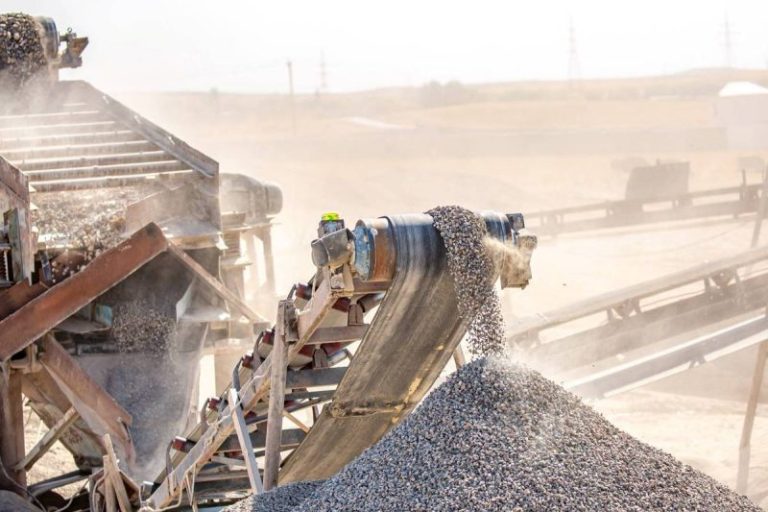
Tepponen outlined one persistent problem: oversized rocks and foreign objects making their way through processing plants.

“If an uncrushable rock or piece of metal gets into the crusher, it can cause blockages, damage belts and create significant downtime,” he said. “If it travels downstream, it can damage equipment and create critical bottlenecks.”

In Western Australia, BHP employs a hub-and-spoke model that connects five mines to a central processing facility. If one of the hazards disrupts operations at the facility, it can affect operations at the mines connected to it.

Additionally, fixing these issues exposes maintenance teams to higher-risk tasks, so eliminating the problem in the first place improves both productivity and safety.

Tepponen explained that historically, workers would be used to identify the hazards before they were loaded onto the truck, but once they reached the conveyor, they became much harder to remove.

The company now employs a real-time monitoring system that detects objects, alerts controllers and can automatically stop the conveyor.

“These are actually very simple technologies available commercially off the shelf. Cameras and machine learning control systems applied to a real world operational constraint,” he said.

In the prior three years, these incidents had caused over 1,000 hours of downtime, according to Tepponen. However, since it installed the monitoring system, the company hasn’t experienced any major disruptions or destruction events caused by oversized rocks, a change that he said amounts to hundreds of thousands of metric tons per year of increased processing.

“It’s a small system-level optimization that can deliver outsized returns on the AI journey. This is not a massive program. This is identifying simple constraints, applying proven technology,” he said, and emphasized the process of controlled testing, iteration and then deploying at scale. ‘That’s how systematic innovation actually happens.’

Testing scenarios with digital twin simulations

In his third use case example, he turned to BHP’s semi-autogenous grinding (SAG) mill at its Escondida operation in Chile, at which differing particle size and hardness in ore feed was impacting production.

The company used AI to create a digital twin of the value chain, which included everything that was known about the operation, such as ore body knowledge, processing behavior and operational constraints.

“That digital simulation enabled scenario testing and gave us the ability to inform blasting and blending strategies to predict granularity,” Tepponen said, noting that monthly production losses attributed to the problem fell by around 70 percent.

“The lesson, when the ore body knowledge is connected directly to the processing decisions, the system becomes more stable and predictable.”

BHP has since applied the approach to other operations, including ones in Australia and Chile.

“The Gen AI integration is multicultural, so non-technical users and the technical users can run scenarios in their first language,” he said, an aspect that he said is very important for the local companies at its operations.

Building foundations, collaboration key to AI usefulness

Tepponen was emphatic that AI alone wasn’t a “superhero.” BHP needed to specifically design these AI platforms in order to achieve these results.

“One of the most important lessons we have learned is we don’t actually get value from AI by starting with AI. The value comes from the foundations, consistent data standards, interoperability. You need to start at the bottom and make your way to the top.”

Tepponen also stressed the value of collaboration, noting that companies tend to be protective of their intellectual property, but opportunities are being missed that could be mutually beneficial.

“The hard truth is, no company can solve this problem of data fragmentation and system integration,” he said, and the industry would benefit from a collaborative approach on standards, interoperability and data throughout the value chain.

Securities Disclosure: I, Dean Belder, hold no direct investment interest in any company mentioned in this article.

This post appeared first on investingnews.com

In 2025, supply disruptions highlighted a growing concern as copper mines in the top copper-producing countries were aging without new mines to replace them.

Additionally, copper demand from electrification is expected to rise significantly in the coming years.

The competing forces of the global macroeconomic situation and a tightening supply and demand situation caused major swings in the copper price last year, and the red metal set a new all-time high in January 2026 as it moved above the US$6 per pound mark on the COMEX for the first time.

Despite a tight supply situation, demand from the energy transition has largely been muted as China, traditionally the largest consumer of copper for its infrastructure, works to stimulate its flagging economy.

The forecast for copper over the next few years is that supply deficits will continue to widen, which in turn should provide more tailwinds for the price of copper and greater upside to company balance sheets.

For investors interested in copper, it’s worth looking at copper production by country. According to the latest US Geological Survey data, global copper production reached 23 million metric tons (MT) in 2025.

Chile again took the crown to become the top copper producing country last year, but some of the others on the list may surprise you. Read on to find out the top 10 copper countries and what mines are driving each country’s copper output.

1. Chile

Copper production: 5.3 million metric tons

In 2025, Chile produced 5.3 million metric tons of copper, making it the world’s largest copper producing country with about 23 percent of the total global copper output. Its copper production dropped 210,000 MT in 2025 compared to its 2024 output. Chile also takes first place for copper reserves with 180 million MT.

Naturally, many of the world’s leading copper miners have substantial operations in Chile, including the state-owned Codelco, Anglo American (LSE:AAL,OTCQX:AAUKF), Glencore (LSE:GLEN,OTC Pink:GLCNF) and Antofagasta (LSE:ANTO,OTC Pink:ANFGF).

Chile is also home to BHP’s (ASX:BHP,NYSE:BHP,LSE:BHP) Escondida, the largest copper mine in the world with an annual output in the 2 million metric ton range. BHP owns a 57.5 percent stake in the operation, with Rio Tinto (ASX:RIO,NYSE:RIO,LSE:RIO) owning 30 percent and Jeco holding the remaining stake.

According to BHP’s 2025 annual report, the company’s portion of Escondida production came in at 1.13 million MT of copper in 2025.

Despite production disruptions at Codelco’s El Teniente, Chile’s copper production is expected to grow to 5.61 million MT in 2026, according to Chile’s copper industry watchdog Cochilco.

2. Democratic Republic of Congo

Copper production: 3.2 million metric tons

In 2025, the Democratic Republic of Congo (DRC) produced 3.2 million metric tons of copper, accounting for nearly 14 percent of global copper output.

The DRC has rapidly increased its copper production in recent years, and its 2025 output marked a continuation of the trend, rising from 2.99 million MT the previous year.

One of the country’s largest copper operations is the Kamoa-Kakula copper complex, a joint venture between Ivanhoe Mines (TSX:IVN,OTCQX:IVPAF) and Zijin Mining Group (HKEX:2899,SHA:601899,OTCPL:ZIJMF). The operation’s Phase 3 expansion commenced commercial production in August 2024.

In 2025, Kamoa-Kakula produced 388,838 MT of copper, a significant decrease from the 437,061 MT produced in 2024. While its copper output was supported by Phase 3, it was impacted by a temporary shutdown of sections of the mine in May 2025 after seismic activity and flooding occurred at the complex. On January 2, 2026, the company announced that it was proceeding to stage 3 dewatering as it works to ramp up production at the affected areas of the mine.

3. Peru

Copper production: 2.7 million metric tons

In 2025, Peru produced 2.7 million metric tons of copper, accounting for just below 12 percent of the world’s copper output. Its total is down a slight 40,000 MT from its copper output in 2024.

Freeport-McMoRan (NYSE:FCX) operates Cerro Verde, the largest copper mine in Peru. In its Q4 2025 report, the company reported that the mine produced 863 million pounds of copper, equivalent to 391,450 MT. This was down from 949 million pounds in 2024.

Other significant copper operations in Peru include Anglo American’s (LSE:AAL,OTCQX:NGLOY) Quellaveco mine and Southern Copper’s (NYSE:SCCO) Tia Maria mine. The majority of copper produced in Peru is shipped to China and Japan, and South Korea and Germany are other top export destinations.

4. China

Copper production: 1.8 million metric tons

In 2025, China mined 1.8 million metric tons of copper, marginally lower than the 1.84 million metric tons produced in 2024. The country’s production hit a peak of 1.94 million MT in 2022.

While the country is fourth place for mine production, when it comes to refined copper production, China is by far the winner. In 2025, China’s refined copper production totaled 14 million metric tons, representing more than 48 percent of global refined copper production and six times the production of the DRC, the second highest refined copper producer.

Zijin Mining Group, a leading metal producer in China, owns a majority stake in the Qulong copper-molybdenum-silver-gold mine in Tibet, the largest copper mine in China.

Zijin reported the Qulong mine produced over 190,000 MT of copper in 2025. Phase 2 started production in January 2026, and is expected to raise its copper output to 300,000 MT in 2026.

5. Russia

Copper production: 1.3 million metric tons

Russia produced 1.3 metric tons of copper in 2025, a sizable increase from the 1.02 million MT produced the previous year.

One of the key contributions to the rise in Russian copper output is the ramp up of Phase 1 production at Udokan Copper’s Udokan mine in Siberia, which entered production in 2023. Phase 1 is expected to produce up to 135,000 MT of copper per year once fully online. This is expected to grow to 450,000 MT if Phase 2 enters production.

Although the copper hydrometallurgical plant at Udokan was delayed by fires in late 2023, copper mining was reported to be unaffected. Udokan pivoted to exporting its copper concentrate instead of refining it domestically, and in a September 2025 release, the company reported it had cumulatively exported 160,000 MT of copper equivalent since the start of production.

6. United States

Copper production: 1 million metric tons

The United States produced 1 million metric tons of copper in 2025. This was down slightly from 1.04 million MT of copper the prior year, and continued a downward trend from the 1.23 million MT the country produced in 2022.

The majority of US copper comes from Arizona, which accounts for 70 percent of domestic supply. Other states with significant copper output include Michigan, Missouri, Montana, Nevada and New Mexico. Overall, 17 mines are responsible for 99 percent of copper production in the United States.

Freeport McMoRan’s Morenci mine in Arizona, a joint venture with Sumitomo (OTC Pink:SSUMF,TSE:8053), is the largest copper mine in the US. According to Freeport’s Q4 2025 report, its combined US operations produced 1.3 billion pounds of copper over the course of the year, equivalent to 591,484 MT.

Other significant operations include Freeport’s Safford and Sierrita mines, at which copper production totaled 249 million MT and 165 million MT respectively.

7. Zambia

Copper production: 940,000 metric tons

In 2025, Zambia produced 940,000 metric tons of copper, up significantly from 823,000 MT in 2024. Production fell to 712,000 MT in 2023 after reaching 840,000 MT in 2021; however, over the last two years, production has rebounded.

There are four major mines that dominate the country’s copper production, including Barrick’s (TSX:ABX,NYSE:B) Lumwana and First Quantum Minerals’ (TSX:FM,OTCPL:FQVLF) Kansanshi.

According to First Quantum’s fourth quarter report, Kansanshi produced 181,183 MT of copper during 2025, up from 170,929 MT the prior year.

Mopani Copper Mines is another major copper producer in the country. While the company was previously owned by a joint venture between Glencore (LSE:GLEN,OTCPL:GLCNF) and First Quantum, the Zambian government, which previously held a 10 percent stake, acquired full ownership in 2021.

8. Australia

Copper production: 730,000 metric tons

In 2025, Australia produced 730,000 metric tons of copper, a slight decrease from the 765,000 MT produced in 2024.

The country’s largest copper operation is BHP’s Olympic Dam mine in South Australia. According to BHP’s annual report, its Australian operations produced 101,900 MT of copper in 2025, down from 106,300 MT in 2024.

The state of Queensland is home to the Mount Isa complex, run by a subsidiary of Glencore. While it was one of Australia’s largest copper producers, the operation was shuttered in July 2025 after a 70 year mine life.

Although it may have modest output compared to those at the top of the list, Australia holds the second highest copper reserves in the world at 100 million metric tons.

9. Indonesia

Copper production: 710,00 metric tons

In 2025, Indonesia produced 710,000 metric tons of copper. While the country’s output had been rising steadily in recent years, it plummeted last year from 1.01 million MT in 2024 due to an accident at the Grasberg copper-gold complex, the country’s largest copper mine.

Grasberg is a 51/48 joint venture between the Indonesian state-owned PT Indonesia Asahan Aluminium and Freeport-McMoRan.

On September 8, 2025, a sudden ingress of wet materials at the mine’s primary Grasberg Block Cave killed seven workers. While Freeport was able to restart operations at unaffected portions of Grasberg during Q4 2025, the mine is unlikely to see full production return until sometime in 2027, with the companies projecting a 600,000 MT loss of contained copper by the end of 2026.

Another of the country’s largest operations is PT Amman Mineral’s (OTCPK:AMMNF,IDX:AMMN) Batu Hijau copper-gold mine. During the first nine months of 2025, the mine produced 145 million pounds of copper in concentrate, equivalent to about 65,770 MT. This marked a 51 percent decline from the same period in 2024 as Amman’s activities transitioned to Phase 8 of the operation. The company set full year 2025 copper guidance at 103,400 MT, and projected a significant increase to 220,000 MT in 2026.

10. Kazakhstan

Copper production: 710,000 metric tons

In 2025, Kazakhstan produced 710,000 metric tons of copper, slightly lower than the 724,000 MT produced in 2024. Still, Kazakhstan’s copper output has climbed substantially in recent years; it produced just 510,000 MT in 2021.

The nation plans to continue that trend, releasing a National Development Plan in February 2024 that aims to increase mineral production by 40 percent by 2029. The plan will involve increased exploration, project co-financing and tax incentives for investment.

Among the country’s largest mining companies is private firm KAZ Minerals, which owns the Aktogay mine. According to the company’s Q3 2025 production report, the mine produced 171,600 MT of copper during the first nine months of the year, in line with the 172,200 MT produced in 2024.

10. Mexico

Copper production: 690,000 metric tons

Rounding out our list of top copper producers, Mexico produced 690,000 metric tons of copper in 2025, a decrease from 2024’s 717,000 MT.

The country’s Sonora state holds Mexico’s two largest copper mines, Buenavista mine and La Caridad. Both mines are owned by Southern Copper (NYSE:SCCO), a subsidiary of Grupo Mexico (OTC Pink:GMBXF,BMV:GMEXICOB).

According to the company’s Q4 2025 report, Buenavista produced 332,710 MT during the year, down from 348,960 MT in 2024.

Securities Disclosure: I, Dean Belder, hold no direct investment interest in any company mentioned in this article.

This post appeared first on investingnews.com

With technology, energy and society set to undergo massive transformations over the next few decades, the mining sector may never have been more important than it is today.

Globally, demand for consumer electronics such as mobile phones, air conditioners and refrigerators is on the rise. Additionally, the energy needs and technological advancement associated with artificial intelligence (AI) and data centers are driving even more demand from commercial sectors.

However, the mining industry has been known for its heavy environmental footprint and complex relationships with local communities. As much of the world pushes towards a greener future, mining companies are increasingly integrating environmental and social responsibility as they operate mines and projects around the world.

In the opening keynote speech at the 2026 Prospectors & Developers Association of Canada convention in Toronto, Vale (NYSE:VALE) CEO Gustavo Pimenta, who joined the company in 2021 following one of the worst mining accidents in Brazil’s history, spoke about these challenges and the importance of addressing them.

Electrification continues driving minerals demand

Since the start of the third millennium, there has been a broad societal shift.

Not only has the Earth’s population exploded from about 6 billion in 2001 to over 8 billion today, but the needs of both developing and developed nations are changing and growing.

Increasingly, the populations in many developing nations are urbanizing, driving demand for the materials necessary to build and modernize the infrastructure, including electricity grids, needed to adequately support them.

Likewise, western desires and demands are also changing. Consumers are driving a transition to low-carbon and sustainable industries, while also moving toward more service- and tech-reliant economies.

These shifts in both developed and developing economies have one thing in common: they are not possible without the mining sector. However, it’s struggling to match the pace of demand growth.

“We’ll have to increase the supply of minerals in general by effect of five to six times, vis-a-vis everything with mining to date,” Pimenta said. He pointed out that without mining, there is no AI and no energy transition.

“Electrification is a massive theme and trend, the electrification of everything, that is driving so much of the copper excitement lately,” he added. However, Pimenta said it isn’t just copper demand that is increasing — he pointed to rising demand for other metals such as nickel, iron and rare earths.

Although demand for these commodities has been high, it’s only recently that more consumers are becoming aware of the important role they play in how electricity is delivered or how mobile phones are made.

For Pimenta, this has led to a disconnect, with NVIDIA (NASDAQ:NVDA) and its US$4.3 trillion market cap exceeding the US$3.8 trillion captured by the top 300 mining companies.

However, he sees some balance returning.

“That is certainly something that is imbalanced, and we started to see a little bit of that rebalance today with money moving away from tech into real, important assets like the commodity assets,” he said.

Evolving economic and environmental strategies for mining

As awareness increases alongside demand, there has been a greater pressure on mining companies to move beyond their checkered pasts and to recognize their own role in creating a sustainable, responsible industry.

Pimenta emphasized this point.

“We can’t just stand and have a conversation where we are telling people, ‘I’m sorry that you have to buy from me.’ We have to go beyond that. We have to move from being essential to something else,” he said.

He noted that his company, Vale, isn’t just focused on its operations in Canada or Brazil; it has operations in 31 countries, and the scope of its responsibility is global.

Pimenta suggested that the future of mining will require a different way of operating, and that some of the needed changes are already being implemented today, citing the adoption of technology and greater automation.

In terms of how Vale is progressing this at its own operations, the company’s use of these technologies led to its Brucutu mine in Brazil being awarded the Shingo prize for operational excellence.

This marked the first time the prize has been awarded to an operation in Latin America.

“That classification shows that moving towards that future not only is the right thing because it’s safe, but also it’s more productive and more efficient. I think we have to make sure we continue to accelerate that,” Pimenta said.

Another area of focus for Pimenta is for Vale to develop what he sees as the workforce of the future.

“They have to be able to deal with AI and find ways to be more productive,” he said. “So there’s a new workforce needed that coexists with the senior, experienced workforce that is already in the companies.”

While automation addresses some core safety and business case aspects of mining’s future, Pimenta also focused on environmental concerns as a central concern. Using the example of Vale’s Carajás operation, he explained how mining companies can offer protection to the lands on which they operate.

The site covers about 800,000 hectares, but because of an agreement it made with the Brazilian government in the 1980s, the company uses only 2 percent of the total area for its mining operations, and preserves everything else.

“What has happened to that area? Everything outside the area we protect has been devastated. We protect with technology, guards, a partnership with the Brazilian Federal Police, and a lot of investment,” Pimenta said.

He acknowledged that mines will impact the environment, and it may seem counterintuitive that companies like Vale can be stewards of the land in ways that governments can’t.

However, Vale’s own past hasn’t been without incident. In 2019, a tailings dam collapsed at its Brumadinho operation, sending 13 million cubic meters of mud and mining waste downstream, killing 272 people.

For his part, Pimenta didn’t shy away from this, and said it forced the company to reassess its operations.

“Today 5 percent of our production is without dams, dry stack infiltration, and that’s the way we will continue to move. We are doing more use of circularity. It’s cheaper, less environmental impact,” he said, noting the use of reprocessing of mine waste to gather more resources.

Additionally, Vale has also been working to reduce its carbon footprint. Pimenta stated that the company had been looking at several ways to do this including using ethanol in its trucks at its Brazilian mines instead of diesel.

However, mines are only one part of the equation for decarbonization, as even more carbon dioxide is emitted during the production of steel.

“The steel industry is still very dependent on fossil fuel, coal, and that’s how most of the production is based. We are working on two main fronts. The first is green solutions, new products that will help our clients to decarbonize,” he said.

One of these solutions is a new iron ore briquette that Pimenta says uses a cold agglomeration process that can reduce the carbon footprint when used in a blast furnace.

The second front Vale is focused on is the development of mega hubs to produce steel in regions that have cheap access to lower-carbon fuels like hydrogen.

Supporting local communities is key

Beyond the economics and the environmental concerns with mining, Pimenta says that mining companies hold social commitments to the communities in which they operate.

“Back in 2021, when I joined the company, we announced a target to lift 500,000 people out of poverty,” he said.

This goal drew a lot of questions from Vale shareholders who asked how much it would cost, and if this meant putting people on payroll. Pimenta explained Vale co-developed a methodology to help them address the specific needs of different communities where they operate.

“Sometimes it’s education, sometimes it’s job opportunities, sometimes they just need to eat to have another day,” he explained. “Today we can measure, we know the social security number of each one of the 52,000 people that, from international standards measurement, have been lifted out of poverty.”

Operations should go beyond mining and making money; they should also contribute positively to the community. If they do so, Pimenta says there could be a shift in how mining companies are perceived. Rather than being pariahs, he hopes they can become welcomed for the value they bring to people.

The company also has the goal of increasing the percentage of women in its workforce. “Diversity is another element that, despite people not talking about it, is important. It was important before, and it continues to be important,” he said.

Investor takeaway

Pimenta addressed early in his keynote that demand for resources is there, but access requires money — it’s started to flow, but he suggested that changing perceptions and approaches within the mining industry is critical.

While there has been a push from some to move away from initiatives like ESG, or diversity, equity and inclusion, the reality is that they’ve permeated the mining industry for a long time now.

Throughout the presentation, Pimenta laid out how these goals have not only become foundational to the way Vale operates, but they can also provide long-term economic benefits to mining companies.

Initiatives, such as greater automation, have made Vale’s operations more efficient, driving cost-effectiveness, while dry tailings have enabled the reprocessing of mining waste and the maximization of output.

Social programs can drive community involvement and help make the operations more desirable to the communities where they operate. This alone has been a bottleneck in permitting in many jurisdictions; if communities welcome mines, it can reduce significant red tape.

Likewise, a diversified workforce can create more jobs in the community while opening the industry to people who haven’t been accepted in the past, helping address another industry challenge: finding new workers.

Securities Disclosure: I, Dean Belder, hold no direct investment interest in any company mentioned in this article.

This post appeared first on investingnews.com