

Archive

March 27, 2026

Browsing

The S&P 500 ($SPX) just logged its fifth straight trading box breakout, which means that, of the five trading ranges the index has experienced since the April lows, all have been resolved to the upside.

How much longer can this last? That’s been the biggest question since the massive April 9 rally. Instead of assuming the market is due to roll over, it’s been more productive to track price action and watch for potential changes along the way. So far, drawdowns have been minimal, and breakouts keep occurring. Nothing in the price action hints at a lasting change — yet.

While some are calling this rally “historic,” we have a recent precedent. Recall that from late 2023 through early 2024, the index had a strong start and gave way to a consistent, steady trend.

From late October 2023 through March 2024, the S&P 500 logged seven consecutive trading box breakouts. That streak finally paused with a pullback from late March to early April, which, as we now know, was only a temporary hiccup. Once the bid returned, the S&P 500 went right back to carving new boxes and climbing higher.

New 52-Week Highs Finally Picking Up

If there’s been one gripe about this rally, it’s that the number of new highs within the index has lagged. As we’ve discussed before, among all the internal breadth indicators available, new highs almost always lag — that’s normal. What we really want to see is whether the number of new highs begins to exceed prior peaks as the market continues to rise, which it has, as shown by the blue line in the chart below.

As of Wednesday’s close, 100 S&P 500 stocks were either at new 52-week highs or within 3% of them. That’s a strong base. We expect this number to continue rising as the market climbs, especially if positive earnings reactions persist across sectors.

Even when we get that first day with 100+ S&P 500 stocks making new 52-week highs, though, it might not be the best time to initiate new longs.

The above chart shows that much needs to align for that many stocks to peak in unison, which has historically led to at least a short-term consolidation, if not deeper pullbacks — as highlighted in yellow. Every time is different, of course, but this is something to keep an eye on in the coming weeks.

Trend Check: GoNoGo Still “Go”

The GoNoGo Trend remains in bullish mode, with the recent countertrend signals having yet to trigger a greater pullback.

Active Bullish Patterns

We still have two live bullish upside targets of 6,555 and 6,745, which could be with us for a while going forward. For the S&P 500 to get there, it will need to form new, smaller versions of the trading boxes.

Failed Bearish Patterns

In the chart below, you can view a rising wedge pattern on the recent price action, the third since April. The prior two wedges broke down briefly and did not lead to a major downturn. The largest pullbacks in each case occurred after the S&P 500 dipped below the lower trendline of the pattern.

The deepest drawdown so far is 3.5%, which is not exactly a game-changer. Without downside follow-through, a classic bearish pattern simply can’t be formed, let alone be broken down from.

We’ll continue to monitor these formations as they develop because, at some point, that will change.
The two pilots killed in the collision between a passenger jet and a Port Authority fire truck at New York’s LaGuardia Airport late Sunday have been identified as Antoine Forest and Mackenzie Gunther.

The pair have yet to be officially named by authorities, who have said only that both pilots of the Canada Air Express plane died and that they were based in Canada. Their identities were confirmed by Canadian news reports and by a college that one pilot attended.

Antoine Forest, one of the pilots who reportedly died in the LaGuardia plane collision.via Facebook

The Federal Aviation Administration, the National Transportation Safety Board and other agencies are investigating the crash. They will seek to determine how the truck was able to cut across the jet’s path moments after it touched down on the runway.

Here’s what we know about the fatal crash.

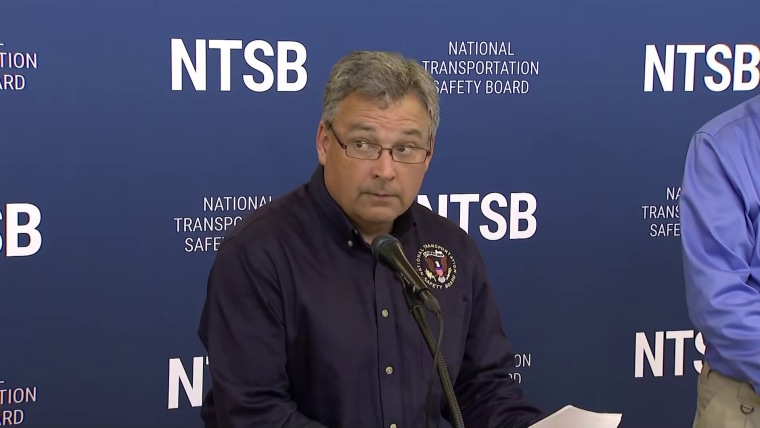
At a news conference Tuesday afternoon, NTSB officials released preliminary information gleaned from the final three minutes of the plane’s cockpit voice recorder that showed that the fire truck was cleared to cross the runway 20 seconds before the crash.

At 2 minutes and 22 seconds, the flight crew checked in with the tower at LaGuardia, said Doug Brazy, NTSB’s senior aviation investigator.

At 2 minutes and 17 seconds, the tower cleared the airplane to land on Runway 4.

Brazy said that at 1 minute and 3 seconds, an airport vehicle made a radio transmission to the tower but that the transmission was “stepped on” by another radio transmission. NTSB Chairwoman Jennifer Homendy said that means there was some sort of interference with the transmission.

At 54 seconds, the tower advised the flight crew that the plane was at a stable approach, Brazy said.

At 40 seconds, the LaGuardia tower asked which vehicle needed to cross a runway. Brazy said the fire truck made a transmission to the tower, which the tower acknowledged. At 25 seconds, the truck requested permission to cross Runway 4. Brazy said that at 20 seconds, the tower cleared the truck to cross.

At 17 seconds, the fire truck read back the runway crossing clearance, he said. According to Brazy, the tower instructed a Frontier Airlines flight to hold position, and at 9 seconds, the tower told the fire truck to stop.

At 8 seconds, there was a sound consistent with the airplane’s landing gear touching down on the runway, he said. At 6 seconds, there was a pilot transfer of controls. Homendy told reporters that the first officer was flying the plane and transferred control to the captain.

At 4 seconds, the tower again instructed the fire truck to stop, Brazy said.

At least 40% of Russia‘s oil export capacity is at a halt following Ukrainian drone attacks, a disputed attack on a major pipeline and the seizure of tankers, according to Reuters calculations based on market data.

The shutdown is the most severe oil supply disruption in the modern history of Russia, the world’s second largest oil exporter, and has hit Moscow just as oil prices exceeded $100 a barrel due to the Iran war.

Russia’s oil output is one of the main sources of revenue for the national budget and is central to the $2.6 trillion economy.

An oil tanker moored in Novorossiysk, Russia, in 2022.AP

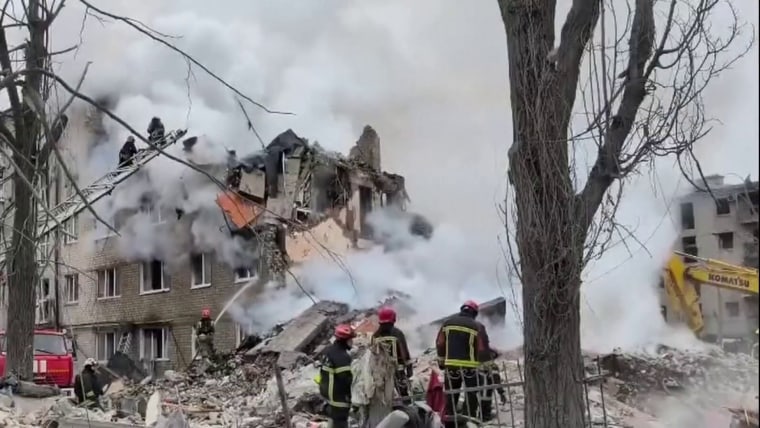
Ukraine intensified drone attacks on Russia‘s oil and fuel export infrastructure this month, hitting all three of Russia‘s major western oil export ports, including Novorossiysk on the Black Sea and Primorsk and Ust-Luga on the Baltic Sea.

According to Reuters calculations, about 40% of Russia‘s crude oil export capabilities — or around 2 million barrels per day, were shut as of Wednesday after the most recent attack.

That includes Primorsk and Ust-Luga as well as the Druzhba pipeline, which runs through Ukraine to Hungary and Slovakia.

Kyiv has also targeted pipeline oil pumping stations and refineries. Kyiv says it aims to diminish Moscow’s oil and gas revenue, which accounts for around a quarter of Russia‘s state budget proceeds, and weaken its military might.

Russia says the Ukrainian strikes are terrorist attacks and has tightened security across its 11 time zones.

Firefighters extinguish a blaze at a chemical transport terminal at Russia’s Ust-Luga port on Jan. 21, 2024. Local media reported that Ukrainian drones attacked the port.Telegram Channel of head of the Kingisepp district via AP

Ukraine said that part of the Druzhba pipeline was damaged by Russian strikes at the end of January, while both Slovakia and Hungary demanded Kyiv restart the supplies immediately.

The Novorossiysk oil terminal, which can handle up to 700,000 bpd, has been loading oil below plan since damage from a heavy Ukrainian drone attack early this month.

In addition, frequent seizures of Russia-related tankers in Europe have disrupted 300,000 bpd of Arctic oil exports flowing from the port of Murmansk, traders said.

With its westward export routes under fire, Moscow must rely on oil exports to Asian markets, but those routes are limited due to capacity, traders said.

Russia continues uninterrupted supplies via pipelines to China, including the Skovorodino-Mohe and Atasu-Alashankou routes, as well as ESPO Blend exports by sea via the port of Kozmino.

Together, the three routes account for some 1.9 million bpd of oil.

Russia also continues to load oil from its two far eastern Sakhalin projects, shipping about 250,000 bpd from the island.

Traders also say that Russia is supplying the refineries in neighboring Belarus with around 300,000 bpd of oil.