
Archive

February 12, 2026

Browsing

The S&P 500 ($SPX) just logged its fifth straight trading box breakout, which means that, of the five trading ranges the index has experienced since the April lows, all have been resolved to the upside.

How much longer can this last? That’s been the biggest question since the massive April 9 rally. Instead of assuming the market is due to roll over, it’s been more productive to track price action and watch for potential changes along the way. So far, drawdowns have been minimal, and breakouts keep occurring. Nothing in the price action hints at a lasting change — yet.

While some are calling this rally “historic,” we have a recent precedent. Recall that from late 2023 through early 2024, the index had a strong start and gave way to a consistent, steady trend.

From late October 2023 through March 2024, the S&P 500 logged seven consecutive trading box breakouts. That streak finally paused with a pullback from late March to early April, which, as we now know, was only a temporary hiccup. Once the bid returned, the S&P 500 went right back to carving new boxes and climbing higher.

New 52-Week Highs Finally Picking Up

If there’s been one gripe about this rally, it’s that the number of new highs within the index has lagged. As we’ve discussed before, among all the internal breadth indicators available, new highs almost always lag — that’s normal. What we really want to see is whether the number of new highs begins to exceed prior peaks as the market continues to rise, which it has, as shown by the blue line in the chart below.

As of Wednesday’s close, 100 S&P 500 stocks were either at new 52-week highs or within 3% of them. That’s a strong base. We expect this number to continue rising as the market climbs, especially if positive earnings reactions persist across sectors.

Even when we get that first day with 100+ S&P 500 stocks making new 52-week highs, though, it might not be the best time to initiate new longs.

The above chart shows that much needs to align for that many stocks to peak in unison, which has historically led to at least a short-term consolidation, if not deeper pullbacks — as highlighted in yellow. Every time is different, of course, but this is something to keep an eye on in the coming weeks.

Trend Check: GoNoGo Still “Go”

The GoNoGo Trend remains in bullish mode, with the recent countertrend signals having yet to trigger a greater pullback.

Active Bullish Patterns

We still have two live bullish upside targets of 6,555 and 6,745, which could be with us for a while going forward. For the S&P 500 to get there, it will need to form new, smaller versions of the trading boxes.

Failed Bearish Patterns

In the chart below, you can view a rising wedge pattern on the recent price action, the third since April. The prior two wedges broke down briefly and did not lead to a major downturn. The largest pullbacks in each case occurred after the S&P 500 dipped below the lower trendline of the pattern.

The deepest drawdown so far is 3.5%, which is not exactly a game-changer. Without downside follow-through, a classic bearish pattern simply can’t be formed, let alone be broken down from.

We’ll continue to monitor these formations as they develop because, at some point, that will change.

Tartisan Nickel (CSE:TN,OTCQX:TTSRF,FSE: 8TA) is a Canadian exploration and development company focused on advancing high-quality critical mineral assets in Ontario. Its flagship asset, the Kenbridge nickel project in Northwestern Ontario, is an advanced-stage nickel sulphide deposit containing nickel, copper and cobalt.

Management’s strategy for Kenbridge is clear and execution-driven: expand and upgrade the resource through drilling, extend potential mine life, and continue systematically de-risking the project.

Tartisan Nickel has been engaging with Treaty # 3 First Nations since May 2007.

At the same time, Tartisan holds the Sill Lake silver project, a past-producing silver-lead property near Sault Ste. Marie, Ontario. Supported by strong fundamentals for nickel, copper and silver, management positions Tartisan as a multi-asset story—providing investors with exposure to several value drivers within a single platform.

Company Highlights

  • Clear focus on drilling-driven value creation, with active programs designed to upgrade inferred resources, expand the deposit at depth, and extend mine life into the mid-teens
  • Low-capex development profile relative to many peer nickel projects, supported by a historic shaft, road access, and established infrastructure
  • Sill Lake Silver Project provides additional, underappreciated value, offering exposure to silver through a brownfields, past-producing asset with a defined historic resource
  • Experienced leadership team with deep capital markets and mine development experience, focused on disciplined capital allocation and unlocking value from opportunity-acquired assets

This Tartisan Nickel profile is part of a paid investor education campaign.*

Click here to connect with Tartisan Nickel (CSE:TN,OTCQX:TTSRF,FSE: 8TA) to receive an Investor Presentation

This post appeared first on investingnews.com

Here’s a quick recap of the crypto landscape for Wednesday (February 11) as of 9:00 p.m. UTC.

Get the latest insights on Bitcoin, Ether and altcoins, along with a round-up of key cryptocurrency market news.

Bitcoin (BTC) was priced at US$67,551.42, down 18 percent over the last 24 hours.

Bitcoin price performance, February 11, 2026.

Chart via TradingView.

“Bitcoin appears to be entering a stabilization phase before its next directional move. In the near term, prices are likely to consolidate around the US$70,000 level as the market digests recent volatility and continued profit-taking, but the broader setup points to a gradual recovery toward the US$85,000 to US$95,000 range by mid-2026.

“The key driver is institutional behavior: ETF outflows are slowing rather than accelerating, suggesting that forced selling pressure is easing and longer-term allocators are becoming more selective instead of exiting outright. At the same time, regulatory progress — particularly around stablecoin frameworks and clearer market structure — continues to strengthen Bitcoin’s position as a maturing asset within global portfolios, especially as investors look for inflation hedges amid ongoing macro uncertainty.

“While short-term price action may remain uneven, innovation across DeFi and tokenized assets is reinforcing the underlying crypto ecosystem, creating conditions that have historically supported post-correction recoveries and attracted long-term capital back into Bitcoin.”

Ether (ETH) was priced at US$1,955.33, down by 2.8 percent over the last 24 hours.

Altcoin price update

  • XRP (XRP) was priced at US$1.38, down by 1.2 percent over 24 hours.
  • Solana (SOL) was trading at US$79.64, down by 3.5 percent over 24 hours.

Today’s crypto news to know

Robinhood shares Q4 earnings

Robinhood Markets (NASDAQ:HOOD) released its latest quarterly report on Wednesday, revealing net income totaling US$605 million for Q4 2025 and US$1.9 billion for the year.

The company reported a record US$1.28 billion in quarterly revenue, a 27 percent increase year-on-year, but shy of estimates of about US$1.36 billion. Its full‑year 2025 revenue reached US$4.5 billion, up 52 percent.

However, crypto revenue fell 38 percent to US$221 million in Q4.

Despite a fundamentally solid quarter, with record earnings per share of US$0.66 in Q4 and US$2.05 for 2025, shares dropped between 7 and 12 percent after the print and closed 9 percent lower on the day.

In other news, Robinhood launched a public testnet for Robinhood Chain, an Ethereum Layer 2 built on Arbitrum technology and designed to support tokenized real‑world and digital assets.

Developers can begin building and testing apps on it ahead of a future mainnet launch. The testnet offers network access, developer docs and compatibility with standard Ethereum tools, plus early support from infrastructure providers such as Alchemy, Chainlink and LayerZero. Robinhood also said it is committing US$1 million to the 2026 Arbitrum Open House program to encourage developer activity on the testnet and eventual mainnet.

Banks dig in on stablecoin yield as CLARITY Act stalls

US banks are hardening their position on stablecoin rules, escalating a policy clash that has left the long-awaited CLARITY Act stuck in Congress. During a White House-hosted meeting led by the administration’s crypto council, banking groups circulated a proposal calling for an outright ban on paying interest or other incentives to stablecoin holders.

The draft language states: “No person may provide any form of financial or non-financial consideration to a stablecoin holder” in connection with holding or using a payment stablecoin.

Banking groups warned that allowing yield on stablecoins could “drive deposit flight that would undercut Main Street lending,” while crypto advocates argued innovation should not be stifled. The dispute centers on whether stablecoin rewards resemble bank deposits, potentially siphoning funds from traditional lenders.

‘As we noted during the meeting, that framework can and must embrace financial innovation without undermining safety and soundness, and without putting the bank deposits that fuel local lending and drive economic activity at risk. We look forward to ongoing discussions to move market structure legislation forward,’ the American Bankers Association said in a statement following the meeting.

The standoff has become the main obstacle preventing the CLARITY Act from advancing, despite earlier passage of the GENIUS Act, which created a federal framework for dollar-backed stablecoins.

Goldman Sachs maintains US$1 billion Bitcoin ETF exposure

Goldman Sachs (NYSE:GS) disclosed in its latest US Securities and Exchange Commission filing that it holds just over US$1 billion in exposure to Bitcoin through exchange-traded funds (ETFs).

The exposure is split across products, including BlackRock’s iShares Bitcoin Trust ETF (NASDAQ:IBIT) and Fidelity’s Wise Origin Bitcoin ETF (NEO:FBTC). Bitcoin has dropped roughly 47 percent from its high and is trading near US$67,000, part of a broader US$2 trillion drawdown across the crypto market. ETF flows have been volatile, with more than US$6 billion exiting spot Bitcoin funds since November, according to industry data.

Despite the slump, Goldman has also expanded into Ether, XRP and Solana ETFs.

Monad launches Nitro accelerator

Blockchain company Monad announced Tuesday (February 10) launch of a new three month accelerator program, Nitro, supported by notable firms including Paradigm, Electric Capital, Dragonfly and Castle Island Ventures.

According to commentary provided in a media briefing accompanying the announcement, “The program is designed to address a common issue in crypto venture funding: teams often raise capital quickly but struggle to ship production-ready products or reach product-market fit. Nitro is structured around execution, shipping cadence, and validation, rather than short-term growth metrics or token-driven incentives.”

The press release notes that the Monad ecosystem has already seen US$108 million raised by projects.

The three month program includes an in-person first month in New York City, and will be followed by two months of focused execution, concluding with a Demo Day for crypto and tech investors.

Interactive Brokers adds Coinbase nano contracts

Interactive Brokers said it is adding “nano contracts’ from Coinbase Global’s (NASDAQ:COIN) derivatives arm to its trading platform. These contracts control fractions of a Bitcoin or Ether coin and require less upfront investment.

Clients can trade these futures, some with set expiry dates and others that track the current price over time, 24/7 within Interactive Brokers’ standard brokerage environment, alongside stocks and options.

The move is meant to make it easier and cheaper for people to get exposure to crypto prices and manage risk, while still using a regulated broker and exchange.

Securities Disclosure: I, Meagen Seatter, hold no direct investment interest in any company mentioned in this article.

Securities Disclosure: I, Giann Liguid, hold no direct investment interest in any company mentioned in this article.

This post appeared first on investingnews.com

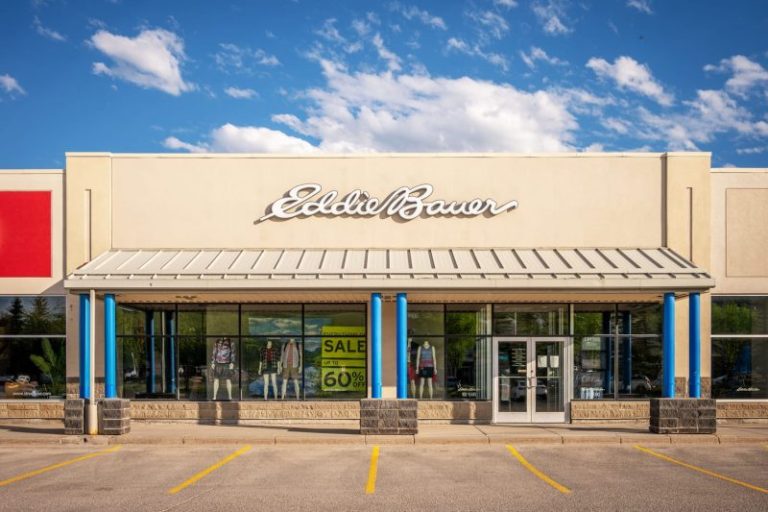
The operator of roughly 180 Eddie Bauer stores across the U.S. and Canada has filed for Chapter 11 bankruptcy protection, blaming declining sales and a litany of other industry headwinds.

The bankruptcy filing marks the third time in a little over two decades for the storied-but-now-tired brand that began as a Seattle fishing shop, later outfitted the first American to climb Mount Everest and made thousands of newfangled down jackets and sleeping bags for the military during World War II.

Eddie Bauer LLC said Monday it had entered into a restructuring pact with its secured lenders as it made the filing in the U.S. Bankruptcy Court for the District of New Jersey.

Most Eddie Bauer retail and outlet stores in the U.S. and Canada will remain open as the company winds down certain locations. It noted that it will conduct a court-supervised sales process, and if a sale can’t be executed, it will begin a wind-down of its U.S. and Canadian operations.

“This is not an easy decision,” said Marc Rosen, CEO of Catalyst Brands, which maintains the license to operate Eddie Bauer stores in the U.S. and Canada. “However, this restructuring is the best way to optimize value for the retail company’s stakeholders and also ensure Catalyst Brands remains profitable and with strong liquidity and cash flow.”

Eddie Bauer’s stores outside of the U.S. and Canada are operated by other licensees, are not included in the Chapter 11 filings, and will stay open, according to the release.

Authentic Brands Group continues to own the intellectual property associated with the Eddie Bauer brand and may license the brand to other operators, the company said. The operations of other brands in the Catalyst Brands portfolio are not affected by this filing and will continue in the normal course, according to the company.

Eddie Bauer’s e-commerce and wholesale operations will also not be impacted by the wind down, as they are operated by a company called Outdoor 5, LLC. That was a transition it made in January and became effective Feb. 2.

Eddie Bauer joins a growing list of U.S. retailers this year that are closing stores, as companies reorganize under bankruptcy protection or pare down their operations to focus on the most profitable businesses.

The parent company of Saks Fifth Avenue said last month that it was seeking bankruptcy protection, buffeted by rising competition and the massive debt it took on to buy its rival in the luxury sector, Neiman Marcus, just over a year ago. A few days later, the parent company said it was closing most of its Saks Off 5th stores.

Amazon said earlier this month that it was closing almost all of its Amazon Go and Amazon Fresh locations within days as it narrows its focus on food delivery and its grocery chain, Whole Foods Market.

Eddie Bauer’s namesake founder — an avid outdoorsman — started the company in Seattle in 1920 as Bauer’s Sports Shop, according to the brand’s website. In 1945, after making more than 50,000 jackets for the military, it launched a mail-order catalog.

“Bauer’s Sports Shop was not just a place where people purchased clothing and gear, it was a community hub where folks gathered to share their wisdom, learn, and talk about their experiences in the outdoors,” the website says.

The company created an American goose-down insulated jacket, known as the “Skyliner,” in 1936, and it became the company’s first patented jacket. It also outfitted the first American to climb Mount Everest — James W. Whittaker — with an Eddie Bauer parka in 1963.

After Bauer retired in 1968 and sold the business to his partner, the outdoor brand shifted more toward casual apparel and was bought by General Mills Inc. in 1971 and then by Spiegel Inc. in 1988. After Spiegel filed for bankruptcy in 2003 and most of its assets were sold, the remainder of the company was reorganized in 2005 as Eddie Bauer Holdings Inc.

In June 2009, Eddie Bauer filed bankruptcy and was acquired by Golden State Capital, the following month. In 2021, it was acquired by Authentic Brands and SPARC Group LLC.

A year ago, Catalyst was formed by the merger of SPARC and JCPenney, which Simon Property Group and fellow mall landlord Brookfield bought out of bankruptcy.

Rosen noted that even prior to the inception of Catalyst Brands last year, Eddie Bauer was in a “challenged situation.”

“Over the past year, these challenges have been exacerbated by various headwinds, including increased costs of doing business due to inflation, ongoing tariff uncertainty, and other factors,” he said.

He noted that while Catalyst’s leadership was able to make improvements in product development and marketing, those changes could not be implemented fast enough to fully address the problems created over several years.

Eddie Bauer had nearly 600 stores at its peak in 2001, according to CoStar Group Inc., a commercial real estate data firm.

In a note published earlier this month, Neil Saunders, managing director of GlobalData Retail, wrote that while the Eddie Bauer name is “well known,” the brand hasn’t kept pace with rivals like Swedish outdoor brand Fjallraven and Canadian label Arc’teryx. He also cited issues with quality deteriorating, which, for an outdoor brand measured by the performance of its products, is very problematic.

“And for many younger shoppers, the brand is seen as somewhat old-fashioned and a bit irrelevant,” he said.

This post appeared first on NBC NEWS