
Archive

February 4, 2026

Browsing

The S&P 500 ($SPX) just logged its fifth straight trading box breakout, which means that, of the five trading ranges the index has experienced since the April lows, all have been resolved to the upside.

How much longer can this last? That’s been the biggest question since the massive April 9 rally. Instead of assuming the market is due to roll over, it’s been more productive to track price action and watch for potential changes along the way. So far, drawdowns have been minimal, and breakouts keep occurring. Nothing in the price action hints at a lasting change — yet.

While some are calling this rally “historic,” we have a recent precedent. Recall that from late 2023 through early 2024, the index had a strong start and gave way to a consistent, steady trend.

From late October 2023 through March 2024, the S&P 500 logged seven consecutive trading box breakouts. That streak finally paused with a pullback from late March to early April, which, as we now know, was only a temporary hiccup. Once the bid returned, the S&P 500 went right back to carving new boxes and climbing higher.

New 52-Week Highs Finally Picking Up

If there’s been one gripe about this rally, it’s that the number of new highs within the index has lagged. As we’ve discussed before, among all the internal breadth indicators available, new highs almost always lag — that’s normal. What we really want to see is whether the number of new highs begins to exceed prior peaks as the market continues to rise, which it has, as shown by the blue line in the chart below.

As of Wednesday’s close, 100 S&P 500 stocks were either at new 52-week highs or within 3% of them. That’s a strong base. We expect this number to continue rising as the market climbs, especially if positive earnings reactions persist across sectors.

Even when we get that first day with 100+ S&P 500 stocks making new 52-week highs, though, it might not be the best time to initiate new longs.

The above chart shows that much needs to align for that many stocks to peak in unison, which has historically led to at least a short-term consolidation, if not deeper pullbacks — as highlighted in yellow. Every time is different, of course, but this is something to keep an eye on in the coming weeks.

Trend Check: GoNoGo Still “Go”

The GoNoGo Trend remains in bullish mode, with the recent countertrend signals having yet to trigger a greater pullback.

Active Bullish Patterns

We still have two live bullish upside targets of 6,555 and 6,745, which could be with us for a while going forward. For the S&P 500 to get there, it will need to form new, smaller versions of the trading boxes.

Failed Bearish Patterns

In the chart below, you can view a rising wedge pattern on the recent price action, the third since April. The prior two wedges broke down briefly and did not lead to a major downturn. The largest pullbacks in each case occurred after the S&P 500 dipped below the lower trendline of the pattern.

The deepest drawdown so far is 3.5%, which is not exactly a game-changer. Without downside follow-through, a classic bearish pattern simply can’t be formed, let alone be broken down from.

We’ll continue to monitor these formations as they develop because, at some point, that will change.


Overview

Torrent Capital (TSXV:TORR) is a publicly traded investment company providing exposure to an actively managed growth portfolio of public and private investments.

Torrent Capital provides investors with access to a broad, actively managed portfolio that combines long-term core holdings with income-generating strategies. Covering public equities, private ventures, and royalty investments, the platform is structured to deliver compounded NAV growth. Over the past year, Torrent Capital’s NAV rose from approximately $0.80 to $0.85 per share, outperforming the S&P 500 (12.98 percent) and the TSX Small Cap Index (7.96 percent), highlighting the resilience and effectiveness of its active management approach.

Portfolio Overview

Public Equities

Torrent’s core public equity holdings include the following:

Kneat (TSX:KSI) – A leader in SaaS solutions for digitising validation and quality processes in regulated industries, including life sciences. Torrent invested early, recognising Kneat’s scalable platform and its potential to transform compliance-heavy sectors globally.

Lemonade (NYSE:LMND) – An insurance technology company that leverages artificial intelligence to automate operations such as claims processing and policy issuance, disrupting the $2 trillion global insurance market.

SentinelOne (NYSE:S) – A global leader in AI-powered cybersecurity. Torrent invested in SentinelOne for its ability to disrupt traditional security solutions and scale rapidly as enterprises adopt automated threat detection and response.

Fortune Bay (TSXV:FOR) – A Canadian gold exploration company with promising assets in Saskatchewan and Mexico. Torrent’s investment reflects our belief in gold’s enduring role as a hedge against market volatility, coupled with Fortune Bay’s potential to unlock significant resource value through exploration success.

Sona Nanotech (CSE:SONA) – Innovator in nanotechnology with applications across healthcare and diagnostics. Torrent’s investment thesis is based on the potential for Sona’s unique gold nanorods to deliver breakthroughs in medical technology, particularly in diagnostics and cancer treatment.

ReeXploration (TSXV:REE) – A rare earth exploration company focused on the Eureka Project in Namibia. Torrent invested in ReeXploration for its strategic exposure to critical minerals essential to clean energy and advanced technologies.

Private Ventures

Torrent selectively invests in early-stage private ventures with high growth potential.

Holding:

OARO Technologies – A cybersecurity and digital identity company delivering advanced blockchain-powered authentication, digital ticketing, and secure credential solutions. Torrent invested in OARO for its ability to meet the growing global demand for secure, scalable identity management, positioning the company at the intersection of cybersecurity and blockchain adoption.

Royalty Investments

Torrent maintains selective exposure to royalty investments designed to generate potential long-term, recurring cash flows.

Key investment:

Argentia Capital – Argentia Capital is focused on the construction of port infrastructure, the provision of services and equity ownership in businesses that support aquaculture, renewable energy, and oil and gas sectors, as well as other port developments.

Company Highlights

  • Proven Performance Across Market Cycles: Torrent Capital’s Net Asset Value (NAV) increased from approximately $0.80 per share in 2024 to approximately $0.85 per share as of December 31, 2025, reflecting continued portfolio growth and resilience through market volatility. This performance outpaced the S&P 500 (12.98 percent) and the TSX Small Cap Index (7.96 percent) over the same period.
  • Diversified Investment Model: Combines public equities, private ventures and royalty investments to balance growth and stability through market cycles.
  • Active Management and Transparency: Torrent publishes frequent NAV updates and portfolio disclosures, providing clarity that differentiates it from other investment companies.
  • Proven Leadership: Led by CEO Wade Dawe and a team with over C$2 billion in deals completed, Torrent combines decades of entrepreneurial and capital markets experience across public and private companies.
  • Strategic focus: Targeted exposure to key growth themes—including artificial intelligence, cybersecurity, and critical minerals—balancing innovation with defensive holdings to produce long-term compounding.

Management Team

Torrent’s leadership is aligned with shareholders and focused on long-term value creation.

Wade Dawe – Chief Executive Officer, Director

Wade Dawe is an Atlantic Canadian entrepreneur and skilled investor. Fiercely independent throughout the entirety of his career, he achieved early success internationally in the resource sector and went on to play a pivotal role in a number of companies as a financier and company founder.

Carl Sheppard – President & Chief Operating Officer, Director

Carl Sheppard is the current president and chief operating officer of Torrent Capital and is also the president and managing partner of Strategic Concepts, a business consulting company. For the past 30 years, he has provided consulting services to many of Canada’s leading resource companies and organizations. He has participated in numerous economic studies, strategic plans, cost/benefit reports and business plans targeted at the identification of development opportunities.

Eric Thompson – Chief Financial Officer

Eric Thompson has over ten years of accounting and assurance experience in both public practice and industry. Prior to assuming the CFO position, he served as the controller of Torrent Capital, contributing to enhanced financial reporting and treasury oversight.

Evan Dawe, CFA – Portfolio Manager – Public Equities

Evan Dawe is a Portfolio Manager at Torrent Capital, focused on identifying high-growth public equity opportunities across U.S. and Canadian markets. He brings a rigorous, fundamentals-driven approach with a strong emphasis on business quality, competitive positioning, and long-term value creation. Evan is a CFA charter holder and holds a Bachelor of Commerce degree from Queen’s University. Prior to Torrent Capital, he served as a Corporate Development Officer at Numus Capital, where he sourced venture capital deal flow and coordinated capital raises for early-stage companies.

Jim Megann – Director

Jim Megann is Managing Director of Numus Financial and serves as a Director of OARO Technologies. He has extensive experience in capital markets, corporate development, and strategic communications, and is the former Chair of NWest Energy.

Carl Hansen – Director

Carl Hansen is CEO of Cascada Silver Corp. and a geologist with more than 30 years of experience in exploration, mining, and public markets. He has led multiple successful exploration companies and has significant experience in corporate finance and capital formation.

Wayne Myles – Director

Wayne Myles is a legal advisor specializing in international mergers and acquisitions, corporate, and commercial law. He provides strategic legal guidance to Torrent’s management and board on governance and cross-border transaction structures.

This post appeared first on investingnews.com

Japan announced that it has successfully retrieved mineral-rich seabed sediment from nearly 6,000 meters below the ocean’s surface near the remote island of Minamitorishima.

Officials say the technical milestone could help reduce the country’s dependence on China.

The work was carried out by deep-sea drilling vessel Chikyu, which collected the sediment as part of a government-backed test program aimed at assessing the feasibility of mining rare-earths-bearing mud from the deep ocean.

According to Japan’s Agency for Marine-Earth Science and Technology, Chikyu departed last month for Minamitorishima — about 1,950 kilometers southeast of Tokyo — and arrived at the test site on January 17.

The first batch of sediment was recovered on February 1.

“It is a first step toward industrialization of domestically produced rare earth in Japan,” Prime Minister Sanae Takaichi said in a statement posted on X. “We will make efforts toward achieving resilient supply chains for rare earths and other critical minerals to avoid overdependence on a particular country.”

Rare earths are essential in the high-performance magnets used in electric vehicles, wind turbines, electronics and defense systems. China currently dominates global production and processing of heavy rare earths, giving Beijing significant influence over prices and supply, a vulnerability that has increasingly worried world governments.

Japan’s latest test comes amid heightened geopolitical tension in the region.

Tokyo has grown more concerned about potential supply disruptions after China recently suspended exports of certain dual-use goods to Japan. While rare earths were not explicitly named, the move raised fears that Beijing could use its control over critical minerals as leverage as it has in the past.

Japanese researchers first identified rare-earth-rich mud deposits around Minamitorishima in the 2010s. Since then, the government has funded research, development and feasibility studies under its Strategic Innovation Promotion Program, focusing on whether those resources could support a domestic supply chain.

The current trial is designed to test not only the ability to retrieve sediment from extreme depths, but also the logistics of deep-sea mining. Officials cautioned that the work is still at an early stage. Details such as the concentration of rare earth elements in the retrieved mud and the overall recovery rates are still being analyzed. Moving toward commercial production would require demonstrating the entire process, from seabed extraction to separation and refining.

Japan plans to continue testing through mid-February. If the trials are successful, larger-scale demonstrations could follow, potentially including the construction of a dedicated processing facility on Minamitorishima later this decade.

US targets rare earths security with Project Vault

While Japan pushes deeper into rare earths supply diversification, developments in the US underscore how deeply critical minerals policies are shaping markets on both sides of the Pacific.

On Monday (February 2), the Trump administration rolled out Project Vault, a roughly US$12 billion strategic critical minerals reserve aimed at reducing US dependence on China for rare earths and other essential metals.

The initiative, anchored by a US$10 billion loan from the US Export‑Import Bank and about US$2 billion in private capital, is designed to stockpile strategic materials like rare earths, cobalt and lithium.

The program’s backers say the reserve will function much like America’s Strategic Petroleum Reserve, offering a buffer against global supply disruptions and insulating manufacturers from price shocks that have plagued markets during recent US-China trade tensions. Analysts say the effort signals an ongoing shift toward industrial policy that treats critical minerals as strategic assets, even as completion details and long‑term execution remain uncertain.

The financial markets responded quickly. Shares of Australian rare earths producer Lynas Rare Earths (ASX:LYC,OTCQX:LYSDY) rallied more than 3 percent on Tuesday (February 3), closing at AU$15.25, reflecting renewed investor interest tied to the policy news and the broader rare earth narrative.

Lynas’ recent movements come against a backdrop of broader gains in non‑Chinese mineral producers, as investors reposition around supply chain security and government policy support.

Rare earths stocks more generally saw upticks in the US market after the country’s critical minerals plan came into focus, with producers like MP Materials (NYSE:MP) and USA Rare Earth (NASDAQ:USAR) gaining on reports of increased government engagement in critical mineral sourcing.

Securities Disclosure: I, Giann Liguid, hold no direct investment interest in any company mentioned in this article.

This post appeared first on investingnews.com

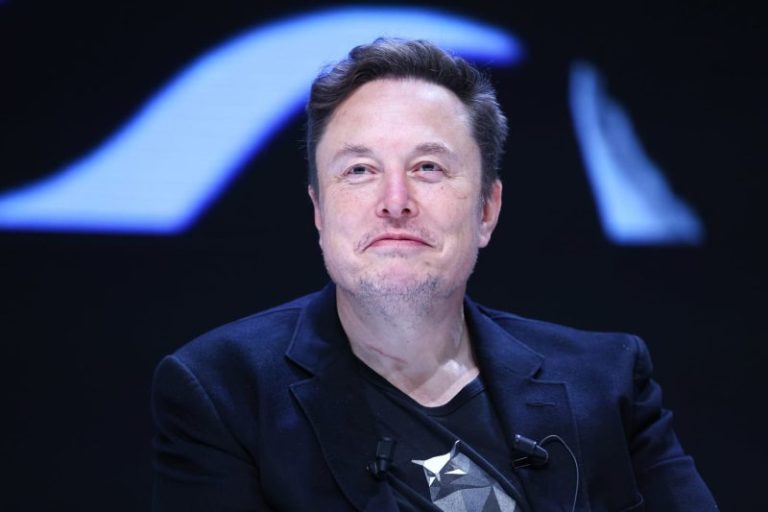
SpaceX on Monday acquired xAI, the artificial intelligence startup that also owns the X social media platform, in a deal combining two companies owned by Elon Musk.

Musk in a news release said that the combination would aim to pursue AI data centers in outer space.

The deal comes on the verge of SpaceX’s highly anticipated initial public offering, which is expected to occur later this year.

The deal creates ‘the most ambitious, vertically-integrated innovation engine on (and off) Earth, with AI, rockets, space-based internet, direct-to-mobile device communications and the world’s foremost real-time information and free speech platform,’ Musk said in a statement.

The combined company will become the world’s most valuable private company, worth more than $1.2 trillion, Bloomberg News reported. NBC News has not been able to verify the valuation, and the companies did not respond to requests for comment.

Musk went on to say that space would be a crucial avenue for building advanced artificial intelligence.

‘In the long term, space-based AI is obviously the only way to scale,’ Musk wrote. ‘The only logical solution therefore is to transport these resource-intensive efforts to a location with vast power and space.’

Musk also offered an ambitious timeline for starting to develop AI from space. He’s failed to meet many of the previous goals he set for his companies.

“My estimate is that within 2 to 3 years, the lowest cost way to generate AI compute will be in space,” he wrote in Monday’s news release.

SpaceX already conducts rocket tests using reusable parts, provides cellular phone and data services to T-Mobile customers, and is working with NASA to return humans to the moon in the near future.

Meanwhile, xAI, Musk’s bid to get in on the AI boom, has reportedly soared to a more than $200 billion valuation. Along the way, the company and its AI bot, Grok, have drawn criticism. Recently, the company limited its image generation technology after users said it was creating sexualized deepfakes. A number of state attorneys general and the European Union are investigating the company.

Musk’s companies have often been intertwined, but Monday’s deal brings them even closer together. Another one of Musk’s companies, Tesla, has invested in xAI and uses some of its technology.

Musk merged his social media site X with xAI in early 2025, but the tie-up between xAI and SpaceX marks the largest combination to date of Musk’s vast business projects.

Founded in 2002, SpaceX has helped catapult Musk to the ranking of richest person in the world, with a net worth of more than $670 billion. The company has quickly become a critical supplier of satellite-based internet around the world, with more than 9,000 satellites orbiting Earth, used by both consumers and governments. SpaceX also holds multiple NASA contracts.

This post appeared first on NBC NEWS